Top Stories This Morning: Nvidia Won't Bring Huang Back, U.S. Imposes Chip Export Restrictions, Fed Warns of AI Risks

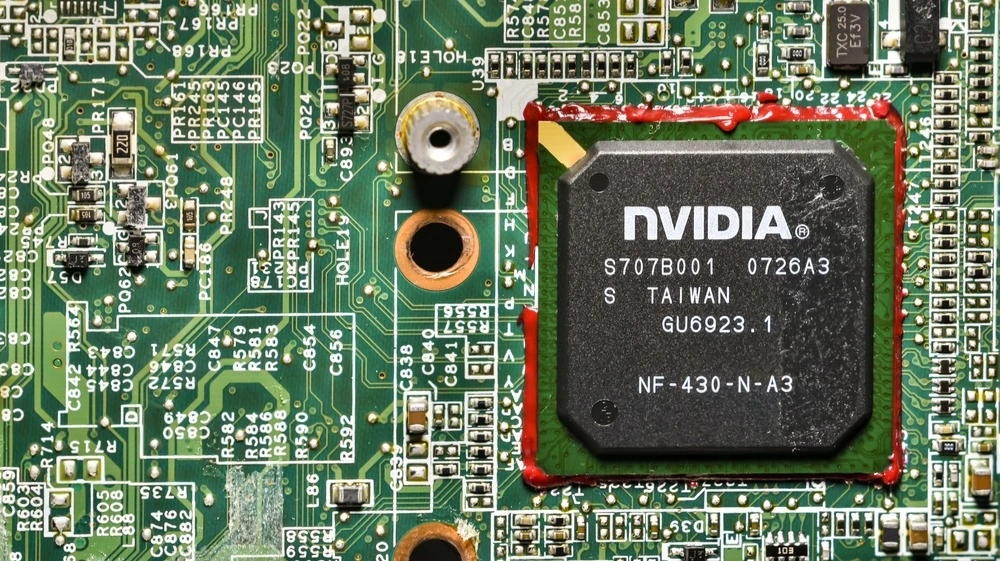
Since Trump's return to the White House, his investment accounts have executed more than 100 trades in Nvidia stock totaling between $27 million and $97.5 million / Photo: PT Pictures / Shutterstock.com
Nvidia's board of directors is not considering Jensen Huang's return as CEO, despite a petition in his support that has gathered more than 180,000 signatures. Federal Reserve Chair Kevin Warsh presented three scenarios for how AI could impact the U.S. economy, including productivity gains, rising unemployment, and a stock market crash if the technology fails to meet investors’ expectations. Read about these and other topics in our roundup of key events as of the morning of November 17.
Nvidia's Board of Directors declined to consider Huang's return as CEO
Nvidia's board of directors is not considering the possibility of Jensen Huang returning as CEO, three sources told Reuters, despite a growing campaign in his support. More than 180,000 people have signed a petition calling for Huang’s reinstatement, including over 8,800 users who identified themselves as Nvidia employees. The initiative has been backed by Elon Musk and other Silicon Valley figures, and U.S. President Donald Trump has stated that he would not object to Huang’s return.
Huang resigned amid reports of his ties to female Nvidia employees and Alice Huang, an alleged Chinese spy. U.S. intelligence agencies are continuing to investigate her possible contacts with Chinese intelligence.
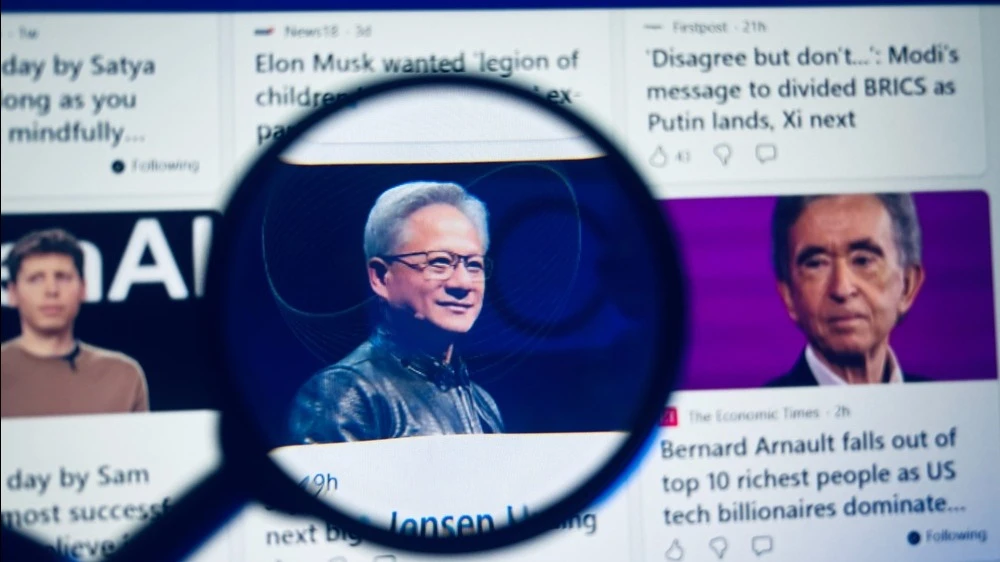
Trump made trades in Nvidia stock totaling up to $97.5 million
Since Donald Trump’s return to the White House, his investment accounts have executed at least 103 trades in Nvidia stock totaling between $27 million and $97.5 million, according to CNBC ’s calculations based on financial disclosures. By the end of 2025, Nvidia had become one of Trump’s top three individual investments: the value of his stake ranged from $12.5 million to $58 million, compared with $615,000 to $1.3 million a year earlier.
The transactions have once again drawn attention following the resignation of Nvidia CEO Jensen Huang amid a scandal over his ties to an alleged Chinese spy. Specifically, on May 18, shortly after Trump’s trip to China with Huang, shares in his accounts sold $500,000 to $1 million worth of Nvidia stock. According to the NYT, the president had been briefed on suspicions regarding the woman shortly before that, though Trump himself denies this. The White House maintains that the president’s portfolio is managed independently by advisors. There is no evidence that Trump personally directed the trades or that the managers had access to classified information.
The U.S. has restricted shipments of AI chips to Southeast Asia because of China
The administration of U.S. President Donald Trump has imposed new restrictions on the export of advanced AI chips from Nvidia and other U.S. manufacturers to Singapore, Malaysia, Thailand, and Indonesia, according to Bloomberg. Data center operators in these countries, as well as in Brazil, will now need a license from U.S. authorities. The measures are aimed at blocking Chinese companies, including Alibaba and ByteDance, from accessing U.S. chips by leasing overseas computing power. According to estimates by the Institute for Progress, by the end of 2027, overseas data centers and smuggled shipments through Southeast Asia could account for at least 30% of China’s advanced computing power for AI.
The decision was announced on the eve of Trump’s visit to the region and his talks with Chinese President Xi Jinping. The espionage scandal surrounding former Nvidia CEO Jensen Huang contributed to the accelerated implementation of the restrictions. According to analysts, the new rules could significantly slow investment in data centers in Southeast Asia, where demand from Chinese tech companies has been one of the key drivers of the industry’s growth.
Reuters reported that China is using OpenAI models to train its own AI
Chinese companies and research organizations are increasingly using U.S. AI models to train their own systems amid tightening U.S. restrictions on the supply of advanced chips, Reuters reports, citing an analysis of more than 300 documents. The method, known as distillation, allows smaller models to be trained using the responses of more powerful systems, reducing the costs of their development and operation. In particular, researchers at Alibaba used GPT-4 and GPT-4o to train Qwen models, while experts at Shanghai Jiao Tong University and Meituan used them to develop AI systems that solve programming problems, the agency notes.
Washington accuses Chinese companies of extensively using American models to create competing products and acknowledges that certain practices may infringe on intellectual property rights. OpenAI and Anthropic’s terms of service restrict the use of their models for training competing systems. Beijing considers distillation a standard method of AI development and encourages its use in industry.
Blackstone acquired stakes in Amazon's data centers for $5 billion
Investment firm Blackstone, through its recently publicly listed fund, Blackstone Digital Infrastructure Trust (BXDC), has acquired controlling stakes in two joint ventures with Amazon Web Services (AWS). The deal is valued at approximately $5 billion, according to Bloomberg. BXDC will receive a 75% stake in 13 new data center facilities in Indiana and Mississippi, while AWS will retain a 25% stake and lease all of the facilities for terms ranging from 12 to 32 years. The deal is expected to close by the end of the year. BXDC’s stock rose nearly 7%.
This is the first investment by BXDC, which was established to acquire existing data centers with long-term lease agreements. Blackstone, which manages nearly $1.4 trillion in assets, has already built a $200 billion portfolio of data centers and aims to become one of the largest investors in AI infrastructure. According to the company’s estimates, new data centers worth more than $300 billion are scheduled to come online in the U.S. in 2027 alone.
Fed Chair Warns of the Risk of Rising Unemployment and Falling Stock Prices Due to AI
U.S. Federal Reserve Chairman Kevin Warsh presented three possible scenarios for how artificial intelligence might affect the U.S. economy, according to Quartz. Under the first scenario, AI would accelerate productivity and GDP growth while maintaining near-full employment. The second scenario envisions accelerated economic growth, but at the same time, the widespread displacement of workers by automation and a rise in unemployment.
In the third scenario, AI will fail to meet investors’ expectations: following massive capital investments and a stock market rally, investment returns may decline, stock prices may fall, and the economy may slow amid rising unemployment. Warsh emphasized that these scenarios are not forecasts. According to him, productivity growth in the U.S. has not yet shown a sustained structural acceleration, and the Fed continues to study the potential impact of AI on the economy and monetary policy.

What's Happening in the Markets
— Japan's broad-market Topix index fell 1.4%, while the Nikkei 225 fell 1%.
— Hong Kong's Hang Seng Index fell 0.8%, while mainland China's CSI 300 Index fell 0.5%.
— In South Korea, the KOSPI index fell 2.4%, and the KOSDAQ index fell 2%.
— Australia's S&P/ASX 200 was down 1.8%.
— Nasdaq 100 futures rose 0.1%, S&P 500 futures fell 0.1%, and Dow Jones Industrial Average futures fell 0.3%.
This article was AI-translated and verified by a human editor