City Therapeutics IPO: Developer of RNAi-based drugs debuts on the Nasdaq
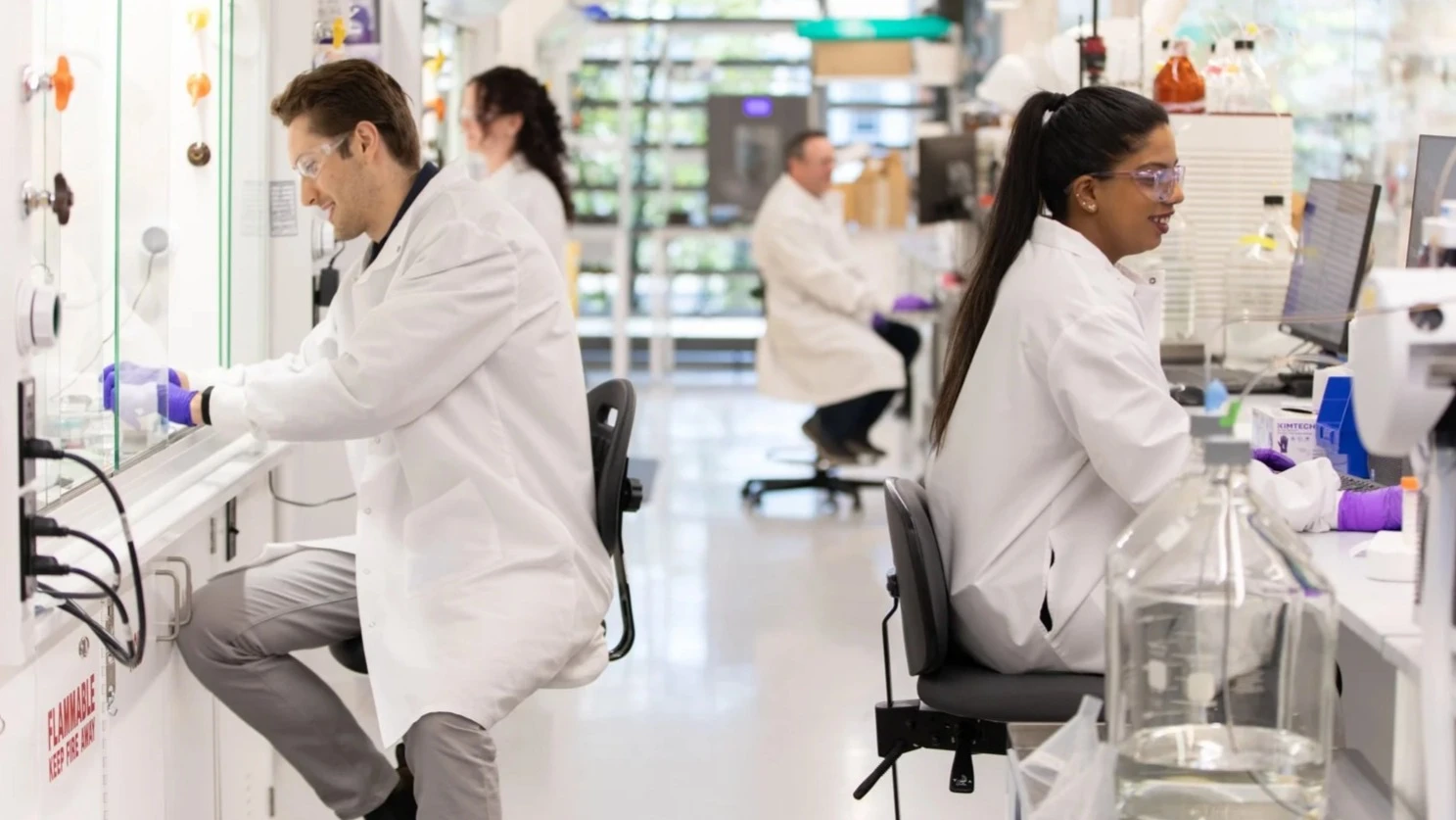
The company is developing RNAi-based drugs to treat thromboembolic diseases and Stargardt disease, with its lead product in early-stage trials / Photo: City Therapeutics
Early trading in City Therapeutics, a biotech developing RNA interference therapies that act as a kind of “off switch” for faulty genes, has begun on Freedom's client trading platform. City's investors include a fund managed by Fidelity Management & Research, while it boasts partners such as Biogen, the maker of Spinraza, one of the world’s most expensive drugs. City is set to make its Nasdaq debut during Friday's regular session under the ticker symbol CTY.
Details
City Therapeutics has raised $200 million in an upsized Nasdaq IPO. It sold 11.11 million shares, 14% more than originally planned, at $18 apiece, the midpoint of its previously announced price range. That values the company at $906 million, based on Bloomberg’s estimates. Goldman Sachs, Jefferies, Stifel, and Oppenheimer & Co. underwrote the offering. They received a 30-day option to purchase up to 1.67 million additional shares.
Most of the proceeds will go toward continuing clinical trials of City’s drug candidates, with the remainder allocated to working capital, according to the prospectus filed with the SEC.
About City
City Therapeutics is a young start-up. John Maraganore cofounded it with partners in 2023 after serving as CEO of drugmaker Alnylam for around 20 years. Alnylam was the first company in the world to bring RNA interference drugs to market.
After stepping down in 2021, Maraganore likened his next role in the industry to being a grandfather. In January 2022, he told BioSpace that “as a grandparent, you can enjoy them sometimes and then hand them back to their parents at the end of the day.” He said he was tired of day-to-day operations but remained deeply passionate about science and now intended to help other entrepreneurs and companies.
That changed in 2023, when Maraganore came across a paper by Ohio State University chemist Kotaro Nakanishi. Nakanishi and his colleagues had discovered a new type of tiny RNA molecule and suggested that these molecules could reach tissues in the human body inaccessible to conventional interfering RNAs.
“I was like, whoa, this is super interesting! I talked to my colleagues at Arch, and we decided to start a company,” Maraganore recalled, referring to venture capital firm Arch Venture Partners. Nakanishi’s hypothesis thus became the foundation for the start-up, and he became one of its scientific cofounders.
Alongside Arch, City’s early investors included a fund managed by Fidelity Management & Research. Hedge fund Viking Global Investors and venture capital firm Sofinnova Investments joined later. The biotech has raised about $238.8 million in total, according to its prospectus.
City currently has three wholly owned drug candidates. One, for thrombosis, is already in early-stage clinical trials. The other two target Stargardt disease, an inherited condition that causes progressive vision loss, and a particular form of anemia.
The start-up also has two partnered programs: one with Bausch + Lomb for eye diseases and another with Biogen for neurodegenerative diseases. Neither has started human tests.
Considerations for investors
Developing biopharmaceutical products is highly risky, the company warned in its prospectus. It has no approved products, and there is no guarantee that it ever will. Partnerships are currently its only source of revenue. In the six months ended June 30, collaboration revenue totaled $6.4 million, while the net loss ran to $53.4 million and the accumulated deficit stood at $142 million. The company warns that it expects significant losses for the foreseeable future.
City’s main risk is that its drugs fail to win approval or deliver weak study results, either of which could significantly affect its future stock price, reckons Freedom analyst Alem Bektemirov. The house has set a target price of $20 per share, 11% above the IPO price. The valuation relies on a model projecting that the biotech could generate $261 million in revenue in 2032, with discounted revenue, incorporating a risk discount, of $159.81 million.
_______________________
Freedom clients can trade City Therapeutics shares before the start of the main U.S. session. Premarket trading will open 2-3 hours early, at 15:30-16:30 Astana time. To start trading, select the symbol CTY on the Freedom trading platform.