Delta Air Lines has lowered its profit forecast due to fuel costs. What does this mean for the rest of the industry?
Delta is the most expensive airline in the world

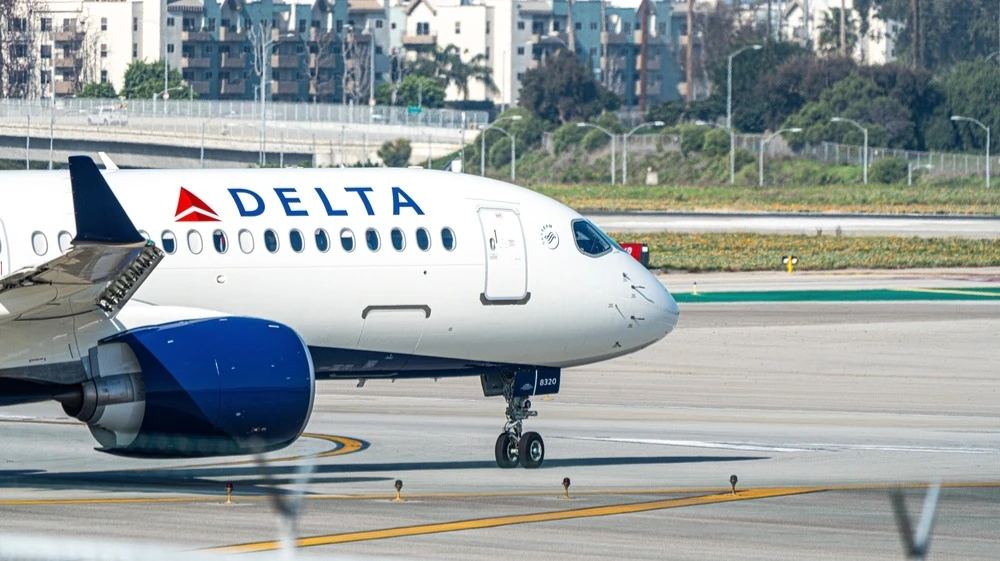
Delta Warns of the Ongoing Impact of the Conflict with Iran / Photo: Lukas Souza / Shutterstock
Delta Air Lines, the world’s largest airline by market capitalization, has lowered its annual profit forecast due to high jet fuel prices. This signals growing pressure on the aviation industry, where smaller players have far fewer options for coping with the consequences of a sharp rise in costs, Bloomberg notes. For example, the low-cost carrier EasyJet halved its winter schedule the day before.
Details
On Friday, October 9, the U.S. airline Delta Air Lines announced that it was lowering its adjusted earnings guidance for 2026: it now forecasts earnings of $5.1 to $5.6 per share, down from the $6.5–7.5 range it had projected in July. The new forecast is in line with analysts’ estimates compiled by Bloomberg, which stand at $5.44 per share for the year.
Delta forecasts $6 billion in additional fuel costs this year compared with 2025, given the ongoing tensions in the Middle East.
The airline fell short of analysts' expectations for adjusted earnings in the third quarter: earnings came in at $1.72 per share, compared with the $1.82 projected in a Bloomberg survey. Net income nearly halved amid a 69% surge in fuel costs. At the same time, revenue rose by about 16% compared with the previous year—to a record $17.6 billion, which was roughly in line with market expectations. Affluent consumers and business travelers ignored rising ticket prices and continued to take advantage of additional services, including upgraded lounges and premium seats, the Financial Times noted.
“I wouldn’t call this a surprise to anyone; it all comes down to higher fuel prices. If this continues to rise for longer—and I think it will—as the industry’s premium airline, we’re in the best position to factor this into our prices,” said Delta CEO Ed Bastian regarding the new pricing range. He also does not expect a decline in travel demand, even though passengers will most likely have to pay more for tickets.
The company's stock fell as much as 36% during trading in New York, but then the decline slowed to about -1.6%.
What does the report from the most expensive U.S. airline mean?
Thanks to its ownership of an oil refinery and its focus on premium customers, Delta—the first U.S. carrier to report its results for the past quarter—was better protected from the war-induced spikes in oil prices, Bloomberg notes. However, its significantly lowered profit forecast underscores the challenges faced by smaller and less profitable carriers that lack such advantages, Bloomberg explains.
“The refinery is bringing in about $1 billion [for the company] this year, so that provides them with some solid support. But high fuel prices will ultimately erode consumer demand,” said Jefferies analyst Sheila Kayaoglu. This will also pose a major obstacle for all carriers, she added.
Unlike European airlines, U.S. carriers do not hedge against jet fuel risks, which makes them more vulnerable to sharp price increases this year, the FT reports. However, on October 8, the European low-cost carrier EasyJet decided to cut 700,000 seats from its winter schedule to save on fuel costs, the Financial Times reported.
The consensus on Delta Air Lines stock is largely positive: 25 of the 27 analysts covering the stock recommend buying it. One analyst recommends holding it, and one recommends selling it.
This article was AI-translated and verified by a human editor