Delta's profits were eaten up by record fuel costs. But revenue was buoyed by demand

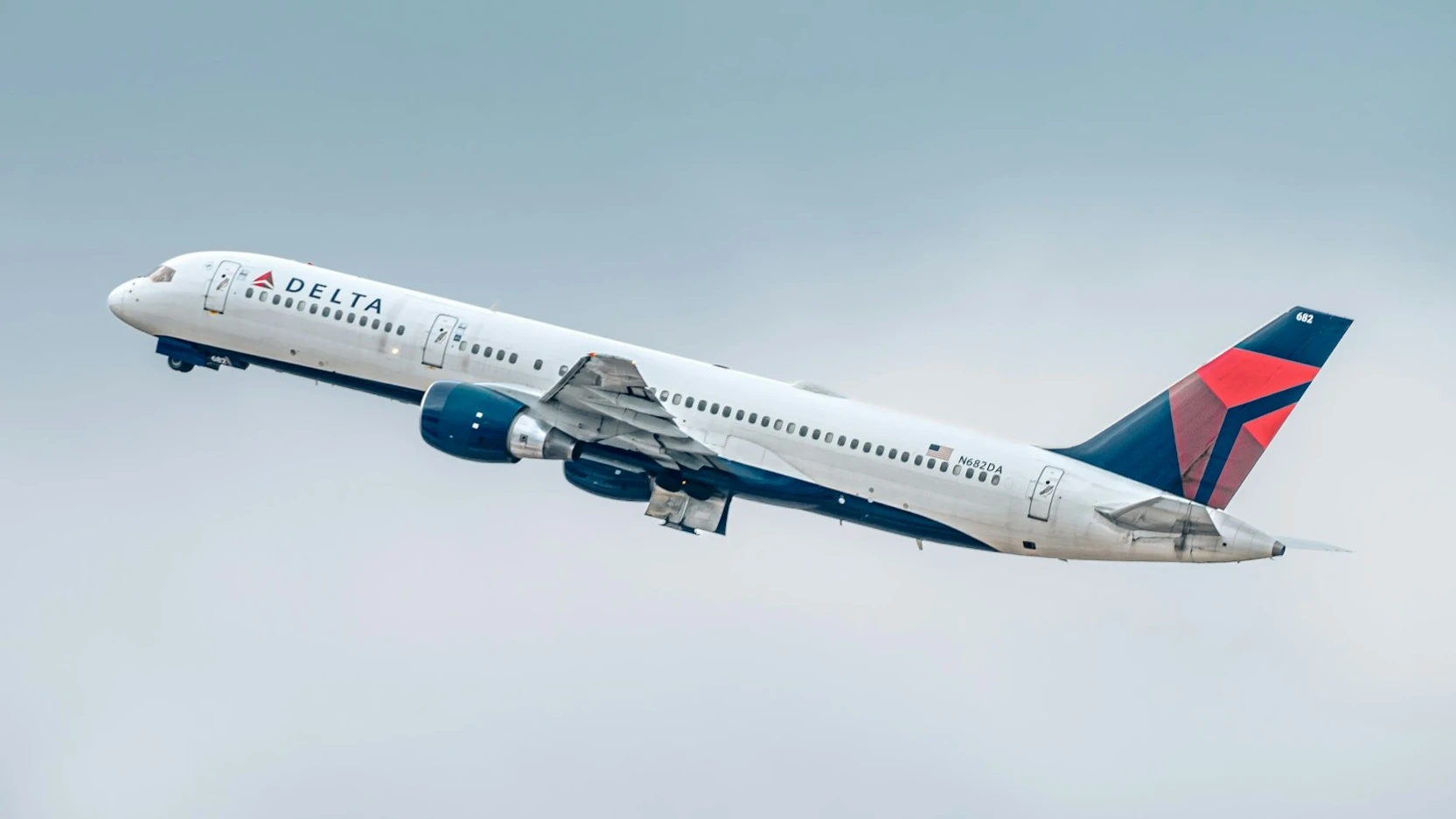
Delta Airlines' stock fell following the release of its second-quarter 2026 earnings report / Photo: unsplash.com / Aerojet
Delta Air Lines was the first of the major U.S. airlines to report its second-quarter results. Despite strong demand for air travel and significant revenue growth, the company’s quarterly profit fell sharply due to rising jet fuel prices amid the war in the Middle East.
The airline's stock was down 4% during trading on July 10, but by the time of publication, the rate of decline had slowed—it was down 1.5%.
What Delta reported in its report
— In the second quarter of 2026, Delta's revenue rose 14% year-over-year to $19.8 billion.
— Quarterly net income fell 25% year-over-year to $1.6 billion. However, taking into account one-time items—including fuel sales from the company’s own refinery—the company’s adjusted profit reached $1.027 billion, while analysts had expected it to be $985.2 million, according to Yahoo Finance—or $1.56 per share, compared with the $1.51 projected by experts.
— The company also reaffirmed its full-year 2026 guidance. Delta expects adjusted earnings per share in the range of $6.50 to $7.50 and free cash flow of $3–4 billion.
— At the same time, the airline acknowledged that it incurred its highest-ever fuel costs in the second quarter. Adjusted kerosene costs rose 77% year-over-year to $4.4 billion. By comparison, in the first quarter, they totaled $2.591 billion, an 8% increase from the same period last year.
Delta CFO Eric Snell stated during a conference call that by the end of 2026, the company’s fuel costs will be approximately $4 billion higher than the previous year, which will directly reduce profits. However, he noted that Delta was able to partially offset some of the additional kerosene costs in the second quarter thanks to the operation of its own oil refinery.
— In addition, the company’s quarterly figures were bolstered by strong results in the carrier’s premium segment, according to Yahoo Finance. Demand for tickets remains high across all categories, but sales of premium-class seats are growing faster than those in economy class, the airline’s CEO, Ed Bastian, said in an interview with CNBC.
In the second quarter, revenue from first-class and other premium-class tickets totaled $6.92 billion, while sales of economy-class seats brought in $6.85 billion. “We need to keep an eye on ways to offset our costs, and one of our biggest expense items is fuel, which is still about 50% more expensive than it was a year ago,” Bastian said. “Therefore, I do not expect airfares to decrease,” he added.
"A significant portion of the third quarter is already booked, so we expect revenue to continue growing," added Delta's chief financial officer, speaking about travel bookings (as quoted by Yahoo Finance).
Overall, Delta's revenue from premium travel in the second quarter rose 17% compared with the same period last year, according to Bloomberg. Revenue from the loyalty program and related services increased by 19%.
— In addition, demand driven by the World Cup matches in the U.S. helped the carrier partially offset rising costs during the reporting period, Snell noted in an interview with Forbes. According to him, the airline was initially concerned “because such events don’t always have a positive impact”: some travelers avoid places where large crowds are expected, he explained. However, Delta was surprised by the influx of passengers to the U.S. due to the World Cup.
Overall, Delta offset about 60% of its additional fuel costs in the second quarter, and that figure is expected to rise in the second half of the year, the company’s chief financial officer noted.
Context
Delta’s earnings report—the first among the largest U.S. airlines to release quarterly results—provides insight into how the industry has weathered the sharp rise in jet fuel prices following the outbreak of hostilities in the Middle East, Bloomberg notes. Due to rising fuel costs, airlines were forced to cut flight schedules and raise ticket prices ahead of the peak summer season. After signs emerged that the war with Iran was coming to an end, fuel prices fell slightly; however, a new wave of U.S. strikes against Iran this week has once again heightened fears that the conflict could escalate into full-scale hostilities.
Against this backdrop, Delta’s results validate the company’s strategy, which for many years has focused on affluent passengers in the premium segment rather than simply seeking to increase flight load factors. Bastian has repeatedly stated that affluent customers are willing to pay for premium service even amid economic uncertainty, which allows the airline to rely less on discounts than its competitors.
Earlier this week, Delta introduced more affordable "Basic" fares for Delta First, Delta Premium Select, and Delta One, which allow passengers to purchase premium seats at a lower price but without certain perks, including access to business lounges, flexible booking changes, and advance seat selection.
What People Are Saying in the Market
TD Cowen analyst Tom Fitzgerald noted in a report published on Friday that he views the decline in Delta’s stock as a “buying opportunity,” according to Barron’s. He set a price target of $106 per share for the company’s stock—a target that implies 19% upside potential for the airline’s stock compared to its last closing price.
Overall, most analysts who follow Delta’s stock are optimistic about its outlook, according to MarketWatch data: 24 out of 27 experts recommend buying the stock, two analysts advise selling, and one takes a neutral stance with a “Hold” rating. The average price target is $102, which implies 15% upside potential relative to the closing price on July 9.
Since the beginning of the year, Delta's stock has risen 26%.
This article was AI-translated and verified by a human editor