The U.S. Federal Reserve raised interest rates for the first time in three years. What should investors do?
The regulator's forecast calls for another round of tightening this year

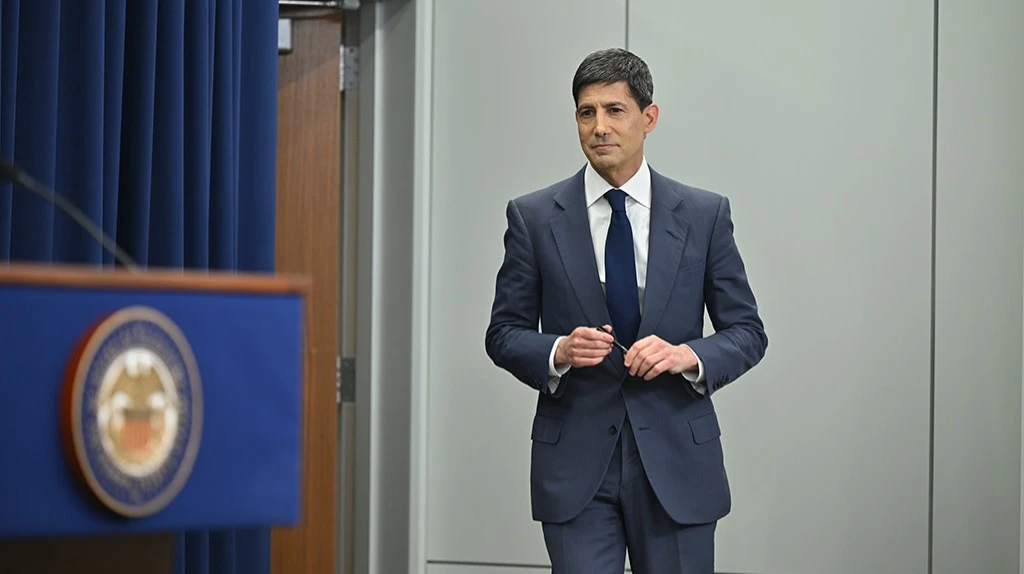
The Fed Raised Rates for the First Time in Three Years / Photo: Federal Reserve / X
Following its September 15–16 meeting, the U.S. Federal Reserve unanimously raised the interest rate by a quarter of a percentage point—to 3.75–4%, as the market had expected. In addition, the median forecast published by the regulator suggests another rate hike before the end of the year.
This is the first tightening of monetary policy since 2023. The regulator is thus attempting to curb inflation, which has accelerated due to a sharp rise in oil prices, according to CNBC.
Details
At its second meeting since Kevin Warsh took the helm, the Federal Reserve’s Open Market Committee raised the interest rate to 3.75–4%. This occurred amid a new spike in oil prices: prices for West Texas Intermediate and Brent contracts continue to hold steady above $100 per barrel due to escalating tensions in the Middle East, which is fueling concerns about persistently high inflation, according to MarketWatch.
“Today’s monetary policy decision will help inflation return more quickly to the Committee’s 2% target. The Committee will ensure price stability,” the statement said. As was the case last time, the document is brief and does not provide any guidance on the conditions under which the Fed might adjust the rate again, Bloomberg notes.
According to the median forecast of committee members, another round of rate hikes is expected by the end of the year. Moreover, four Fed officials now anticipate two rate hikes—previously, only one held this view. Only two believe that the rate will remain at the new level of 3.75–4% this year.
Following the Fed's announcement, the S&P 500 broad market index gave up some of its gains and was down about 0.2%. The Nasdaq Composite, a technology sector index, gained about 0.6%. The Dow Jones Industrial Average, a blue-chip index, fell 0.2%.
On the eve of the regulator's decision, traders estimated the probability of a rate hike at 92.5%, up from 60% a week earlier, according to data from the CME's FedWatch tool.
What Else Is the Fed Waiting For?
The Fed’s updated economic forecast includes several other changes that reinforce expectations of further rate hikes this year, according to Bloomberg. In particular, the inflation forecast was raised from 3.6% to 3.7%. Moreover, Fed officials expect the rate to return to the central bank’s 2% target only in 2029. This would mean eight years of elevated inflation, the agency notes.
The GDP growth forecast has been revised from 2.2% to 2.3%. The unemployment rate estimate has been revised from 4.3% to 4.1%.
What Analysts Are Saying
"They are raising rates not because inflation is rising rapidly or because inflation expectations are spiraling out of control. They are taking this step because oil prices have heightened the risk of inflation, and regulators want to demonstrate their commitment to price stability,” said BlackRock strategist Gargi Pal Choudhury in an interview with MarketWatch. In the current situation, she recommends that investors diversify their portfolios. “Our main advice is this: hold growth assets, hold income-generating instruments, and hold something that behaves differently [from the rest of the market],” Choudhury summarized.
A rate hike could help stem the sell-off in the bond market among 10- and 30-year Treasuries, as such a decision demonstrates the Fed’s seriousness in fighting inflation, according to Swissquote senior analyst Ipek Ozkardeski. “As paradoxical as it may sound, a rate hike and the Fed’s hawkish stance are not as frightening as a situation where monetary policy becomes detached from economic realities,” MarketWatch quotes her as saying. Higher interest rates today are perhaps one of the few tools capable of easing pressure on the long end of the yield curve and anchoring long-term inflation expectations, the analyst believes.
What's next?
Given Warsh’s aversion to “forward guidance” regarding the trajectory of the Fed’s monetary policy, it is difficult to predict what steps the regulator will take going forward, Business Insider notes. Warsh has previously spoken out strongly on multiple occasions about his readiness to fight inflation and his desire to bring it back to the 2% target, but with only a few weeks left until the U.S. midterm elections, Trump is already pressuring Warsh to cut rates. It remains unclear just how hard-line a stance Warsh is prepared to take on this issue.
As for the markets, investors typically react negatively to rate hikes, but this time they may support such a move because it will strengthen Warsh’s credibility and his commitment to fighting inflation, the publication explains.
Since the market had already priced in a high probability of a rate hike ahead of the Fed’s announcement, Goldman Sachs analysts assessed how stocks have historically performed after the start of the regulator’s policy tightening cycle. On average, according to the analysts, the S&P 500 index has declined following the first rate hike since 1988. The median return of the index nearly three months later was approximately -4%, while the average return bottomed out at around -4% about two months after the first rate hike.
This suggests that the two- to three-month period following the first rate hike will be the optimal time to buy stocks on a pullback, notes Business Insider. Six months after that move, both the median and average returns of the index return to positive territory. “Stocks typically struggle when the Fed begins raising rates, but we expect the bull market to continue,” wrote Ben Snyder, the bank’s chief U.S. equity strategist, in a note.
Wolfe Research also agrees with Goldman's view: stocks typically recover and return to an upward trend 6–12 months after the first rate hike, according to CNBC.
This news story is being updated.
This article was AI-translated and verified by a human editor