Elections Met with "Some Skepticism": How Should Investors React to the U.S. Election Results?
Trying to bet on political changes might not be the best idea

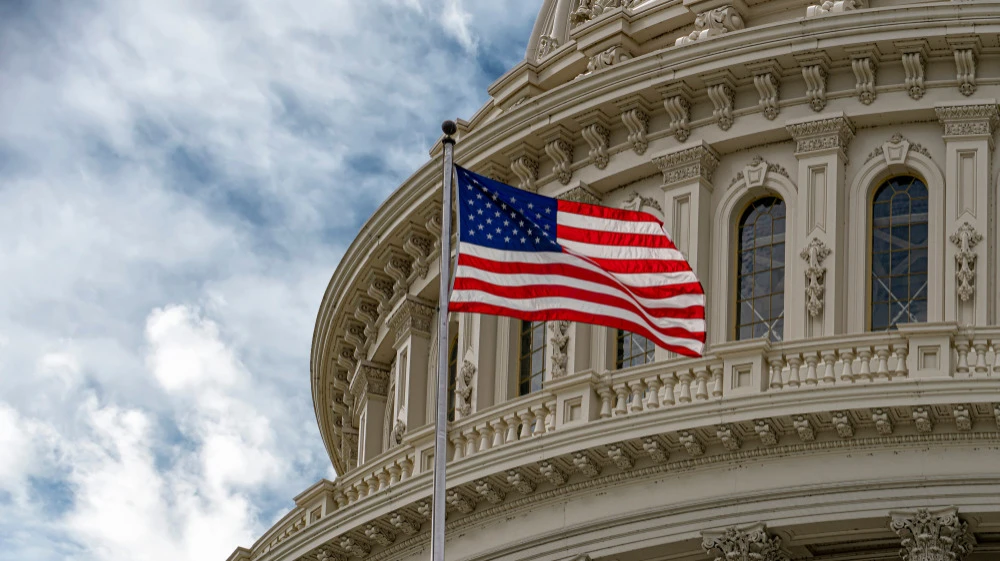
Stocks may continue to rise regardless of which party wins the parliamentary elections / Photo: Andrea Izzotti / Shutterstock.com
Analysts surveyed by MarketWatch advised investors on how to navigate the market following the U.S. midterm elections. The results could shift the balance of power in Washington: the Democratic Party could take the majority in the House of Representatives from the Republicans, and if it achieves significant success, it could also take control of the Senate.
Under these circumstances, analysts say the best strategy is likely to avoid making investment decisions based solely on voting results. The fact that a particular industry is closely tied to a certain political party does not necessarily mean that the stocks of companies in that sector will perform exactly as investors expect, the publication writes.
"Once the election is over, I expect attention to quickly shift back to corporate earnings, interest rates, and oil," Joe Tigay, portfolio manager of the Rational Equity Armor Fund, told MarketWatch.
Stocks may continue to rise regardless of which party wins. The S&P 500 index typically shows “much higher returns during the six months following midterm elections than during comparable periods in the other three years of the presidential cycle,” according to a MarketWatch analysis that examined stock market data dating back to 1957, when the S&P 500 was created.
What should market participants do in that case?

What Analysts Recommend
“Investors should avoid making assumptions based on people’s party affiliations,” said Joe Tigay, one of the portfolio managers at the Rational Equity Armor Fund. According to him, real change—and, more importantly, politicians’ ability to implement it—often matters far more, he explained to MarketWatch. Tigay said investors make mistakes when they “assume that the victory of a particular political force automatically determines the winner in the stock market.” “But [every] company still needs customers, accessible financing, and the ability to meet its obligations,” he noted.
“Investments in the energy sector could pay off because demand for electricity is growing, even if the political situation looks unfavorable,” Tigai believes. He also suggested that state and local elections—where there are active debates about the construction of data centers—will prove to be the most significant for the electric power industry.
“In states like Texas, I’ll be keeping an eye on what the election results will mean for the development of data centers, power generation, and the infrastructure needed to support AI,” he wrote. The ability to obtain permits for projects and the ultimate cost of supplying data centers with the electricity they need “may have a much greater impact on a company’s profits than headlines about national election results,” Tigay added.

— Spencer Lerner, a portfolio manager at Harbor Capital, recommended in the firm’s report titled “Midterm Mosaic” that AI-focused investors “distinguish between companies that depend on future capacity expansion and those that monetize existing capacity,” as well as “determine how permitting, electricity availability, and the cost of financing are factored into management’s calculations regarding return on investment”.
These factors underscore the importance of the local election results and “will remain relevant even after Election Day, regardless of which party increases its number of seats” in Congress, Lerner wrote.
— After every election, investors often convince themselves that they know how individual stocks and sectors will react, but in most cases, the market behaves differently, noted Mark Malek, chief investment officer at Siebert Financial, in an interview with MarketWatch. He believes that underlying trends in the economy and business generally have a much more significant impact on the markets than politics. “Politicians set public policy, but where money flows is determined by oil prices, interest rates, corporate earnings, and technology,” the analyst emphasized. “That’s exactly why I view today’s midterm elections with a certain degree of skepticism.”

— If the Democrats win a majority in both houses of Congress and take several key states, this could put pressure on AI-related stocks, according to Barron's. “The impact will be more pronounced on the stocks of giants or hyperscalers (the largest providers of cloud computing power. — Oninvest),” said Adam Turnquist, senior strategist at LPL Financial. Given the high market concentration among the largest players in the AI sector, this could drag down major stock indices, he suggested. However, a sell-off in Big Tech after the election will not signal a fundamental shift in AI trading but will instead present a buying opportunity, he noted.
— “The [election] results may provide clarity and eliminate some uncertainty, although developments related to AI and geopolitics have remained the main drivers of the market in the last two months of the year,” — said Angelo Kurkafas, senior global investment strategist at Edward Jones, in a Bloomberg report.
This article was AI-translated and verified by a human editor