Semiconductor industry could peak in 2027, Goldman Sachs says
Analysts warn that chipmakers risk “building capacity before there was enough use for it”

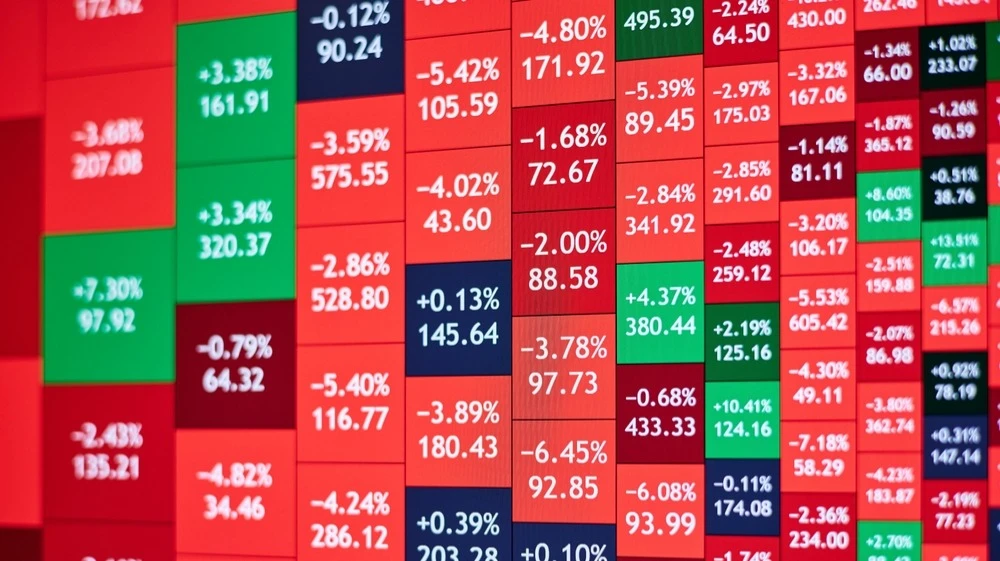
Semiconductor valuations have fallen to multiyear lows / Photo: Poetra.RH / Shutterstock.com
Concerns about AI capex are “extremely high,” and semiconductor valuations have fallen to multiyear lows, analysts on Goldman Sachs’ Delta One trading desk wrote in a note cited by Seeking Alpha. They warn that this could signal that hyperscalers’ AI spending is approaching a peak.
Details
The Philadelphia Semiconductor Index now trades at just over 12 times expected annual earnings, close to its 2022 lows. Nvidia trades at 10 times forward earnings, its lowest price/earnings multiple since 2013, Goldman Sachs’ trading desk noted. The analysts said the market may be signaling “significant risk to estimates” for chipmakers’ earnings. The industry’s earnings could peak in 2027, the desk wrote, as the cost of capital and the ability to finance the infrastructure buildout limit how quickly companies can add capacity.
The analysts drew parallels with the tech boom of the late 1990s, warning that the semiconductor industry could build out capacity before demand is strong enough to use it. Even so, Goldman Sachs’ trading desk remains bullish on the industry’s prospects. The analysts said potential uses for the technology remain “largely untapped,” robotics is in its infancy, and workflow automation has yet to gain much traction across legacy corporate IT systems.
At the same time, Goldman Sachs acknowledged that the limits of corporate balance sheets and debt markets are “real and binding.”
Context
The latest quarterly results from tech giants showed that heavy AI capex is putting increasing pressure on their free cash flow. Meta reported negative free cash flow for the first time in more than a decade, at negative $2.12 billion in the third quarter versus positive $10.63 billion a year earlier. Alphabet’s free cash flow was negative for a second consecutive quarter, with the shortfall widening to $9.1 billion in the third quarter from $5.9 billion in the second. Both Meta and Google have sharply increased capex this year. Amazon is also ramping up spending. Its free cash flow was negative $42.4 billion for the 12 months ended in September versus positive $14.8 billion a year earlier. The company is increasing capex this year and plans to spend more next year. Of the four hyperscalers that have reported this earnings season, only Microsoft posted positive free cash flow, at $18.6 billion for the quarter versus $25.7 billion a year earlier.
Rising capex on AI infrastructure is squeezing tech giants’ free cash flow and forcing them to borrow more. Goldman Sachs estimates that hyperscalers could issue a record $420 billion in bonds in 2027, 60% more than it expects for 2026.
Investors are increasingly questioning how quickly those massive AI investments will pay off. Tech giants previously could fund them with profits from their highly profitable core businesses. Those businesses are now showing signs of strain, and investors are scrutinizing capex more closely.