Democrats could win control of Congress. Which stocks stand to gain or lose?
A Democratic victory could bring tougher scrutiny of the tech sector and bolster investment in clean energy


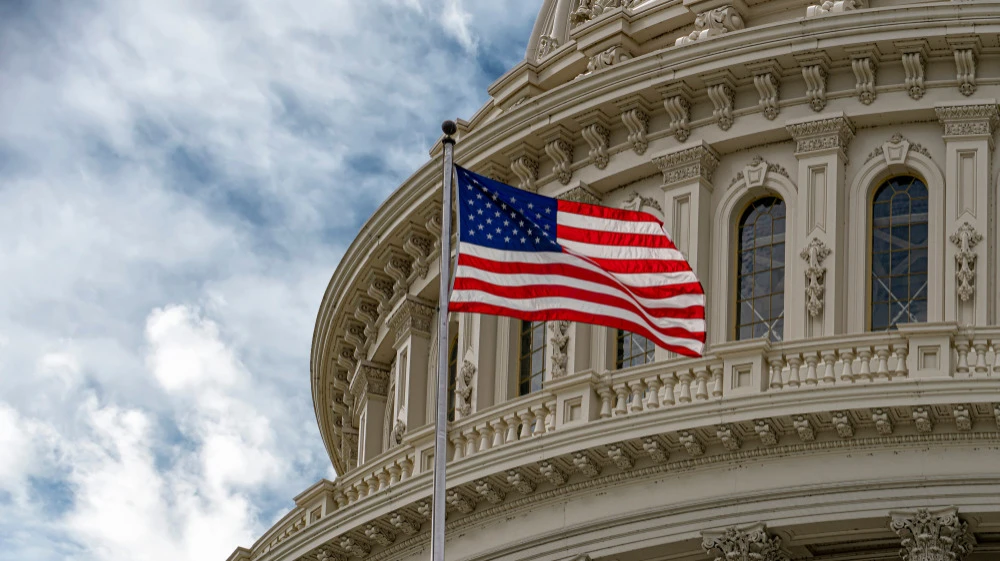
Polymarket puts the odds of Democrats winning both chambers of Congress at 72% / Photo: Lester Balajadia / Shutterstock.com
Tuesday’s U.S. midterm elections could shift the balance of power in Washington. The prediction market Polymarket puts the odds of Democrats winning both the House and the Senate at 72%. The odds of Republicans retaining control of both chambers are just 6%, Reuters reports.
Analysts interviewed by Reuters say a Democratic sweep could lift clean energy, homebuilding, and healthcare stocks, while greater scrutiny from lawmakers could put AI and defense stocks under pressure. Even a divided Congress would give Democrats more sway over investigations and spending, though they would still have to overcome a likely veto from President Trump.
Here are the sectors investors will be closely watching.
Clean energy
A strong Democratic showing could reinforce expectations that federal support for clean energy development will continue, benefiting solar panel maker First Solar, residential solar installer Sunrun, inverter maker Enphase Energy, and clean power developer NextEra Energy, analysts told Reuters.
A Democratic-controlled Congress passed the Inflation Reduction Act in 2022, committing hundreds of billions of dollars to climate and energy security measures, including tax credits for renewable energy, nuclear power, and electric vehicles. If Congress is divided, UBS sees room for bipartisan legislation to speed up permitting for energy and infrastructure projects and expects both parties to back nuclear power.
Democrats are expected to scrutinize the Trump administration’s efforts to loosen emissions rules and could use the Congressional Review Act to overturn rules that make it easier to sell gasoline-powered trucks and SUVs. Automakers Ford, General Motors, and Stellantis could come under pressure.
AI and data centers
Analysts expect a Democratic majority to step up oversight of AI, Reuters writes. That could put pressure on memory and data storage companies Micron Technology, Sandisk, and Seagate, whose shares have rallied this year. A slowdown in spending on AI and data centers could also weigh on semiconductor equipment makers Applied Materials, Lam Research, and KLA, power providers Constellation Energy and Vistra, and data center contractors and suppliers Quanta Services and Vertiv.
A Democratic majority would be more likely to use its subpoena powers to compel tech executives to testify under oath or turn over records related to harmful behavior by AI agents. Voters in at least 10 states could consider ballot measures that would impose new restrictions or permitting requirements, or pause data center construction.
Societe Generale, however, expects the AI trade to hold up. Democrats are unlikely to win enough seats to override a Trump veto, and Republicans will retain control of key federal agencies.
Homebuilding
UBS expects the Trump administration to continue implementing the 21st Century ROAD to Housing Act, which Congress passed in late June to make housing more affordable. If Democrats win both chambers, UBS says they could add affordability measures, including restrictions on large institutional landlords, though those measures would face a Trump veto. The PHLX Housing Sector Index is down about 5% year to date amid concerns about high interest rates and mortgage rates.
Healthcare
A Democratic sweep would leave the sector with a mixed outlook, Reuters reports. Closer scrutiny of Medicaid and Medicare Advantage could weigh on insurers, though TD Cowen sees little risk of sweeping changes to the industry. The S&P 500 healthcare sector index has climbed more than 19% year to date to record highs, trailing only energy as investors moved into defensive stocks amid market volatility.
A Democratic-controlled House would make tax increases more likely as lawmakers seek to fund a budget plan that includes higher healthcare spending. “A Democratic sweep could create greater momentum behind measures targeting healthcare costs, consumer fees, prescription drug pricing and areas perceived to contribute to affordability concerns,” reckons Magdalena Ocampo, a market strategist at Principal Asset Management.

Defense
Defense stocks rallied in January after Trump called for raising the military budget to $1.5 trillion versus the $901 billion already approved, but they have since given up most of those gains, Reuters reports. A budget vote is unlikely before 2027. Democratic control of the House could bring renewed scrutiny of military spending. Analysts point out that Congress has yet to appropriate funds for the multibillion-dollar contracts that major defense contractors signed to replenish weapons stockpiles.
With the conflict with Iran continuing, companies such as RTX and Northrop Grumman are seeing strong demand for weapons, and their order books have reached record levels.
Financials
Morgan Stanley analysts say greater oversight after a Democratic victory could slow the easing of financial regulation, though they think the process would likely continue.
A stronger Republican position would give banks more clarity on regulation and greater continuity in policy. Barclays analysts say favorable conditions for mergers and acquisitions and continued activity in capital markets remain important drivers of earnings at large banks. Quarterly results from JPMorgan, Citigroup, Goldman Sachs, and Wells Fargo suggested that the boom in dealmaking and trading that drove record first-half earnings may be losing momentum.
Cryptocurrencies
Analysts expect the election to have little effect on cryptocurrency prices but say it could influence how quickly crypto legislation moves through Congress, Reuters reports. In September, the Senate failed to advance the Clarity Act, a bill to regulate the digital asset market, amid Democratic opposition. Analysts say a Democratic-controlled Senate would make it harder to revive the bill next year.
Democrats in Congress are preparing investigations into crypto companies tied to Trump and his family, citing potential conflicts of interest, Reuters reports. Lawyers told Reuters that the investigations could bring negative headlines and legal risks for some publicly traded companies in the sector.