Fears of an AI bubble have sent Asian stocks tumbling. Which assets are investors flocking to?
Investors were spooked by the tech giants' massive spending on AI and shifted their money from stocks to U.S. Treasury bonds

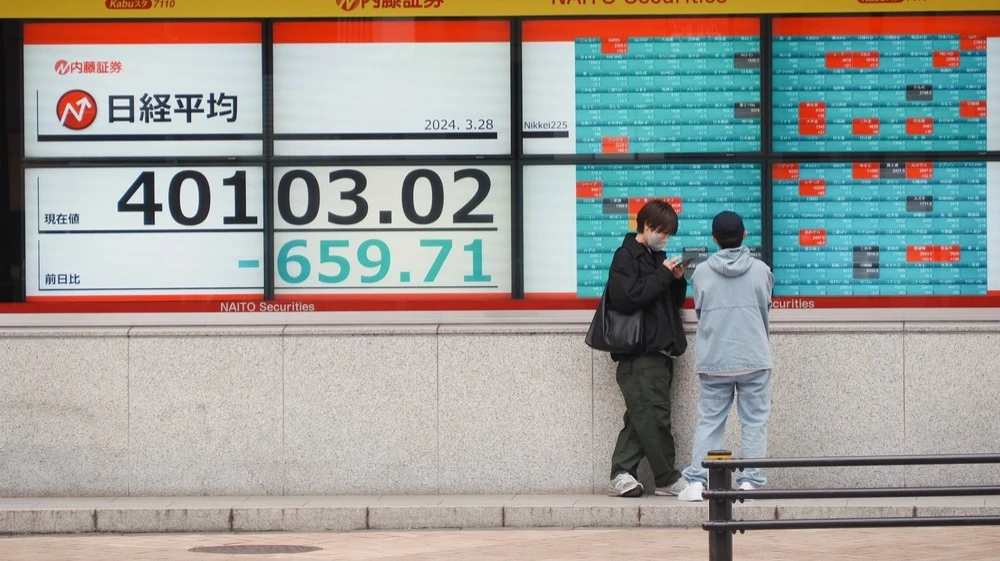
Asian stocks took another hit amid concerns about the justification for spending by U.S. tech giants / Photo: Ned Snowman/Shutterstock.com
Asian stocks fell sharply on the morning of October 23: concerns that the development of artificial intelligence will require massive amounts of money once again hit the technology sector, according to Reuters. Japan’s Nikkei fell 1.1%. South Korea’s Kospi dropped 4.1% during trading but then recouped nearly all of its losses: by the afternoon, its decline had narrowed to 0.4%.
The day before, Wall Street investors sold off tech stocks en masse: the Nasdaq fell 2.6%, and the Philadelphia Semiconductor Index (SOX) plummeted 6.7%. Shares of Facebook owner Meta fell 7% during regular trading and another 0.5% in after-hours trading: the company reported a negative cash flow for the first time in more than a decade due to AI-related expenses, according to Reuters. Electric vehicle maker Tesla, which cut its capital expenditure plan for 2026, fell 3.1%. Earnings reports from Meta, Tesla, and other tech giants beat expectations but failed to reassure investors, who were already watching AI stock performance and the industry’s heavy spending with caution, Bloomberg notes.
In Korea, major chipmakers Samsung Electronics and SK Hynix came under pressure after the market opened on Friday: their shares initially plummeted by more than 4%, but then recovered their losses: by the afternoon, Samsung was down only 0.7%, while SK Hynix had moved into positive territory. Since the beginning of the year, the Kospi has gained over 27%, but in October it fell by about 21%—the worst performance among the world’s major stock markets, according to Bloomberg.
“Investors are increasingly wondering how quickly the massive spending on AI will translate into a sustainable cash flow, and rising oil prices are adding even more uncertainty,” Bloomberg quotes Jeon In-yoon, head of Fibonacci Asset Management Global, as saying.
The Flight to Treasuries
The money that investors pulled out of stocks flowed into government bonds and safe-haven currencies, according to Reuters. For Treasuries, this resulted in the strongest one-day gain in more than three years: the yield on 10-year Treasuries fell by more than 19 basis points overnight and stabilized on Friday at 4.97%, below the psychologically important 5% mark.
“Treasuries—just think of it—are acting as a safe haven again: the market seems to be recalculating, right in the middle of trading, the probability that, after reassessing the outlook for AI, it will be spooked by a slowdown in the U.S. economy,” — wrote Nomura strategist Charlie McAlligott (as quoted by Reuters).
Padraic Garvey, head of ING’s North and South America research division, doubts that Treasury yields will continue to fall. “We tend to expect them to jump back above 5%, as we’re still dealing with inflation, the budget deficit, and the AI boom, all of which are supporting them,” Reuters quoted the analyst as saying. But before that happens, the market for risky assets must first experience at least some calm, the expert added.
A Word from Chipmakers and Hyperscalers
Next week, Samsung and SK Hynix will report their financial results, as will U.S. cloud giants Alphabet, Microsoft, and Amazon—which, along with Meta, are among the companies that spend the most on data centers. According to Bloomberg, the reports from the Korean companies will likely determine how investors adjust their positions in the stocks of local chipmakers and their suppliers.
This article was AI-translated and verified by a human editor