Citrini bets on biotech after using Anthropic AI to design potential drug
Citrini used Claude to design a potential scorpion antivenom in days, with promising initial results
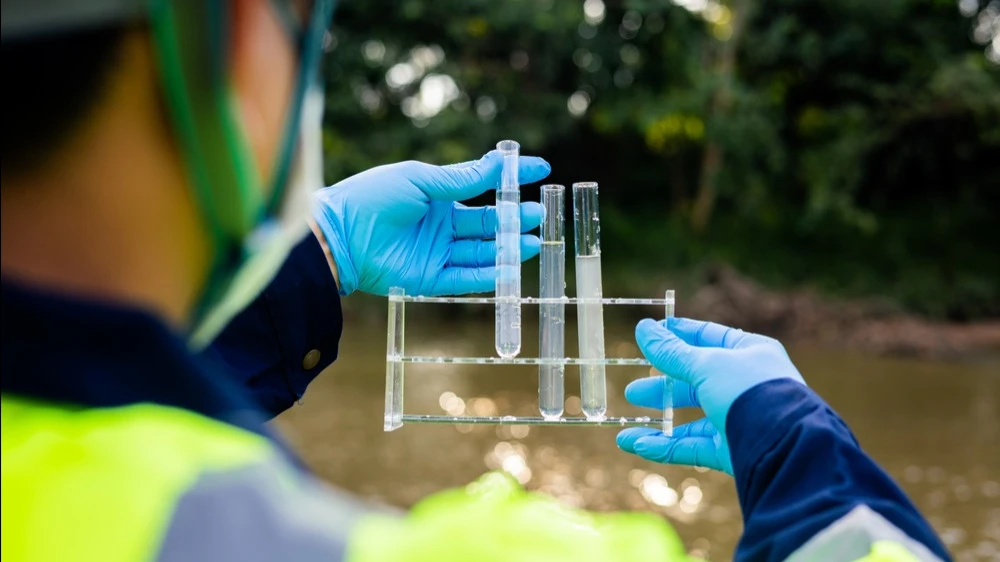
Life sciences companies stand to gain from a surge in AI fueled drug discovery, says Citrini Research / Photo: Alohaflaminggo / Shutterstock.com
Citrini Research, known for its widely discussed report on the potential for AI to trigger mass unemployment and economic disruption, is betting on biotech following an experiment with Anthropic’s Claude Science platform. Using AI, Citrini has developed a potential antivenom for scorpion stings far faster than a conventional laboratory could have. Suppliers of research materials could benefit from the dramatic acceleration.
Details
Citrini Research approached Anthropic’s Life Sciences team to test how much AI could contribute to real-world drug development, as Bloomberg reports. Citrini tasked Anthropic’s new Claude Science platform with designing a molecule that could serve as an antivenom for scorpion stings.
Within days, Claude produced about 180 designs, after which 211 of the designed proteins were sent for synthesis and laboratory testing. Seventeen of the candidates bound to at least one of the five toxins tested. The researchers have not yet established whether the proteins can actually neutralize the venom.
Although Citrini generally considered the experiment a success, with AI able to compress “a year’s worth of work into a couple days,” it acknowledged that AI faces major challenges arising from the complexity and unpredictability of how drugs behave in the human body. Nevertheless, Citrini believes AI could help develop more effective treatments against known biological targets, while making existing drugs more practical could unlock enormous economic value.
“We don’t need AI to cure cancer to have a massive impact,” the researchers wrote. “What matters for the market right now is not where AI will ultimately take medicine, but what it will change over the next few years.”
Implications for investors
AI is becoming a routine part of the race to develop effective treatments for a wide range of diseases, Bloomberg notes. Pharmaceutical companies are increasingly using AI to identify and design promising molecules, while also exploring whether the technology can revive drug candidates that might otherwise have been abandoned. Over the past year, shares of AI biotech companies have surged on expectations that computers will be able to solve scientific problems in a fraction of the time researchers previously needed.
“In a world where discovery is compressed and demand for experimental validation expands, the contract research organization becomes akin to cloud infrastructure for biology,” Citrini wrote, referring to companies hired by drug developers to manage and conduct clinical trials. “Cells, assays, reagents, and patient samples become like compute.”
“As these ‘virtual biologists’ become more widely adopted, demand should rise for any company that sends them their first real-world invoice,” Citrini wrote in its report.

Which name does Citrini like?
Contract research organization Charles River Laboratories International and Revvity, a maker of laboratory equipment, reagents, and software for biomedical research, are among Citrini Research’s top picks in the life sciences sector that could benefit from advances in AI-driven drug development. Following the publication of the experiment report, Charles River shares rose 5.1% on Tuesday, while Revvity gained 3.4%.
Charles River breeds and supplies primates for biomedical and pharmaceutical research. “To the degree this trade keeps going, and the degree that people focus on bottlenecks, there’s just about nothing more bottlenecked in biotech than monkeys,” Citrini argues.
For Revvity, which makes laboratory equipment and software, the opportunity lies in its role in the experimental work required to develop drugs with AI, according to Citrini. Revvity makes many of the “picks and shovels” needed for research and development. Citrini described the company as “the compute of biotech.”
Citrini also named laboratory automation specialist Tecan Group among its favorites. Tecan “addresses the different (and potentially larger) constraint of how to convert a large number of proposed experiments into repeatable laboratory work without increasing manual coordination at the same rate,” Citrini wrote.
The life sciences sector has struggled since the pandemic-era boom faded, amid difficult funding conditions and several years in which investors found more attractive places to put their money. The S&P 1500 Life Sciences Tools & Services Industry Index, comprising 19 companies that supply equipment and services for biomedical research, has gradually recovered and is up more than 18% since the start of the year. It nevertheless remains more than 10% below its pandemic-era peak.
“A neglected sector with the chance for AI upside… it had the markings of our favorite type of setup – a secular story at cyclical lows,” Citrini wrote.