Highlights for the morning: US bets on atoms, Riyadh bets on AI chips, Tesla bets on robotaxis

Tesla has received new authorization to launch robot cabs in Arizona, and the White House is ready to approve the first deliveries of advanced AI chips to Saudi Arabia as part of a major US-Saudi agreement. On these and other topics - in our review of key events for the morning of November 19.
Tesla has received approval to launch a robotaxi in Arizona
Tesla has received permission from Arizona authorities to launch an autonomous robotaxi service, paving the way for the project to expand in the new state, Bloomberg reports. The Arizona Department of Transportation granted Tesla a permit to operate as a transportation network company, allowing the use of automated driving vehicles with a supervisor operator. Previously, Tesla could only test autonomous cars; it is now preparing to launch the service in the Phoenix area.
Investors are closely watching the pace of robotaxi development as Tesla gradually shifts its focus to autonomous technology, robotics and AI, the agency notes. The company now operates a fully unmanned cab service in Austin and a semi-autonomous service in the San Francisco area. Elon Musk said Tesla plans to expand the service to Arizona, Nevada and Florida by the end of the year.
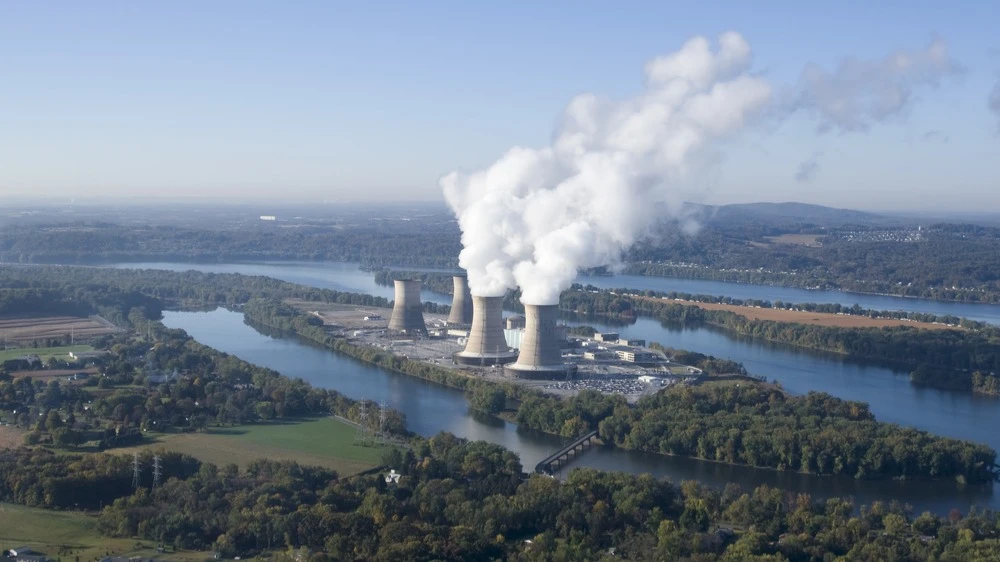
The U.S. will allocate $1 billion to restart the former Three Mile Island Unit 1
The Trump administration will provide Constellation Energy with a $1 billion loan to restart the shuttered Three Mile Island Unit 1 nuclear power plant in Pennsylvania, now called the Crane Clean Energy Center, CNBC reports. The plant, shut down in 2019, is set to start generating electricity again in 2027 - as part of an agreement with Microsoft to power local data centers. The loan will cover most of the project's $1.6 billion cost and, according to the U.S. Department of Energy, will lower the cost of electricity for customers of PJM Interconnection, a grid operator serving more than 65 million people in 13 states.
The decision fits into the new federal strategy to support nuclear power: the Department of Energy has already allocated $1.5 billion to restart the Palisades nuclear power plant in Michigan, and NextEra in Iowa has similar plans, the channel recalls. Rising demand due to the rapid development of AI data centers is pushing authorities to find new energy sources, CNBC explains. Constellation, the largest operator of nuclear power plants in the US, will receive its first funds in 2026; its shares rose more than 2% after the announcement.
US poised to approve first shipments of advanced AI chips to Saudi Humain
The U.S. plans to authorize for the first time shipments of high-performance AI chips to Saudi company Humain, Bloomberg reports. The decision will be part of a broader US-Saudi agreement on artificial intelligence amid a meeting between Crown Prince Mohammed bin Salman and Donald Trump. Washington intends to "favorably" consider applications to export chips to Saudi Arabia, which will help not only Humain but also US companies working on AI projects in the region, the agency points out. The volume of possible approvals is estimated at tens of thousands of chips.
This would be a win for Nvidia, AMD and other manufacturers looking to strengthen their position in the fast-growing Middle East AI market, one of the key fields of competition for the US and China. The U.S. has previously issued similar licenses for hyperscale projects in the UAE, and Humain is awaiting approvals for Nvidia, AMD, Qualcomm and Groq chips. The U.S. Commerce Department and Humain did not comment.
China suspends Japanese seafood imports again
China has notified Japan of a renewed suspension of Japanese seafood imports, citing the need to monitor the discharge of treated water from the Fukushima nuclear power plant, Bloomberg reports. The ban comes months after it was lifted and reflects the lack of progress in recent talks between the countries. Relations deteriorated after Japanese Prime Minister Sanae Takaichi announced the possible involvement of Japanese troops in the event of a crisis in the Taiwan Strait, a move that Beijing strongly condemned.
The economic consequences are already visible: imports of Japanese seafood to China have almost come to naught - only $500 thousand in the first nine months of 2025. Beijing has also warned citizens against traveling to Japan, leading to the cancellation of group tours and a drop in travel and retail stocks. State-owned firms have warned employees against traveling, increasing pressure on bilateral economic ties.
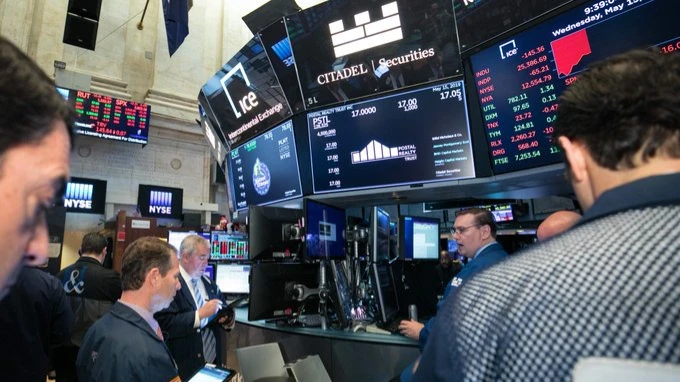
What's in the markets
- The broad Japanese Topix index declined by 0.24%. Benchmark Nikkei 225 - by 0.57%.
- Hong Kong's Hang Seng Index was down 0.5 percent, while mainland China's CSI 300 index was up 0.38 percent.
- In South Korea, the Kospi index fell 0.99 percent and the Kosdaq fell 1.08 percent.
- Australia's S&P/ASX 200 was down 0.25 percent.
- Nasdaq 100 futures were down 0.27 percent, the S&P 500 was down 0.17 percent and the Dow Jones Industrial Average was down 0.12 percent.
This article was AI-translated and verified by a human editor