Hong Kong has surpassed Switzerland to become the largest offshore hub
The main driver for the Asian megacity has been the influx of assets from the Chinese mainland

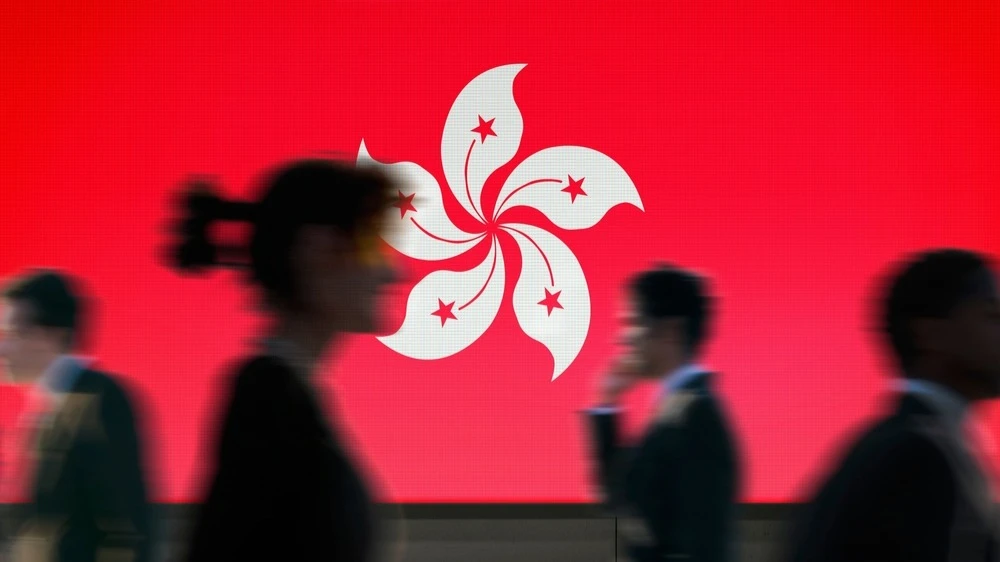
Hong Kong has overtaken Switzerland to become the world's top center for cross-border capital allocation / Photo: Rawpixel.com / Shutterstock
Hong Kong, having overtaken Switzerland for the first time in history, has become the world's largest center for the management and placement of foreign assets. This trend is unlikely to change in the near future, as Asian financial hubs are growing faster than European ones, according to a report by the Boston Consulting Group (BCG).
Details
The volume of offshore assets placed in Hong Kong in 2025 increased by 10.7% to $2.95 trillion, according to BCG's Global Wealth Report. This surge was fueled by capital inflows from China and an active stock market, where technology giants with a heavy weighting in the indexes showed strong growth and large IPOs took place. Thus, Hong Kong has surpassed Switzerland, which holds $2.94 trillion in overseas capital, by a small margin, the report said.
"With flows from the mainland accounting for more than 60% of assets under management, Hong Kong is reinforcing its role as China's gateway to global markets, although this same concentration of capital closely links its future trajectory to economic and regulatory developments on the mainland," the report said.
According to BCG forecasts, the inflow of foreign capital to Hong Kong and Singapore will continue to grow by about 9% annually until 2030. By comparison, the average growth of Switzerland by this indicator for the same period will be about 6%, experts expect. BCG analysts also predict that the rapid accumulation of wealth in Asia will increase the gap between Hong Kong and Switzerland to almost $ 600 billion by 2030, specifies Bloomberg.
Overall, cross-border capital deployed globally grew 8.4% last year to $15.7 trillion, driven by strong markets and investors' growing desire to spread their savings across countries. At the same time, the lion's share of funds flowed to the top 10 financial havens of the planet, which further increased their concentration, BCG added, noting that two poles are emerging on the global stage: Singapore and Hong Kong for Asia, and Switzerland, the United Kingdom, and the United States for the Western Hemisphere.
What's next
In an effort to regain its attractiveness as an offshore hub, Hong Kong, which lost some of its appeal due to years of pandemic-related restrictions and political changes, is now actively promoting low taxes, rich human resources and thriving capital markets among the global elite, Bloomberg writes. This strategy is working: geopolitical tensions, including instability in the Middle East, are prompting the wealthy to diversify assets in favor of Asia, the agency notes.
But despite a more modest growth rate last year, diversification could be Switzerland's key advantage as a leading offshore hub - as it attracts clients from all corners of the globe, while Asian hubs are largely dependent on the rise of China's economy, BCG said. "Geopolitical uncertainty confirms Switzerland's role as a key global savings center, attracting protective capital flows from more volatile regions such as the Middle East," the analysts said.
Wealthy people are seeking to transfer their assets from the Middle East region to Switzerland amid the ongoing conflict in the Middle East, bankers and financial advisers told Reuters. Along with this increase in interest in asset allocation by clients from the Middle East are also recorded in Hong Kong, writes Bloomberg. To maintain this momentum, Hong Kong plans to extend tax incentives to more asset classes, said Secretary for Financial Services and Treasury of Hong Kong Christopher Hui.
"What ultimately matters is proximity to the customer," BCG noted.
This article was AI-translated and verified by a human editor