China benefits from loss of confidence in the US. What should investors do according to Ray Dalio?
The famous investor believes that the U.S. is losing its status as a world power capable of defending its interests, while China is increasing its influence and capital
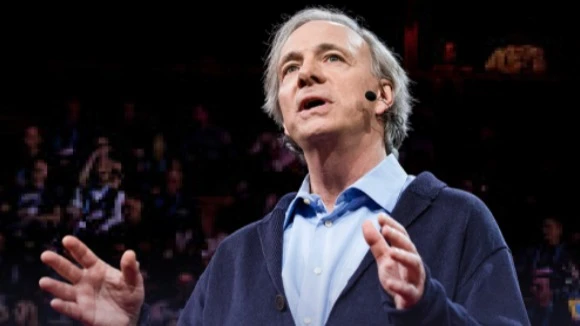
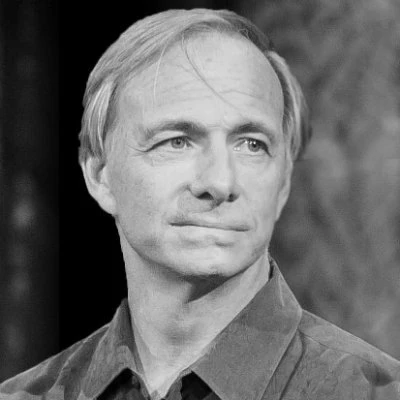
Dalio advises investors not to try to guess the outcome of a war or the exchange rate, but to build a more resilient portfolio in advance / Photo: principles.com
The U.S. and Israeli war with Iran has not yet become such a shock to the markets that would make investors reconsider their approach to asset valuation, Ray Dalio, founder of Bridgewater Associates, said in an interview with Bloomberg: investors are still primarily looking at future cash flows and corporate profits. In his view, the conflict has become a point at which other countries are assessing not only U.S. strength but also their own place between Washington and Beijing. And how should an investor act in such a situation?
War as a test of American assurances
For Dalio, war with Iran is not only a source of market volatility, but a test of U.S. security guarantees. Exchanges can quickly recoup initial fear if investors see no threat to corporate profits and future cash flows. But for U.S. allies, a different question matters: whether Washington can deliver results in a military crisis and confirm that its defenses still carry the same weight.
"We are faced with a situation where the whole world is watching closely and giving its assessment of what is happening. Is the United States in principle capable of winning this war? And this has enormous consequences, because for many states it is a question of their key alliances. Why do we even need these bases overseas? The U.S. has about 750 bases in about 80 countries around the world. And all this military presence is mainly based on the belief that in case of an emergency, the U.S. will definitely come to the rescue and protect them. And right now, that perception is starting to change
China as a new point of attraction
The weakening confidence in U.S. defense increases the main geopolitical risk for Dalio: the vacuum around the United States is being filled by China. States are beginning to construct relations with Beijing as a power, without which strategic decisions can no longer be made. Dalio compares this model to the historical system of tribute relations (dependence on more powerful neighbors and payment of tribute), and sees it as one of the signs of a changing world order.
"Such a tribute system is not at all an oppressive or totalitarian form of control. It is much more based on the fact that a more powerful power is obliged to treat less powerful states with dignity and fairness. And those, in turn, undertake to recognize the authority of the stronger neighbor. And within the framework of this model, they should interact in an absolutely harmonious way"
Exports, assets and the yuan: what China's strength rests on
Dalio attributes China's growing influence to economic power rather than military expansion. He suggests looking at export earnings, accumulated financial assets, rising living standards and China's competition in various fields - including artificial intelligence and robotics. According to Dalio, the country is building up a resource base for a long rivalry with the United States.
"The notional 'Corporation of China' is now making colossal amounts of money. In other words, if you look at the volume of their export earnings and the amount of financial assets they have already accumulated and continue to accumulate - these amounts are simply enormous"
This economic foundation, according to Dalio, will not only manifest itself in trade in goods or competition between companies. The next level is the financial infrastructure.
"There will also be a major leap in the use of the yuan as a global currency. It will not displace the dollar overnight, but its share in international settlements will grow rapidly"
What an investor should do
Dalio advises investors not to try to guess the outcome of a war or the trajectory of currencies, but to build a more resilient portfolio in advance. When military alliances, currency calculations and technology cycles are changing simultaneously, it's important to guard against mistakes in basic assumptions: which currency to hold capital in and how widely to spread risk. Liquidity, according to Dalio, provides room for maneuver, while diversification reduces dependence on a single scenario.
"When talking about diversification, I definitely include gold as a protective monetary asset, because there are big questions about the future of fiat money itself. And this is not at all a matter of tactical speculation. In other words, I don't think that the average person should be constantly rushing in and out of the market based on what I say or what others say. People should have a calibrated strategic asset allocation structure that they will generally adhere to and that provides an optimal balance of return and risk"
This article was AI-translated and verified by a human editor