How small-cap Backblaze is taking on the tech giants in the cloud storage market

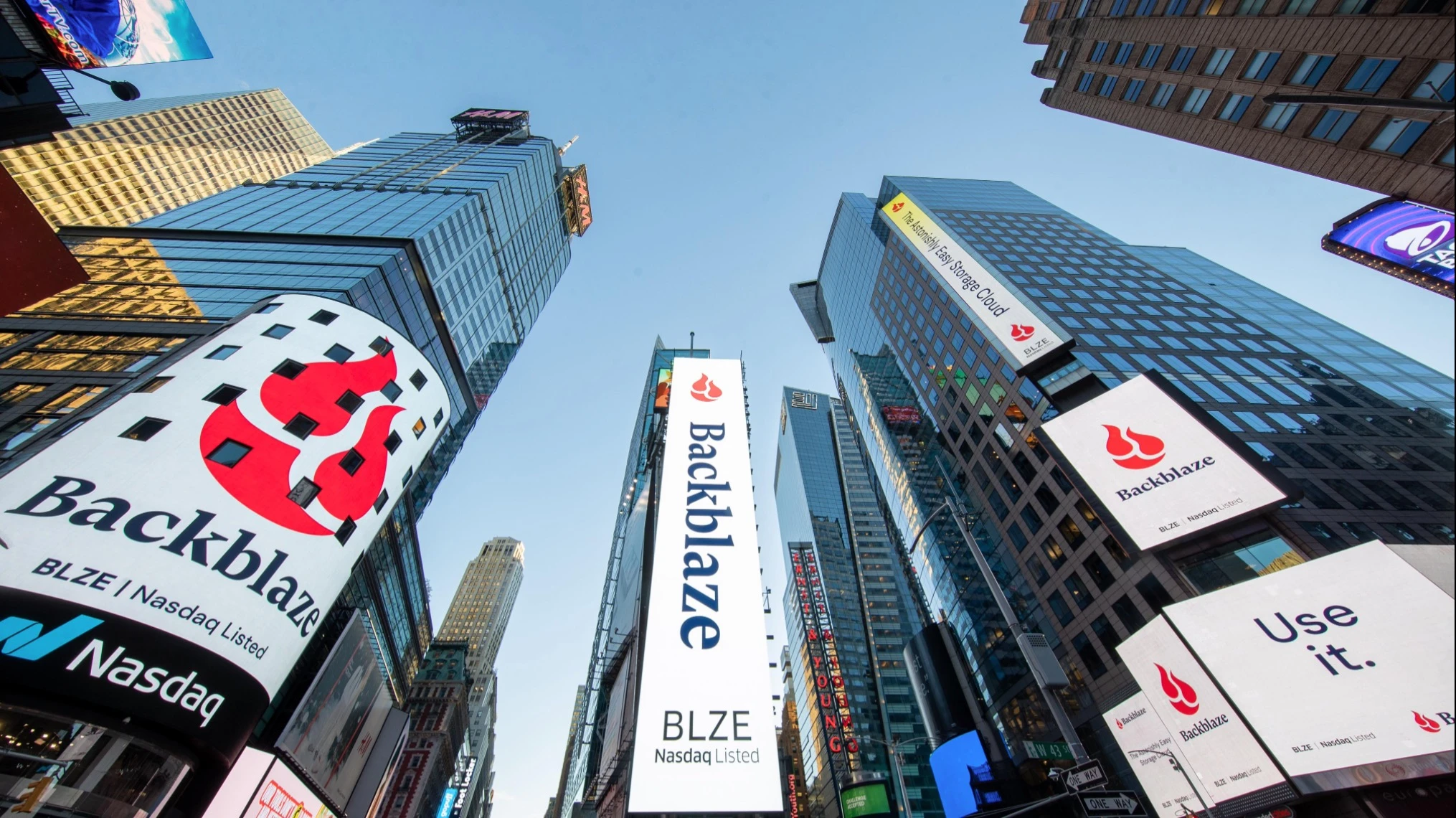
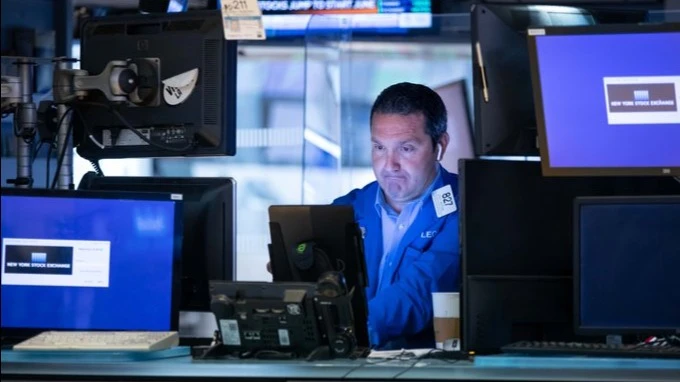
Backblaze positions itself as an infrastructure provider for the AI market / Photo: Nasdaq Exchange / X
The high cost of cloud services is a headache for almost every data-intensive business. Palo Alto-based backup service Backblaze ran into the same problem several years ago. It responded by building its own cloud using inexpensive hard drives, declaring a price war on market leaders Amazon Web Services, Google, and Microsoft, before radically changing its business model. Backblaze is now a cloud storage provider for AI with a contract from CoreWeave. Its stock is up 300% year to date. Is it worth the price?
Undercutting the hyperscalers
In 2007, in Palo Alto, the unofficial capital of Silicon Valley, the founders of start-up Backblaze were assembling and testing Storage Pods by hand in a small apartment. These were the company’s first server enclosures designed to pack in large numbers of hard drives for data storage.
“We started talking about how everything was going digital, no one was backing up their data, and that was going to be a big problem,” Backblaze cofounder and CEO Gleb Budman, who was born in the Soviet Union and emigrated to the U.S., recalled on GigaOm’s CEO Speaks podcast.
The business idea was to create an extremely affordable service that would automatically save users’ files to the cloud. But neither Amazon S3 nor Dell hardware would have allowed Backblaze to keep prices low; the costs would have had to be passed on through its own prices, Budman noted.
The founders ultimately decided to build the service using hard drives instead of more expensive flash memory. The idea proved so popular that in 2015, the Storage Pod evolved into a new business line: the B2 Cloud Storage service.
Look, I love you for backing up all my employee laptops and desktops, but I have all these other storage needs. Help me with all of this, you know, help me with my archiving, help me with the application storage that I need. I’ve got this media content. I need to manage it somehow. Help me with all this data.

B2 offered storage at “about one fifth the price of the traditional cloud providers,” as well as free egress. That became the service’s calling card. Users often based their budgets on the cost of storing each gigabyte, overlooking the separate fees hyperscalers charge whenever data is retrieved from the cloud.
Backblaze set out to disrupt the hidden download tax, i.e., the egress fees underpinning the economics of cloud platforms.
The company undercut rivals not only through its infrastructure but also through its proprietary software. It also focused on object storage without devoting resources to computing capacity, as companies such as Nebius and CoreWeave do. Nor did Backblaze invest in additional services such as file synchronization and collaborative editing of the kind offered by Google Drive and Dropbox.
The supposed divide between hyperscalers’ expensive flash storage and niche providers’ inexpensive hard drives is somewhat contrived, according to AI researcher and Holon Institute of Technology lecturer Mikael Gorsky. Data archives in any cloud are stored on hard drives, while flash memory provides the maximum processing speeds and near-instantaneous response times required by databases and virtual machines. Machine-learning systems therefore use different types of memory simultaneously, giving them access to a broader range of capabilities.
Taking the plunge into AI
Backblaze went public in 2021. It sold 6.5 million shares on the Nasdaq at $16 apiece, the midpoint of its marketed range, raising $100 million. Such a modest offering was unusual for a tech company in the early 2020s. CNBC described the IPO as a throwback to a time when companies valued at less than $1 billion routinely went public to raise capital and build their profile.
Backblaze shares gained 24% on their first trading day and another 12% on the second, climbing to $22.31 apiece and giving the company a market capitalization of around $650 million. “Our IPO was a great day and the realization of 14 years of hard work by our team,” Budman wrote in a post on the company’s blog.
In 2022, however, inflation accelerated to a multi-decade high, prompting the Fed to raise interest rates aggressively and bringing the era of cheap pandemic-era money to an end. The return to normality undermined the business models of pandemic beneficiaries, many of which were tech companies. The IPO boom of the previous two years also ended in 2022. Newly public stocks and unprofitable companies were hit hardest. Backblaze fell into both categories.
In a post marking the anniversary of the IPO, Budman noted that the company’s stock had plunged 70% since its market debut, posing a challenge for shareholders and employees.
“Obviously I wish the last 10 months would have gone differently in the markets, who doesn’t?” Budman wrote, while making clear that he did not regret the decision to go public.
Before going public, Backblaze had raised just $3 million and issued $10 million of convertible notes. This also ran counter to the approach taken by many tech companies, which aggressively drove up their valuations through funding rounds. Budman attributed the modest fundraising to the founders’ desire to retain control of the company.
Backblaze did, however, aggressively grant stock options to key engineers to retain them for the long term, German Kaplun, cofounder and head of strategy at TMT Investments, told Oninvest. TMT Investments was an early Backblaze backer. The practice continually diluted existing shareholders, but TMT Investments accepted that risk because the start-up appeared attractive.
Backblaze used the IPO proceeds to radically overhaul its business model. At the time of the offering, B2 generated only a third of total revenue but was growing quickly, with its revenue up 60% year over year in the first half of 2021. The backup business, by contrast, was losing momentum, growing 12% over the same period. Client retention was higher for B2 than for backup, as was average annual revenue per user.
In 2025, Backblaze launched B2 Overdrive, a high-speed storage service for demanding workloads. Then in 2026, it introduced B2 Neo, a cloud storage service for neoclouds that provide computing capacity for AI. Neoclouds can integrate the resources under their own brands and resell them to clients at their own prices, a model known as white labeling. From then on, while retaining its other business segments, Backblaze began positioning itself as an infrastructure provider for AI.
A big client
In summer 2026, Backblaze signed a five-year contract with neocloud CoreWeave worth a total of $335 million and covering an undisclosed number of exabytes of storage. One exabyte is equal to 1 million TB. Actual payments will depend on the capacity CoreWeave leases. If CoreWeave takes up all the capacity covered by the contract in equal annual increments, Backblaze will receive $67 million annually from the neocloud. Until now, Backblaze’s entire B2 cloud segment had generated only slightly more, at $79.9 million in 2025.
Backblaze is also using incentives to retain this key client. The contract includes warrants allowing CoreWeave to purchase 4.2 million Backblaze shares, with expiration dates in 2032 and 2035. Vesting will be tied to contracted capacity levels. If the neocloud meets the conditions, it will be able to purchase the stock at $7.60 per share, less than half the current price. Existing shareholders will again face dilution, however.
“Backblaze found itself in the right place several years before that place became obvious,” Kaplun argues. Until recently, it was viewed as a data-storage and backup company; now it is becoming part of AI infrastructure, he added.
The AI race has opened a window for companies such as Backblaze to grow their revenue, according to Gorsky. He explained that open protocols and low prices would easily win over AI developers, while white-label offerings could appeal to neoclouds.
However, he acknowledged that Backblaze is not selling proprietary know-how. Competition in the cloud market is fierce even outside of the hyperscalers, with many small and midsize players offering similar products and prices. Moreover, Backblaze tightened its pricing policy in autumn 2023, limiting free egress for B2 clients to three times their average monthly storage volume.
B2 currently charges from $6.50 per month for 1 TB of capacity, versus $6.00 for IDrive e2 and $7.99 for Wasabi. Larger rival Cloudflare R2 has made data egress entirely free.
'Amazing' results and real risks
Budman called the company’s latest quarterly results “amazing” because of its progress in AI, despite a 2% decline in backup revenue. “2Q was an amazing quarter for Backblaze,” he remarked.
Backblaze generated second-quarter 2026 revenue of $42.7 million, up 18% year over year. B2 Cloud Storage accounted for more than half of that, at $26.6 million, with the AI-focused segment growing 34% year over year.
The first quarter of 2026 showed a similar pattern: the AI segment grew 24% year over year, while the company reported stagnation in backup.
The management has raised its 2026 revenue outlook to $172-174 million from $161.5-163.5 million and its adjusted EBITDA margin guidance to 27-29% from 23-25%. Backblaze expects B2 revenue to grow 40% next year and backup revenue to decline 3%.
Despite strong financials, Backblaze remains unprofitable, although the net loss is narrowing. It stood at $5.1 million, or $0.08 per share, in the second quarter. One reason is that almost all the company’s cash is absorbed by capex and payments on debt, at $6.6 million and $5.8 million, respectively, in the first half of this year. Its operating cash flow totaled $13.8 million in the same period.
The situation will not change in the near term. On the earnings call, CFO Marc Suidan said capex would rise to 55-65% of revenue in the second half of the year, citing upfront investment in the capacity needed to fulfill signed contracts. The gross margin will temporarily decline by several hundred basis points.
Backblaze has two vulnerabilities that retail investors should watch.
The first is its current dependence on a single key client, CoreWeave. Backblaze secured the CoreWeave contract, but Citizens analyst Rustam Kanga doubts the company can sign further deals of a similar scale without warrants and the resulting shareholder dilution.
The company is clearly trying to mitigate that risk. On the second-quarter earnings call, Budman said Backblaze was in talks with other cloud-infrastructure providers. The company reported a 57% increase in the number of large clients – those with contracts worth at least $50,000 – and a 67% rise in annual revenue from this group. Backblaze has four other large deals with undisclosed clients worth more than $500,000, while B2 Overdrive has signed a “seven-figure” contract with a leading AI model developer that was also not identified.
The second vulnerability is that Backblaze is unprofitable and plans to continue investing in sales and marketing, infrastructure, and development to remain competitive, Needham & Company financial analyst Mike Cikos noted. If its growth slows, it may need additional investment. That could delay its plans to achieve profitability and weigh on the stock, he warned.
Backblaze did not respond to a request for comment from Oninvest.
Despite these concerns, eight of the 10 analysts covering Backblaze have a “buy” call on the stock. Following the latest earnings release, Oppenheimer raised its target price to $25 per share from $15 per share, B. Riley Securities to $24 per share from $16 per share, and Needham & Company to $23 per share from $14 per share. The consensus target price is $19.71 per share.
Backblaze shares closed Wednesday at $19.34 apiece.