"Intuition Acts as a Veto": Herman Kaplun's Investment Rules

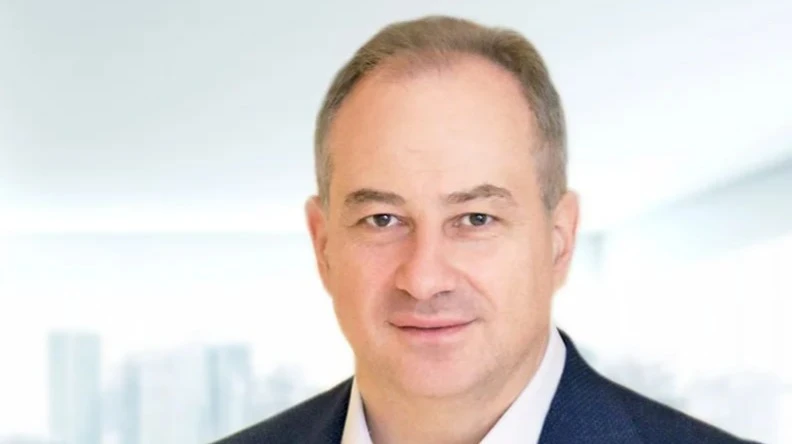
German Kaplun, co-founder of TMT Investments PLC
German Kaplun—an entrepreneur and investor, co-founder and director of strategic development at TMT Investments PLC, and a man once dubbed the “Indiana Jones of finance”—spoke with Oninvest about how, when, and where he prefers to invest.
What do you invest in—and why that in particular?
We invest in established technology companies with rapidly growing revenue and the potential to become global leaders. Our primary focus is on subscription-based B2B software: AI products for business, fintech, marketplaces, cybersecurity, data analytics, and digital health—the intersection of medicine and technology.
The term “SaaS” sounds less trendy today than it did a few years ago, but we’re not chasing trends anyway. The subscription model offers something you’ll find almost nowhere else: recurring revenue that can be measured, and scalability without a proportional increase in costs. In fact, the entire wave of AI companies in recent years has been built on this exact model—it’s the product’s features that have changed, not the business model.
In addition to the market segment and the product, three things are important to us: a strong founding team; the product’s global scalability; and a clear exit potential. Everyone is talking about AI these days, and it’s in almost every presentation. So for us, the question isn’t whether a company has AI, but whether it delivers measurable results—cost savings or revenue—to the customer. If the product would perform roughly the same without AI, that’s marketing, not technology.
Do you remember your first investment? How did it go?
I remember it, but there’s no point in discussing it as a case study—everything has changed since then: the market, valuations, the pace of change, and the very nature of the products. The lessons from that time are almost irrelevant today. What remains relevant is the set of questions that need to be answered before a deal. There are many of them, but first and foremost, we look at the product and its actual demand, the size of the market and its current dynamics, the business’s economics, and the team. All of these factors are equally important, and none of them is decisive on its own: a strong team in a shrinking market won’t deliver results, and a growing market won’t save a product that nobody needs.
What would you definitely never buy again?
Never say never. Technology changes so quickly that what seemed pointless yesterday becomes obvious tomorrow—and vice versa. An investor’s list of “off-limits” industries usually means that they simply haven’t updated their view of the world.
The only thing we really stay away from is what we don't understand ourselves. Not because there's no money to be made, but because we wouldn't be able to help such a company and wouldn't be able to tell when something went wrong.
Who do you trust when making decisions?
For ourselves and our partners. The fact that a very large player is getting involved in the deal doesn’t mean anything to us in and of itself. Yes, they have more money. But we don’t know why they got involved, and there could be many reasons: synergy with one of their portfolio companies, a different investment horizon, a desire to please someone on the board or their own investor. Anything. We have our own criteria and our own investment size. Relying on major players as validation is a way of accepting someone else’s decision without understanding its logic.
If you could invest in only one idea for 10 years—what would it be?
A single idea carries a very high risk: there’s no room for error. Given that scenario, I wouldn’t go with a venture capital firm at all—I’d choose a large public company instead. For example, Palantir: impressive growth rates and a business model that makes it hard for customers to walk away. Or CrowdStrike: the need for cybersecurity will only grow, no matter what happens to other budgets. This isn’t a buy recommendation, but an illustration of the principle: over the long term, what matters isn’t the idea itself, but how hard it is for a customer to walk away from you.
When was the last time you made a mistake—and what did you learn from it?
Every investor makes mistakes on a regular basis, especially if there are many companies in the portfolio. This isn’t an exception—it’s part of the model. Recently, I was once again reminded that deviating from one’s own strategy rarely ends in success. We sometimes deliberately engage in such experiments—using small amounts—to get an inside look at a new niche. But the success rate there is consistently lower, and this is confirmed time and again.
Are you more of a strategy person or an intuitive person?
It’s about a combination, but with a clear hierarchy. We operate based on a strategy—it determines what we’re looking at in the first place. Intuition acts as a veto power in this process: if a deal looks good on paper but something about it really doesn’t sit right with us, we won’t go through with it. It doesn’t work the other way around: intuition can’t push through a deal that doesn’t fit our strategy. Experience shows that this asymmetry is the right approach.
Which of these well-known investors do you identify with most?
I’m tempted to say Buffett—and in some ways, that’s true. We also invest through a public company, and we also have a long-term horizon, though not as long as his. Numbers are important to both of us. But that’s where the differences begin: he’s in traditional business, we’re in technology; he invests in mature companies, we invest in startups. Because of the stage of development, we look at completely different things in financial statements. He focuses on the stability of cash flow; we focus on speed and whether we can replicate growth.
What does an investor fear when the screen goes dark?
Silence. Not bad news—that can be discussed and responded to. It’s scary when there’s no information at all. Bad news from a startup always arrives late, and the worse things are, the longer the delay. When a founder stops sending updates, it almost always means something worse than the worst update he could have sent.
What is the most frustrating thing about the investment environment?
A lack of proper transparency. The venture capital market bears no resemblance to the public market—neither in terms of deal terms, revenue, nor profits. It’s nearly impossible to find reliable information about another company online, and the market is driven by rumors and hearsay.
That said, I understand where this comes from: early-stage projects have to protect themselves, and going public poses a real risk for them. But the price of this secrecy is that market valuations take on a life of their own.
Do you have a "lucky" investment? Something you hold onto, even when there's little logic behind it?
No—and I hope it never does. Having a good-luck charm in your briefcase usually means that a person isn't ready to admit a mistake and comes up with an emotional explanation instead of a solution.
What did you spend the profits from your most successful deal on?
We are a publicly traded company, and when we make significant returns, we pay dividends—not annually, but as circumstances warrant. But most of the profits are reinvested into the portfolio and new investments. That, in fact, is the whole point of the model: one successful deal finances the next ten attempts, most of which won’t work out. There’s simply no “take-it-and-spend-it” stage here.
What would have to happen for you to cache everything?
World War IV, probably. But that’s not the answer either—cash loses value too, just more slowly and imperceptibly. Cashing out completely isn’t a form of protection; it’s a bet that you’ve timed it right. You always need to strike a balance.
Do you have a guilty pleasure when it comes to investing?
This doesn’t apply to venture capital, but in the public market—yes, I do pay attention to seasonality and traditional periods of growth and decline. Historically, July through September isn’t usually the best period for tech stocks. I realize this is more like a superstition than actual analysis, and it doesn’t influence my decisions regarding my venture capital portfolio in any way. That’s why I feel a bit guilty.
This article was AI-translated and verified by a human editor