How soon will the AI bubble burst? Will France infect the Eurozone? What's wrong with Levi's jeans?

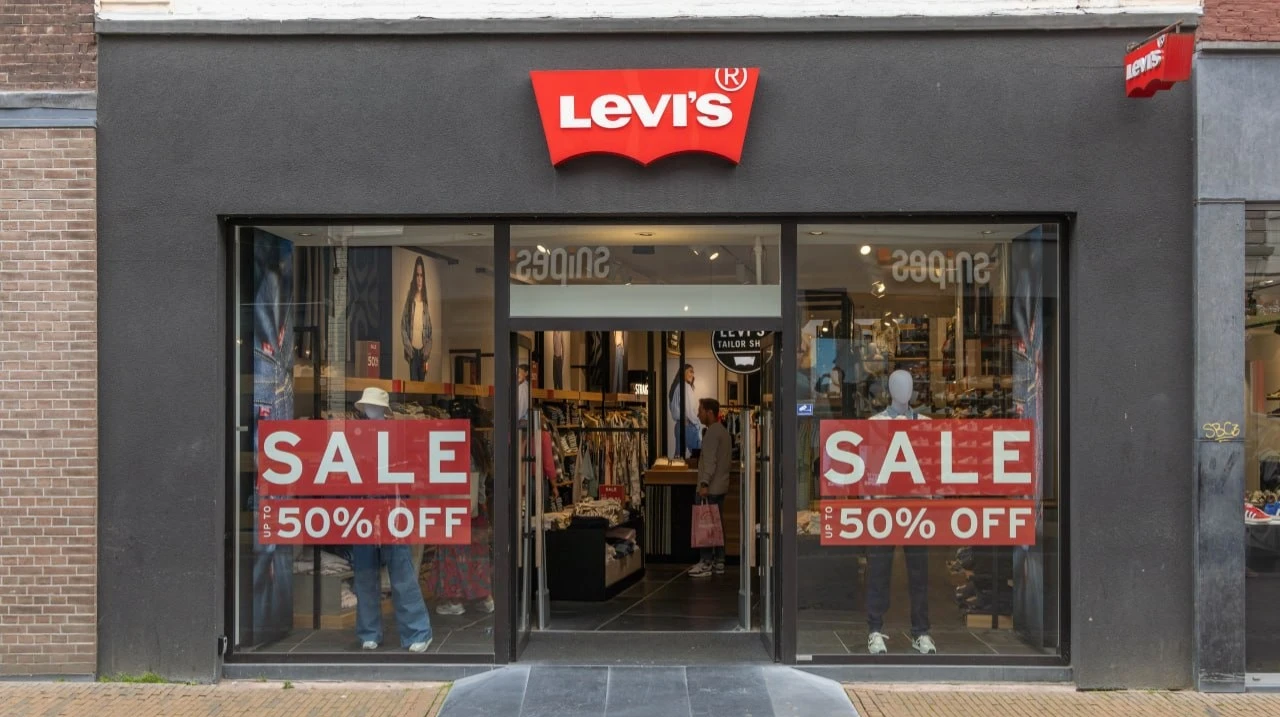
The flagship of the American way of life is facing trouble: Levi Strauss's stock price and direct sales have declined due to changing fashion trends. PixelBiss / Shutterstock.com
This week, as has become traditional, the main bogeyman and scarecrow was artificial intelligence (we still refer to it in the old-fashioned way, despite the risk of becoming enemies of the White House). Only this time, the discussion wasn’t about existential threats (AI will destroy humanity), but rather economic ones: AI is not so much a curse as it is a bubble.
For example, billionaire Ray Dalio has once again warned that the AI market is a classic bubble, steadily approaching the point of bursting—since AI projects are financed by massive amounts of debt, and further interest rate hikes do not bode well. The quote of the week probably belongs to Dalio himself.
"Everyone says, 'I'm worth $1 billion,' but try spending that money. To spend it, you have to sell off your wealth to get cash—and that's exactly where the bubble usually bursts."
Joachim Clement, head of market strategy at the British bank Panmure Liberum, predicts that the much-discussed AI bubble will burst in 2027–28 and trigger a severe stock market crash — specifically, the S&P 500 index could plummet by 36% (though this is the most pessimistic estimate). Analysts at BofA also point to clear signs of a bubble, while noting that the dire consequences can still be avoided with the help of equity derivatives. Be that as it may, OpenAI’s revenue ultimately fell $20 billion short of expectations.
Secret Cargo
While the U.S. and China battle for supremacy in the AI race, plain old human negligence still reigns supreme: a UPS employee got distracted and missed a warning letter stating that a certain secret shipment must under no circumstances be routed through Hong Kong (only through Taiwan). As a result, the shipment—which consisted of a cockpit canopy and a hatch from the world’s most advanced fighter jet, the F-35—ended up in China. UPS shares fell 0.9% following the incident. The Pentagon has launched an investigation, which has yet to yield any results—likely because the agency is currently too busy preparing for a public execution.
While details of the latest U.S. weapons are making their way to China, another flagship of the American way of life has run into a bit of trouble: Levi Strauss’s stock price fell 3%, and direct sales to consumers declined by 1% in the U.S. and 2% in Europe. The reason is a shift in trends: the advertising campaign focused on baggy jeans, while shoppers have switched to low-rise styles. However, Wall Street analysts still recommend buying the company’s stock—fashions come and go, but the timeless appeal of jeans remains.
The Crisis in France
While high school students in Paris are storming the Bastille, France is facing a different set of problems. The debt crisis is weighing on banks, government bonds are undergoing a sharp sell-off, which is weakening the euro, economic growth is falling short of expectations, the financial sector’s appeal is waning, and political fragmentation is preventing serious consideration of necessary reforms. Frédéric Ducrozet, Head of Strategy and Macroeconomic Research at Pictet Wealth, analyzed the situation exclusively for Oninvest and concluded that the eurozone as a whole is not yet facing a crisis.
Nevertheless, nearly €215 billion in French investment-grade corporate bonds (representing 38% of the corporate bond market) are now considered less risky than government debt securities with comparable maturities. This amount has increased nearly 18-fold compared to the beginning of 2026.
What to Read This Weekend
This weekend, be sure to check out the column by investor and entrepreneur Mark Zavadsky, whose highly engaging interview we recently published. He writes about the close connection between poker and business and, in the first installment, explains how to face off against the ideal opponent.
Anna Krasnova read the book *Millionaires Everywhere*, which is, in a sense, dedicated to those very ideal opponents—the countless millionaires among us whose names are not widely known and whose sources of wealth seem mysterious at first glance. The authors of this research book, in essence, should have used an epigraph from *The Golden Calf*: “And perhaps a millionaire is sitting right now in this so-called summer garden at the next table, drinking a forty-kopeck ‘Tip-Top’ beer.”
And to end the week on an optimistic note, read this piece by the economist and forecaster Nouriel Roubini. He argues that despite all the shocks, risks, and crises, the global economy is generally doing quite well, “the tailwind of technology remains strong,” and China and the U.S. will eventually reconcile—well, one can’t help but want to believe a man who once wrote a book about the world’s major meta-threats.
This article was AI-translated and verified by a human editor