Huang still holds $135 billion worth of Nvidia stock. Why is this worrying investors?

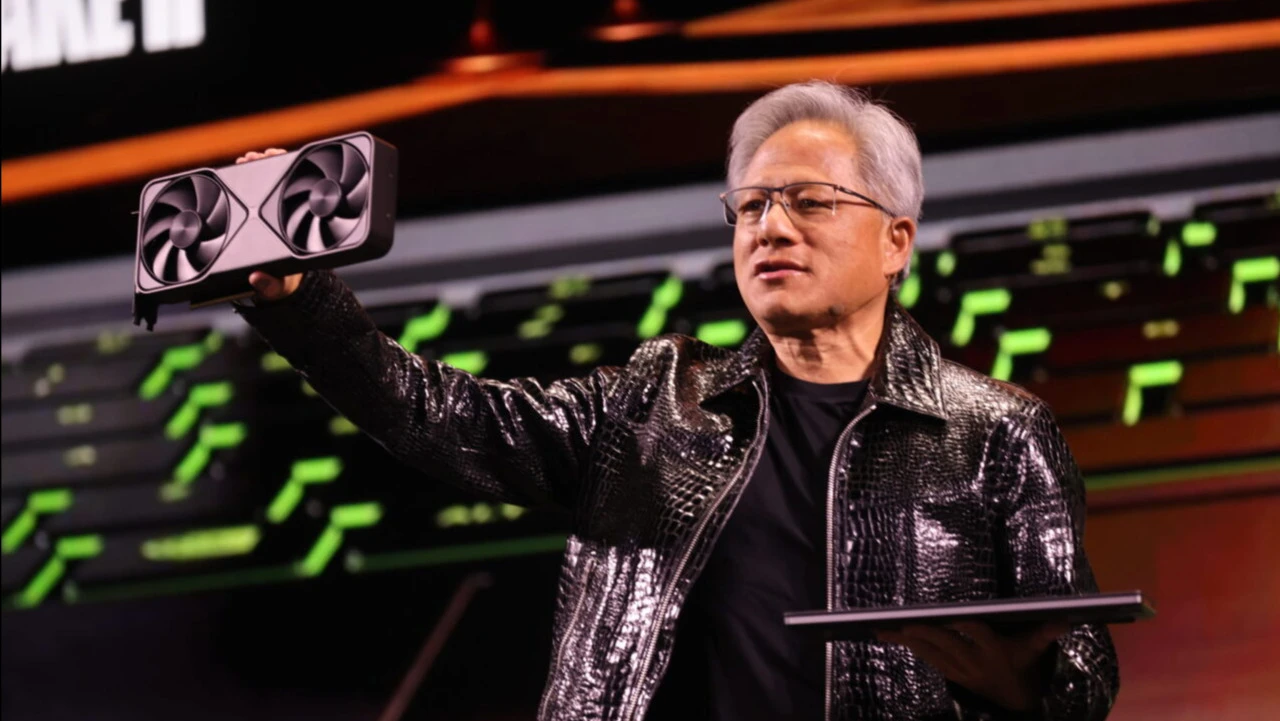
Jensen Huang owns approximately 812 million shares, or about 3.5%, of the AI chip manufacturer / Photo: Nvidia
Jensen Huang’s departure as CEO of Nvidia has raised questions among investors about the fate of his $135 billion stake in the company, according to the Financial Times. Over his 33 years at the helm of the company, Huang has reduced his stake only marginally, but he may now begin a large-scale sell-off that could put pressure on Nvidia’s stock price, the publication believes. Other well-known founders have acted similarly after stepping down from their companies.
Details
Over his 33 years at the helm of Nvidia, Jensen Huang has sold approximately $3 billion worth of the chipmaker’s shares, according to data from Capital IQ and company documents cited by the Financial Times. As a result, he remains Nvidia’s largest individual shareholder: he owns about 812 million shares worth $135 billion. His stake in the company is about 3.5%.
However, the FT suggests that the situation could change following Huang’s departure as CEO. The publication notes that other founders of major companies have often quickly sold off their stakes after being ousted. For example, Steve Jobs sold virtually all of his Apple shares within a few months of stepping down in 1985. Uber co-founder Travis Kalanick sold his stake, worth more than $2.5 billion, about two months after the end of the lock-up period in 2019. Wynn Resorts founder Steve Wynn completely divested his holdings in the company, worth a total of $2.1 billion, a few weeks after stepping down in 2018.
A large-scale sale of shares by Huang could pose a problem for investors. His stake is equivalent to roughly six full days’ worth of trading volume in Nvidia shares. Therefore, the sales will have to be spread out over several months to avoid putting pressure on the stock price, the FT explains.
For most of his career, Huang sold shares annually in amounts that rarely exceeded a few hundred million dollars. In 2024, the volume rose to $713 million, and in 2025, it reached $1 billion. So far in 2026, he has not sold a single share. In January, at the World Economic Forum in Davos, Huang said that shortly after Nvidia’s IPO, when the company was valued at $300 million, he sold part of his stake to buy his parents a Mercedes S-Class. “It’s the most expensive car in the world,” he said. “They regret it.”
What could stand in Huang's way?
Huang's ability to sell his Nvidia shares may be limited due to the prospect of lengthy legal investigations into his relationship with Alice Huang — the former head of the Singapore-based technology company Megaspeed International, which leases data center computing power and has become one of Nvidia’s largest buyers of AI chips in Asia. On November 6, The New York Times reported that a memo circulating among high-ranking officials in the Donald Trump administration contained information about Alice Huang’s recruitment by Chinese intelligence to gather information on the head of Nvidia.
Nvidia’s release of its quarterly earnings report on Tuesday, November 17, could allow Huang to begin selling shares, according to lawyers interviewed by the FT. However, for this to happen, the former CEO must not possess any material negative information about the company that is not yet known to investors. As long as Huang has such information, he cannot sell his shares. “Huang will be able to start selling shares as soon as any material negative non-public information that he obtained while serving as CEO is disclosed,” Jesse Fried, a corporate governance expert at Harvard University, explained to the FT.
Another factor highlighted by the FT is the structure of his shareholdings. Huang holds his shares both directly and through family trusts and holding companies. The vast majority of his stake is held in entities that he controls jointly with his wife, Lori Huang. Reports of the former Nvidia executive’s alleged extramarital affairs have sparked speculation about the future of their marriage, the FT warns.
Unlike other tech billionaires, such as Elon Musk and Larry Ellison, Huang has not taken out loans secured by his shares. Nvidia prohibits its executives from using their shares as collateral for loans.
This article was AI-translated and verified by a human editor