Key Starship tests did not go as planned. SpaceX shares fell

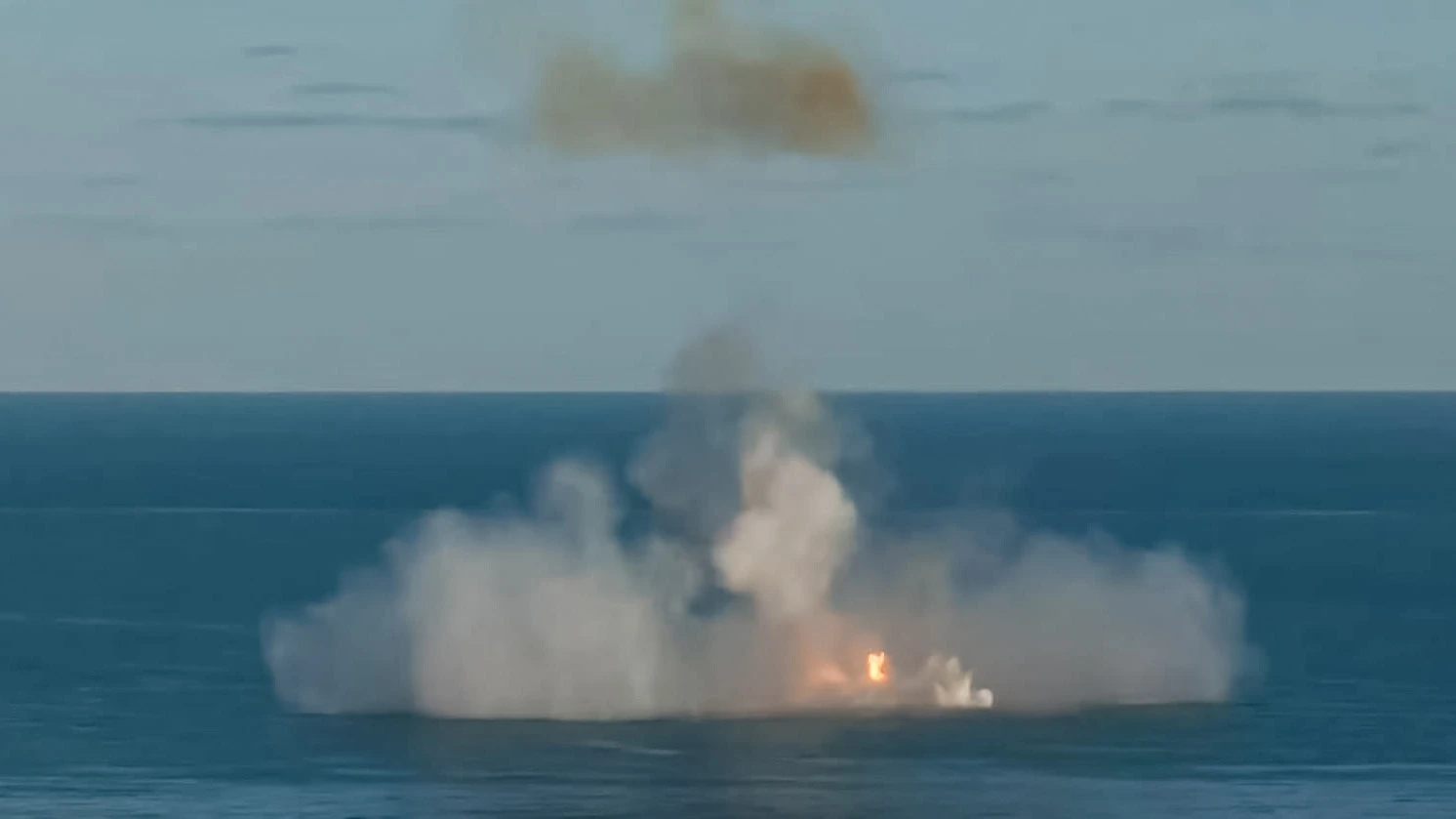
The Super Heavy booster landed in the Gulf of Mexico and exploded / Photo: still from the SpaceX livestream
During the 15th test flight of the Starship rocket, Elon Musk’s space company SpaceX was unable to return the Super Heavy booster to the launch site in Texas. Instead, it splashed down in the Gulf of Mexico and subsequently exploded, as shown in live footage.
SpaceX had hoped to return both Starship stages to the launch site for the first time during this flight. Previously, it had already used mechanical “arms” to capture the Super Heavy booster as it returned to the launch site on three occasions.
That said, SpaceX may still be able to recover the Starship spacecraft itself. It is scheduled to spend about 22 hours in orbit, deploy 26 upgraded Starlink satellites into space, and return to Earth on November 14. SpaceX plans to land the spacecraft directly on the launch tower using the same mechanical grippers as for the booster. If the maneuver is successful, the company will be able to demonstrate the reusability of the rocket’s second stage, which has never before been recovered in this manner, according to Bloomberg.
Developing a fully reusable rocket is crucial for SpaceX’s future growth. Recovering both stages will significantly reduce launch costs and increase launch frequency. Musk plans to use Starship to launch up to 100,000 next-generation Starlink satellites and 1 million spacecraft for the Starmind network of orbital data centers into orbit. In addition, Starship is intended to transport astronauts to the Moon and, in the long term, to establish a settlement on Mars. A successful test of the return of both stages would be an important step toward realizing these plans.
SpaceX shares fell by more than 1% in after-hours trading on November 13 following the failed Super Heavy return.
This article was AI-translated and verified by a human editor