Morning in New York: Stocks Remain Volatile

Market trends will continue to be driven by rising yields on debt instruments and higher energy prices / Photo: marketlan / Shutterstock
A daily review and forecast of events in the U.S. stock market by Mikhail Denislamov, Deputy Director of Capital Markets Research at Freedom Broker.
We expect
Market trends will continue to be driven by rising yields on debt instruments (yesterday, yields on 10-year Treasuries returned to their highest levels since 2006) as well as rising energy prices.
The market estimates the probability of a 25-basis-point Fed rate hike in October at approximately 70%, compared with less than 20% a month ago.
The most significant releases on the macroeconomic calendar will be the JOLTS job openings data for August (consensus: 7.205 million, July: 7.271 million) and the Conference Board’s Consumer Confidence Index for September (consensus: 90 points, August: 89.4 points). Comments on the economic situation and the prospects for adjustments to monetary policy will be provided by the presidents of the Federal Reserve Banks of New York and Chicago, John Williams and Ostan Goolsbee, as well as Federal Reserve Board members Michelle Bowman, Michael Barr, and Christopher Waller. The focus will be on assessments of inflation risks and the future path of interest rates.
Geopolitics will continue to influence the oil market. According to Bloomberg, Iranian officials are pessimistic about the prospects for a conflict-resolution agreement before the U.S. midterm elections in November. The deadlock in negotiations is propping up oil prices: Brent rose above $106 per barrel, while WTI approached $94. The resumption of shipments from Saudi Arabia via the Red Sea is acting as a factor holding back the oil rally.
In the AI sector, the focus is on OpenAI’s Developer Day (DevDay) and Donald Trump’s meeting with the heads of major tech companies, including Meta Platforms (META), OpenAI, Anthropic, and Nvidia (NVDA). Discussions will center on the balance between AI development and regulation. Any new signals regarding safety controls will influence stock movements in the sector.
Carnival (CCL), CarMax (KMX), and Uranium Energy (UEC) will release their financial reports before the market opens. The consensus estimate for Carnival calls for adjusted EPS and revenue of $1.35 and $8.39 billion, respectively, compared to $1.43 and $8.09 billion a year earlier. The market’s reaction to the earnings release will depend on booking volume data, pricing trends, and fuel costs, given high oil prices. Market consensus estimates for CarMax call for EPS of $0.71 and revenue of $6.94 billion. Management’s comments on demand for used cars and the cost of auto loans will be key.
Futures on U.S. stock indices are showing mild, mixed movements. We assess the risk balance for the upcoming session as neutral, with volatility remaining elevated. The focus will be on Treasury yields, oil price movements, and a busy schedule of speeches by Fed officials, which will influence monetary policy forecasts. News from the aforementioned meeting between the management of tech giants and the White House chief will be an additional factor.
What to Look for in the Pre-Market
— AMD (AMD) plans to acquire World Labs for $8.2 billion in a stock-for-stock transaction — a lab that develops spatial AI models (generating and simulating interactive 3D environments based on text, images, and video, as well as robot training technologies). If regulators approve the deal, it is expected to close by the end of the year. The World Labs team will continue its research in the field of AI models.

— Summit Therapeutics (SMMT) shares surged by about 21% on news that AstraZeneca (AZN) is investing $2 billion in the company through the purchase of convertible preferred shares at a price equivalent to $18.36 per common share. Upon conversion, AstraZeneca’s stake will be approximately 12%. The companies will also conduct joint trials of ivonescimab in combination with sonesitatug vedotin for the treatment of gastrointestinal tumors. The deal will improve funding options for the development of ivonescimab. The FDA’s decision on the drug for EGFR-mutated NSCLC is expected on November 14.
— RTX (RTX) shares are rising following the announcement that its subsidiary Raytheon has signed a five-year contract with the Pentagon worth up to $20.7 billion to supply AMRAAM missiles. The agreement calls for a significant increase in production volumes. The total value of the contract will depend on funding approved by Congress.
— Jefferies Financial Group (JEF) shares are down, even though its quarterly EPS came in at $1.08 against a consensus estimate of $1, and revenue also beat expectations. The market’s negative reaction was triggered by a decline in asset management revenue from $176.9 million a year earlier to $85.6 million. Meanwhile, the investment banking division generated a record $1.33 billion.
— AAR (AIR) shares are up about 4% following the announcement of the acquisition of 65% of MRO Holdings for $1.8 billion and the repayment of approximately $1.3 billion of its debt. The total value of this acquisition is estimated at $4 billion. MRO Holdings projects 2026 revenue of around $1 billion with an EBITDA margin of approximately 27%. AAR’s revenue for the most recent reporting period increased by 24% to $918 million, and adjusted EPS rose by 38% to $1.49. Today’s earnings call will focus on the deal’s impact on margins, earnings per share, and debt burden.
— Vail Resorts (MTN) shares are down about 1% following the release of its quarterly results. Sales of season passes for the 2026/27 season fell 12% year-over-year, and revenue from those passes declined by 6%. Guidance for EBITDA from the resort business (Resort Reported) for fiscal year 2027 projects a range of 805–865 million (835 million at the midpoint of the range). Achieving this target is projected to require normal weather conditions and a recovery in tourist traffic driven by single-trip ticket sales. Weak advance sales remain a key factor in assessing demand ahead of the winter season.
The Market on the Eve of...
Trading on September 28 on U.S. stock exchanges ended in the red. The S&P 500 lost 0.77%, the Nasdaq-100 fell 1.08%, the Dow Jones dropped 0.67%, and the Russell 2000 fell 0.69%. The sell-off was broad-based: on the NYSE, there were 3.15 times as many declining stocks as advancing ones, and on the Nasdaq, 2.55 times as many. The VIX “fear index” rose 1.2 points to 16.07. Telecom stocks (XLC: −1.58%), cyclical consumer goods providers (XLY: −1.41%), and the financial sector (XLF: −1.19%) corrected more sharply than the market as a whole. Only the healthcare (XLV: +0.33%), consumer staples (XLP: +0.27%), and energy (XLE: +0.10%) sectors closed slightly higher.
The main source of pressure remained the rise in Treasury yields across the yield curve. The yield on 10-year Treasuries reached 5.23%, briefly approaching its highest level since 2006. The yield on 30-year Treasuries stood at 5.56%, hitting a new high for 2004 during the day.
The DXY Dollar Index rose 0.2% to 101.21. WTI crude oil prices rose to $92.6 per barrel. The spike in prices at the start of the session followed the U.S. rejection of Iran’s proposal to resolve the conflict, but this rise was partially offset by expectations of new talks mediated by Qatar. Gold fell by more than 3.5% amid rising bond yields.

The macroeconomic environment did not help reduce inflationary risks. The Dallas Fed’s Manufacturing Business Activity Index fell from 11.6 points in August to 9.8 in September. At the same time, the index’s price and wage components rose. Federal Reserve Board member Lisa Cook warned of the risks of rising inflationary pressures in the coming months, including those stemming from large-scale investments in AI infrastructure and the situation in the Middle East.
In the AI sector, performance was mixed. Qualcomm (QCOM: −7.2%) and Intel (INTC: −5.7%) were among the S&P 500’s underperformers. Nvidia (NVDA: +1.7%) rose after announcing an increase in its share buyback program by $150 billion, bringing the total to $235 billion. The company also unveiled the Open Agent Safety Platform to enhance the safety of AI agents.
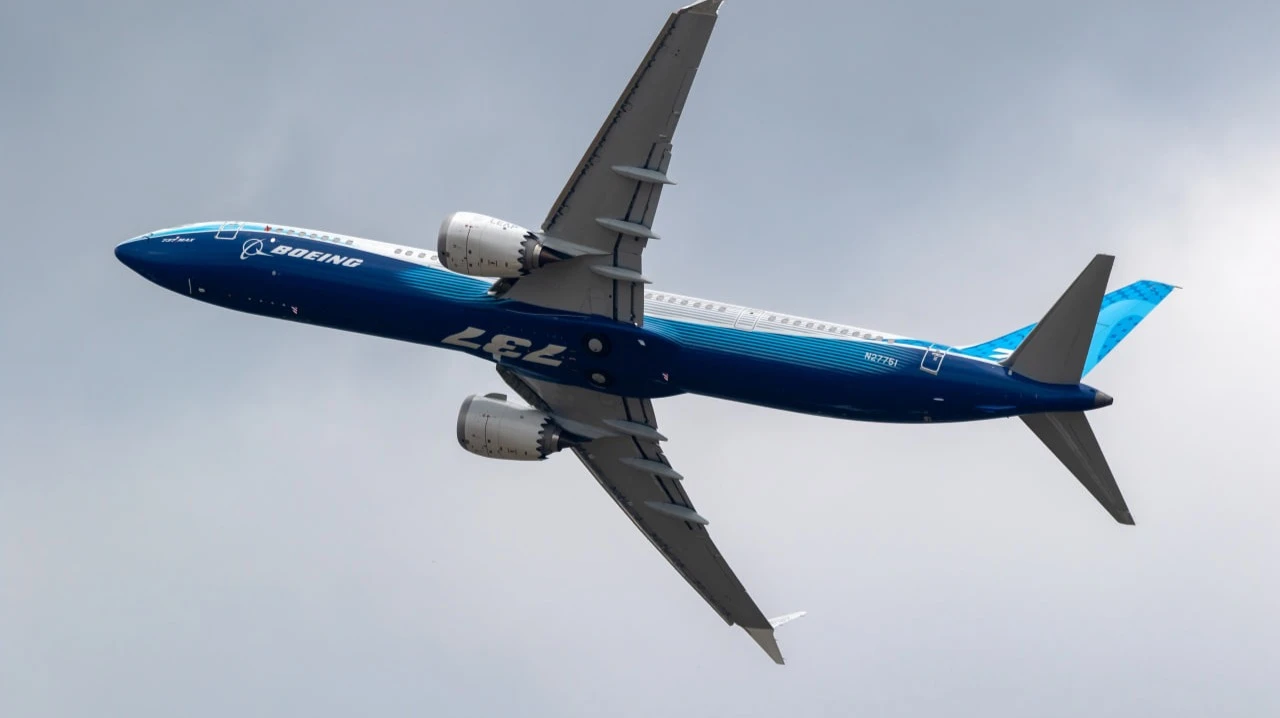
Boeing (BA: −6.9%) shares reacted negatively to news that the FAA had postponed certification of the 737 MAX 10 due to software issues that could increase the workload on pilots in certain landing scenarios. MongoDB (MDB: −18.5%) shares plummeted following reports that the company’s CEO, Chirantan Desai, had moved to Meta Platforms (META), with former CEO Dev Itticheria temporarily taking his place.
Overall, market trends were driven by a combination of rising yields, inflation risks, and geopolitical uncertainty. The S&P 500 closed the session at around 7,684 points.
This article was AI-translated and verified by a human editor