The Hot Summer of 2026: Lindt Decided to Lower Chocolate Prices, and Its Stock Plunged
Once considered one of the world's most expensive stocks and a benchmark for quality and steady growth, it has now fallen to its February 2021 level

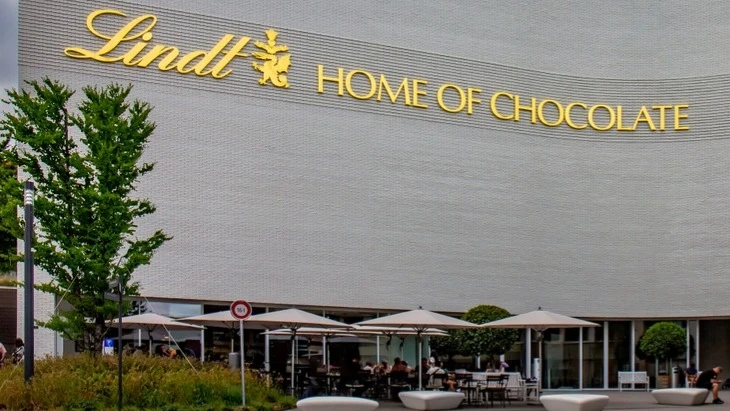
Lindt shares are second only to Berkshire Hathaway shares in terms of price per share / Photo: Vladislav Gajic/Shutterstock.com
Swiss chocolate maker Lindt & Sprüngli has been forced to cut prices and has once again lowered its sales forecast—this time following a hot summer in Europe, according to Bloomberg. The company’s stock price has plummeted: the second downward revision to expected sales growth in six months is undermining confidence in Lindt’s forecasts, which had previously helped justify the premium brand’s high stock price.
Demand melted away in the heat
Lindt is already lowering prices on its Christmas assortment and plans to reduce prices on all its products starting in January 2027, according to Bloomberg, citing company CEO Adalbert Lechner. The chocolate maker now expects organic sales growth of no more than 2% this year, down from the previously forecast 4–6%. Lindt has lowered its annual forecast for the second time since the beginning of the year; the first reduction occurred in March.
The company noted that, among other factors, an unprecedented summer heat wave had a negative impact on chocolate sales in Europe. Price increases also led to a decline in demand for Lindt products: as a result, Lindt’s order volume in Germany, Switzerland, and Austria fell short of expectations, particularly in the seasonal segment of the business.
On September 29, Lindt shares fell 9.1% from the previous close during trading in Zurich, to 81,200 Swiss francs. The last time the stock closed below this level was on February 26, 2021—according to Yahoo Finance, the closing price at that time was 80,500 francs.
A Cult with a Chocolate Payoff
The drop in Lindt’s stock price was an “unfamiliar experience” for shareholders accustomed to success, the German newspaper *Handelsblatt* wrote in August of this year. The publication described Lindt as a benchmark for high-quality stocks that had promised steady growth for decades. As the newspaper noted, over the previous five years, the stock had rarely traded below 100,000 francs.
Lindt’s fame isn’t limited to gold-wrapped bunnies, Lindor balls, and chocolate Santa Clauses: the company’s registered voting stock has, in its own right, achieved cult status in Switzerland, according to Handelsblatt. In terms of price per share, it is second only to Berkshire Hathaway Class A stock. At the annual meeting, shareholders also receive a Lindt & Sprüngli gift case containing a “natural” dividend—approximately four kilograms of Swiss chocolate.
"It remains to be seen whether a suitcase full of chocolate will be enough at the next shareholders' meeting in April [2027] to appease the shareholders," notes Handelsblatt.
The Price of Greed
In recent years, Lindt has actively raised prices in an effort to meet investors’ high margin expectations. In addition, due to poor harvests, the price of cocoa has nearly tripled at its peak compared to 2024 levels. However, unlike in previous years, it has become more difficult to pass on rising production costs to consumers, according to Handelsblatt.
“Lindt & Sprüngli is now paying the price for a strategy that has already caused problems for other premium brand manufacturers,” the newspaper notes, suggesting that the company may have gone too far in raising prices. In the first half of 2026, sales rose by 4.3%, but this was due exclusively to higher prices: the volume of sales actually declined. This is precisely what particularly alarmed stock market analysts, Handelsblatt emphasizes.
Trust is more valuable than chocolate
“The second downward revision to the forecast in six months undermines Lindt’s reputation as a company with reliable forecasts, which is a key pillar of its premium valuation,” Bloomberg quotes Vontobel analyst Jean-Philippe Berchi as saying.
In September, even before Lindt revised its forecast, Switzerland’s largest bank, UBS, lowered its price target from 137,000 to 125,000 francs but maintained its “Buy” recommendation. The bank expects Lindt's business to recover in 2027, with physical sales volume increasing by 5% and EBIT rising by 11%.
The FactSet consensus on Lindt shares has remained neutral —a “Hold”—for the past three months. Of the 19 analysts, seven recommend buying the stock (Buy) or overweighting it in a portfolio (Overweight), the same number advise holding, and five recommend selling (Sell). The average target price of 104,332 francs per Lindt share, calculated based on FactSet data, implies a 28% upside potential.
This article was AI-translated and verified by a human editor