Iran war spurs $10 bln Kazakhstan project between China and EU
KTZ scales the Middle Corridor to carry freight that previously traveled through Russia and the Middle East

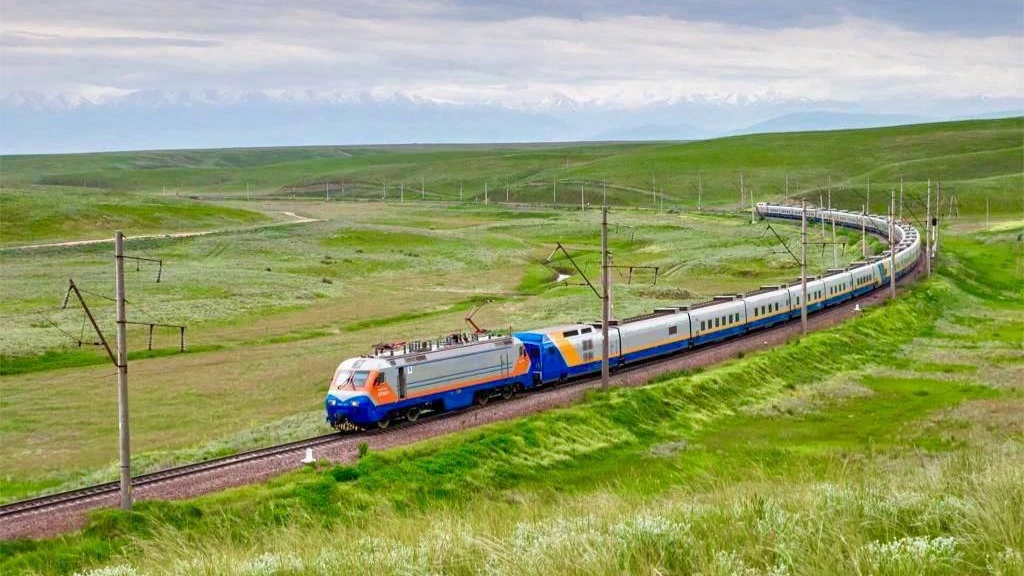
Kazakhstan's national railway operator Kazakhstan Temir Joly (KTZ), which is considering listing its shares in London or Hong Kong this year, is expanding tracks and infrastructure to meet the growing demand for freight transportation between China and Europe. This is reported by Bloomberg with reference to the statement of the company's Chairman of the Board Talgat Aldybergenov.
The war in the Middle East and the blockage of the Strait of Hormuz are leading to an increase in transportation volumes, Aldybergenov said. "Chinese customers have become more interested in land transportation rather than sea transportation because of reliability and predictable delivery times," he emphasized.
Details
Kazakhstan has made transport logistics a strategic priority, turning the national railroad into a key transit operator, Bloomberg highlights. KTZ's total investment in infrastructure development is expected to reach $10 billion by 2030, with about half of that amount already spent, Aldybergenov said.
KTZ is currently expanding the capacity of its terminals in both China and Europe. In 2020, the company acquired a terminal at the port of Xi'an, giving it access to a hub that generates about 40% of all container trains traveling from China to Europe via Kazakhstan, Bloomberg quoted Aldybergenov as saying.
The company is building 900 kilometers of rail lines in 2026, including a new 300-kilometer Ayagoz-Bakhty route toward China that will create the country's third rail border crossing with its eastern neighbor, Bloomberg wrote. Once these projects are completed, rail capacity between Kazakhstan and China is expected to reach 100 million tons by 2030, up from about 55 million tons now, Aldybergenov said.
Kazakhstan has also signed long-term agreements with U.S. Wabtec and France's Alstom for the supply of locomotives, including 300 units from the U.S. manufacturer over the next decade, to avoid shortages and expand railroad capacity.
Why it's important
The change in the structure of KTZ's trade flows underscores the growing importance of the so-called Middle Corridor, the Trans-Caspian rail route linking China and Europe, Bloomberg emphasizes. The railroad route is more than 4,250 kilometers long and passes through several countries, including Azerbaijan, Georgia and Turkey, but the longest section is in Kazakhstan.
In the first quarter of 2026, some 173 trains traveled the route, each carrying 55 containers with various types of cargo. The target for the entire year is 600 trains, a figure that could grow by 67% next year, according to the head of KTZ.
The importance of this route in the global freight market has increased since the full-scale conflict between Russia and Ukraine began in 2022, prompting many to avoid railroads passing through Russia. Since then, the volume of cargo moving through the Middle Corridor has grown about tenfold, according to data from Abrdn Investments Ltd, a British company cited by Bloomberg.
Problem areas
KTZ has identified the Caspian Sea as one of the main bottlenecks on the Middle Corridor due to a shortage of vessels. To solve the problem, KTZ is allocating more than $100 million to buy six ships, including four to be built by China's Jiangsu Hantong Group and two by the Baku Shipyard in Azerbaijan. Deliveries will begin next year, Aldybergenov said.
The vessels are needed to transport cargo across the Caspian Sea from the Kazakh ports of Aktau and Kuryk (now controlled by KTZ) to Baku, after which the goods continue through Georgia and the Black Sea to Europe. China Railway Container Transport Corp is participating in this expansion to increase cargo volumes.
Company plans
Currently, KTZ is negotiating the acquisition of container terminals in Romania, Hungary and Germany, as well as studying the possibility of a joint project in the Chinese province of Chengdu, which would combine investment in the Chinese terminal with the construction of an agricultural container hub in Kazakhstan's Kokshetau to increase exports to China, Aldybergenov said.
Air cargo transportation is seen as another promising area for expansion, and KTZ plans to purchase its first freighter by the end of the year while preparing a larger development plan for additional purchases over the next three years, Aldybergenov said.
Separately, Kazakhstan also serves the so-called "North-South" route between Russia and Iran, although the volume of traffic there has declined recently, Aldybergenov added.
This article was AI-translated and verified by a human editor