Path to Hong Kong: Can Kazakhstan's railroad attract investors from China?

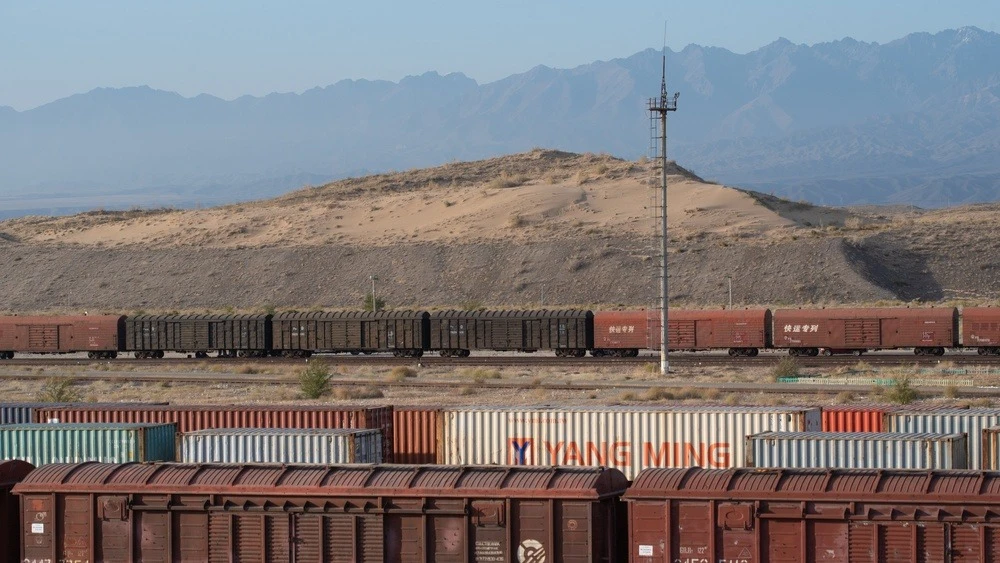
Kazakhstan Railways hopes to float in Hong Kong on a wave of interest in transit transportation
"Kazakhstan Temir Zholy (KTZ), the country's railroad operator, may list on the stock exchange in Hong Kong by the end of the year. Among the reasons are high debt levels and possible interest in the company from Chinese investors.
Details of the offering have not been officially announced. According to Bloomberg, the company plans to raise about $1 bln. The maximum volume of the placement is estimated at 25% of the capital. Earlier the agency, citing sources, estimated the company at $10 bln.
Red Zone
"We plan to hold an IPO this year to repay the debt, as well as to complete major projects," said KTZ deputy chairman Yerlan Koishibayev. According to him, the company's nominal debt is now KZT4.7 trillion ($10.2 billion - an amount comparable to the valuation of the entire company), with more than half of its liabilities denominated in currency.
KTZh is the monopoly operator of Kazakhstan's railroad network and the leading freight and passenger carrier in the country. The holding includes 14 companies, including, in addition to carriers and infrastructure divisions, two seaports, a logistics terminal operator, a paramilitary railway guard, the provider Transtelecom and others. The company has an ambitious investment program: KTZ intends to invest up to $15 billion by 2030. The sole owner of KTZ is the sovereign fund of Kazakhstan, Samruk-Kazyna.
In 2024, the head of the Supreme Audit Chamber, Alikhan Smailov, who audited budget spending on the transportation industry, noted that KTZ is unable to pay its obligations and is in the "red" zone of credit risk. According to him, the debt continues to grow, and almost half of this amount is used to refinance already assumed obligations. The main reason is that 73% of KTZh's total freight turnover for the period from 2020 to 2023 is transported at tariffs below cost, and all losses are covered mainly by transit revenues.
Regulated railroad transportation tariffs have doubled over the past three years and have been raised three times in 2025. According to the consolidated statements, the company's revenues rose 27.4% to 2.76 trillion tenge ($5.3 bln at the average exchange rate for the year) and net profit more than doubled to 343.6 bln tenge ($658.8 mln).
The company's debt load is now approaching four EBITDA, which is quite high, but comparable to some other railroad companies, notes Freedom Finance Global analyst Daniyar Orazbayev. For example, according to Moody's Rating, the U.S. public company Union Pacific has a debt-to-EBITDA ratio of 2.8, while the state-owned SNCF (France) has a debt-to-EBITDA ratio of 9.8 with an A1 rating.
The level of KTZ's debt burden is not of serious concern to international rating agencies, as they are confident of the government's support for the company. In February 2025, Moody's affirmed KTZ's long-term rating at Baa2 (one of the lower levels of investment grade ratings), noting that it could be upgraded in the event of an increase in the sovereign rating of Kazakhstan or Samruk-Kazyna. Fitch Ratings points out that despite KTZ's significant debt, more than half is held by the government and its entities.
"The debt load itself is not a serious obstacle to attracting investors, if this factor is fairly taken into account when evaluating the company and, for example, the shares will be offered at a certain discount compared to similar companies," Orazbayev said.
In April, KTZ tested the interest of international investors by placing Eurobonds for $1 bln: demand exceeded supply almost four times. Eldar Shamsutdinov, Chairman of the Public Council of the Ministry of National Economy of Kazakhstan, noted at that time that the corporate risk premium for this company had practically gone to zero: investment-rated Kazakhstan rarely enters the market, and the supply shortage squeezes spreads.
Why China
One of the international sites for IPO of Kazakhstan Temir Zholy may become Hong Kong - a year ago London was discussed as the main site. Saken Muratuly, the head of the representative office of Samruk-Kazyna in China, said that KTZ may be of interest to Chinese investors, as the company is an important link in the so-called "Middle Corridor" - the Trans-Caspian international transportation route. According to him, "traditionally" 96% of goods were transported from China to Europe by sea. But "geopolitical circumstances of recent months" have shown that this route may be vulnerable. In addition, Muratuly said, delivery via sea routes takes about two months, while KTZ can deliver cargo to Europe in 14 days. According to Eurostat, total imports of Chinese goods from Europe amount to more than 500 billion euros.
The Trans-Caspian International Transport Route passes through China, Kazakhstan, the Caspian Sea, Azerbaijan, Georgia, Turkey and on to European countries. In 2025, 4.12 million tons of cargo were transported through it, which is about a quarter of all rail transit between China and Europe. Kazakhstan's Deputy Prime Minister Serik Zhumangarin said in September that rail transit from China bypassing Russia will grow to 7-10 million tons in the coming years.
The growth of transit flows is one of Kazakhstan's key objectives: the government has set a goal to increase the total volume of transit through the country by 65% to 55 million tons in 2026. However, in February, President Kasym-Jomart Tokayev said that the realism of this goal is questionable due to constraints related to the "capabilities and plans of neighboring states. In addition, Kazakhstan has only two seaports, with the larger one, Aktau, at risk due to shallowing. There are also difficulties on the other side of the sea: World Bank experts note that the port of Baku (Alyat) is primarily focused on receiving cargo from Turkmenistan.
Other countries are also competing for Chinese transit: Kyrgyzstan and Uzbekistan, together with China, are building a new railroad line at a cost of about $4.7 billion, which should reduce the time of cargo delivery to Europe to 10 days. The capacity of the route is estimated at 15 million tons per year, about the same amount planned to be transported along the Middle Corridor by then. However, by 2030, when construction is scheduled to be completed, the structure of transport corridors, according to analyst Daniyar Orazbayev, will be complementary rather than interchangeable.
Government support or IPO?
The first talks about bringing the railroad monopoly to an IPO started about 16 years ago - and the total number of postponements is now difficult to count. The last postponement "in order to choose a more favorable market window" was announced last fall.
Sergey Suverov, investment strategist at Arikapital Management Company, says: "IPO is an alternative way to finance a company in conditions when state support is limited, it is a complicated and relatively expensive procedure. If there is enough state support, the placement can be postponed indefinitely".
This article was AI-translated and verified by a human editor