Is Cartier the New Birkin? Investors Are Looking for the Next Big Thing in the World of Luxury

Cartier is the main driver of Richemont's jewelry division. Photo: Caroline Ruda / Shutterstock.com
How should investors view the idea that Cartier jewelry has become the new equivalent of the Birkin bag in terms of creating shareholder value in the luxury sector? Alena Nikolaeva, an independent portfolio manager specializing in global markets, provides her insights.
All You Need Is Love (by Cartier)
The Wall Street Journal wondered whether Cartier’s wildly popular Love bracelets (a Richemont brand) are poised to unseat the Hermès Birkin bag as the top-performing product delivering the best returns to shareholders in the luxury goods industry?
But for an investor, this isn’t quite the right way to frame the question. It’s much more interesting to ask it another way: Which business model does the market currently value more highly? Richemont’s scalable model, or Hermès’s model of absolute scarcity?
Looking at the latest results, the answer seems quite obvious. On July 15, Richemont released its financial results for the first quarter of fiscal year 2027 (ended June 30), which turned out to be one of the strongest in recent years. The group’s sales rose 20% in constant currency to €6.3 billion, although the market had expected growth of about 11%. Sales increased across all regions: the Americas, Europe, the Asia-Pacific region, and Japan all posted double-digit growth, and, to top it off, sales in the Middle East and Africa returned to growth. All of this is particularly impressive given all the talk of slowing demand in China.
Sales for the jewelry division—which continues to be driven primarily by Cartier (Richemont’s portfolio also includes Buccellati, Van Cleef & Arpels, and Vhernier)—rose by 24% at once. This is nearly double analysts’ expectations; moreover, the company’s jewelry business has posted double-digit growth for the seventh consecutive quarter.
Battle of Strategies
But the most interesting thing here isn’t even the growth rates themselves, but rather what exactly is driving this growth. Many people think that Cartier makes most of its money from million-dollar necklaces. In reality, according to analysts’ estimates, high jewelry accounts for less than 15–25% of sales.
The real driving force behind the business is popular jewelry pieces, such as the Love Bracelet, Trinity, and Juste un Clou (those iconic “nails” from Cartier). People buy them for weddings, anniversaries, graduations, and the birth of a child. These pieces cost several thousand dollars. In other words, they’re expensive enough to remain luxury items, yet affordable enough for millions of people to buy them. That’s the strength of Cartier’s business model.
The company is scaling up the luxury segment, but it isn’t turning it into a mass market. And here we’re seeing a much broader shift. In the past, a handbag was the first major luxury purchase. Today, the “Z-generation” is increasingly starting with jewelry, and they buy a handbag later—or even on the secondary market.
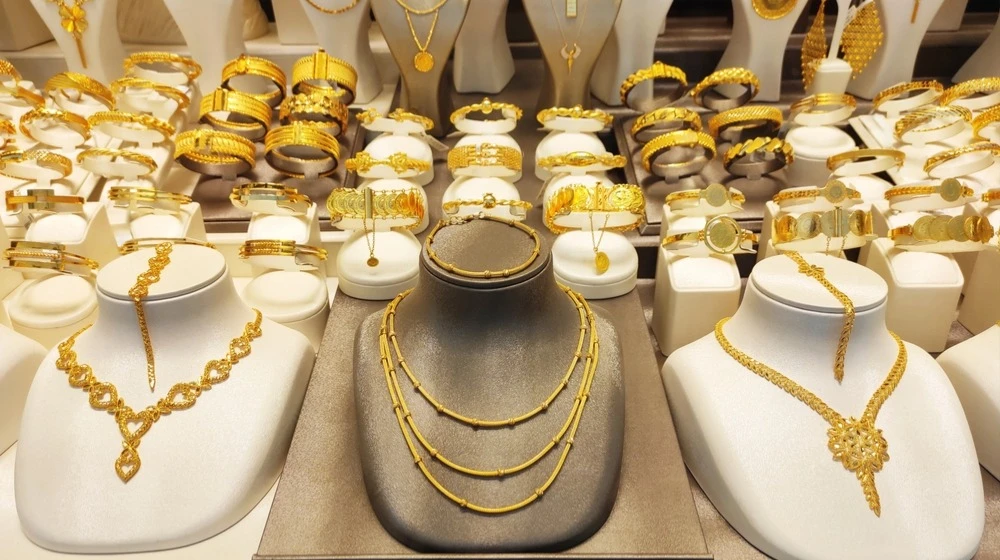
The reason is quite simple. Shoppers have become much more cost-conscious. In the wake of the pandemic, many fashion brands aggressively raised prices on handbags and other leather goods, sometimes by double-digit percentages. At the same time, the quality doesn’t always match the price.
Jewelry houses are much more cautious. That is why Cartier is increasingly seen as a more sensible purchase these days.
In addition, jewelry is generally less subject to fashion trends. It’s easier to store and pass down through generations, and it can even be sold on the resale market. Considering all this, it seems that Richemont has already found the perfect formula for growth.
But then we look at Hermès and realize that it operates on a completely different marketing model.
The Birkin isn't just a bag—it isn't even the most profitable product. It's a mechanism for creating scarcity.
It’s difficult to purchase one in a boutique. That’s precisely why customers spend years building a relationship with the brand: they buy scarves, jewelry, and clothing, all with the hope of one day owning the coveted Birkin. A single iconic bag drives sales across virtually all other categories. It is precisely this model that allows Hermès to maintain an operating margin above 40% (by comparison, Richemont’s annual operating margin was 20%). This is one of the highest figures in the entire luxury industry.
Analysts expect Hermès' organic sales to grow by about 10% per year through 2028, which is also nearly twice as fast as the sector average.
There’s another interesting detail. Following some less-than-impressive quarterly results, concerns arose in the market that the Birkin’s appeal was waning. But the secondary market suggests otherwise. The average resale premium for these bags has risen from about 25% to 45% above the retail price in just one quarter. This means that demand still significantly outstrips supply, and the shortage is far from over.
That’s why I wouldn’t choose between Cartier and Hermès based solely on their current growth rates. These companies create shareholder value in completely different ways. Richemont is scaling up the luxury market, expanding its audience through iconic jewelry, and attracting a new generation of buyers. Hermès, on the other hand, limits supply, creates scarcity, and earns significantly more from each individual customer.
That is precisely why the market currently values Hermès more highly. Richemont is trading at a forward P/E ratio of just over 28, while Hermès is trading at over 37. Investors are paying this premium for predictable growth, pricing power, high margins, and a business model that is virtually impossible to replicate quickly.
So the question today is no longer whether Cartier can become the new Birkin, but which will prove stronger in the long run—scale or scarcity? For now, the market is favoring scarcity. But the coming decade will reveal which of these two marketing strategies is truly more viable.
This article was AI-translated and verified by a human editor