Luxury favorite: Cartier owner beats rivals on revenue growth amid war

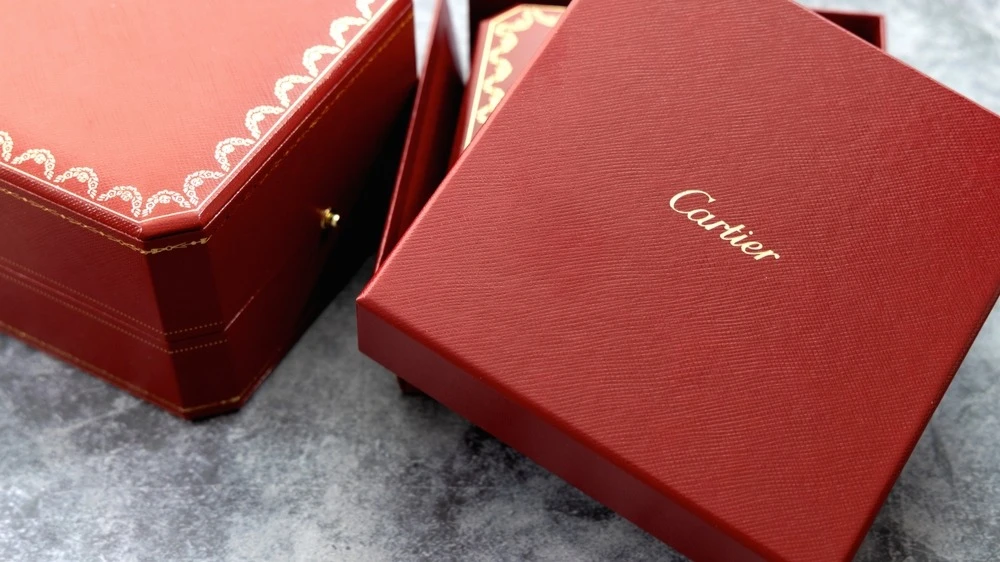
Cartier's owner, luxury group Richemont, has outpaced rivals in revenue growth for early 2026 / Photo: Caroline Ruda / Shutterstock
Revenue of Swiss luxury group Richemont for the full fiscal year that ended in March, grew stronger than analysts' forecasts: customers actively purchased expensive bracelets and rings brand of Cartier group. This helped Richemont to survive the downturn in the luxury market noticeably better than most competitors, Bloomberg writes.
Details
- Richemont Group's revenue for the full fiscal year rose 11% excluding exchange rate fluctuations, the company said in a report. Analysts surveyed by Bloomberg had forecast growth of 9.78%. In the last quarter, the group's revenue rose 13% year-on-year, excluding exchange rate fluctuations, to €5.4 billion ($6.2 billion), a result that was also above market expectations, the Financial Times reported.
- At the end of the fiscal year, sales of Richemont's jewelry business, which includes the Cartier brand, increased by 14%, excluding exchange rate fluctuations, to €16.5 billion. Moreover, the company's sales grew in all regions, and Richemont recorded the highest results in North and South America, where the group's sales, excluding exchange rate fluctuations, increased by 17%.
- In addition, Richemont's revenue in the Middle East and Africa grew 13% in constant currency over the last reporting year, but declined 3% in the latest quarter, reflecting a drop in local demand and lower tourist traffic in the region. The Middle East and Africa typically accounts for about 9% of Richemont's revenue, Bloomberg points out.
However, despite the war in the Middle East, which also affected luxury group LVMH, Gucci owner Kering Holding and Hermes, which recorded weaker results at the beginning of the year due to lower sales in the region, Richemont has shown relative resilience during the downturn in the sector, Bloomberg notes. In the first quarter, combined revenues of LVMH and Kering Holding fell 6% year-on-year, while total Hermès sales rose 5.6% in the same time.
In many ways, Cartier's strong performance was due to its focus on high-end jewelry, which is often seen by investors as a more reliable means of saving than expensive clothing and leather goods.
What else did Richemont tell you about
Chairman Johan Rupert said in a reporting conference call that Richemont's fall in the Middle East and Africa was largely due to a decline in tourist traffic to the region, which was one of the fastest-growing markets in the luxury sector before the conflict, the FT writes.
"Tourism [in the Middle East] has dropped to zero," he said, adding that local shoppers continue to shop, especially in Abu Dhabi. "Until the tourists come back, I don't think anyone can expect serious growth [in the region]. The market will recover, it always does," he noted.
- Richemont's operating profit for the year decreased by 5% compared to last year and amounted to € 4.5 billion. The figure was slightly below market expectations, notes the Financial Times. The main factors in the decline were currency fluctuations and rising raw material costs against the backdrop of persistently high gold prices. The strong Swiss franc put more pressure on the group's profitability than expected, Bloomberg writes.
- Richemont also proposed a 10% dividend increase and a special dividend of 1 Swiss franc. This underscores the strength of the company's balance sheet and its willingness to return excess capital to shareholders, said Vontobel analyst Jean-Philippe Bertschi. The company also launched a new buyback program under which it plans to buy back up to 10 million Class A shares.
What about the stock
Richemont shares rose 5.6% in early trading on May 22 in Zurich, reaching a high of almost three months. However, then they leveled this growth and at the time of publication - in minus by 1.6%. Since the beginning of the year, the company's securities have fallen by more than 10%, while, for example, shares of LVMH (owns the brands Louis Vuitton and Christian Dior) for the same time lost 27%, and shares of Hermès - fell by 24%.
What the analysts are saying
"Richemont remains one of our favorites in the luxury sector," Bloomberg quoted Vontobel analyst Jean-Philippe Bertschi as saying, due to, among other things, "the demand for high-end jewelry and the ability of [the company's] tightly managed distribution network."
"Richemont is closing out a volatile and generally pessimistic reporting season in the luxury sector with an outstanding fourth-quarter sales performance, recording only a slight underperformance on earnings forecasts due to exchange rate fluctuations. In our view, Richemont is now a fundamentally stronger business than in the past," said Citigroup analyst Thomas Chauvet. His opinion quotes the FT.
After the publication of the reports, RBC bank maintained its recommendation to hold the company's securities (Neutral rating), analysts' target price for Richemont shares - 165 Swiss francs - suggests their growth by 5.3% relative to the last closing price.
In general, analysts covering the Swiss luxury group's securities are positive about them: 17 out of 26 recommend buying them. Nine advise to hold.
This article was AI-translated and verified by a human editor