Mag7 shares have experienced their biggest sell-off in over a year. What's next?

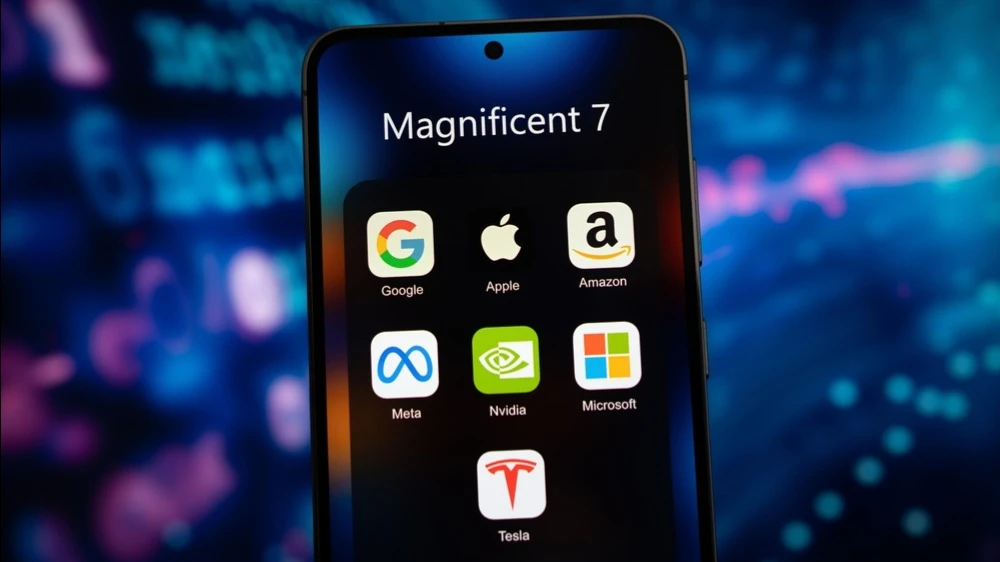
Photo: gguy / Shutterstock
The stocks of the largest technology companies on Wall Street—known as the “Magnificent 7”—experienced their biggest sell-off since April 2025 the day before, — back then, the administration of U.S. President Donald Trump announced the imposition of tariffs on imports from virtually every country in the world; but now investor sentiment has been dampened by a sharp rise in Big Tech’s AI spending, as well as lingering concerns about inflation, according to MarketWatch.
Details
On June 23, Wall Street’s largest technology companies—which, according to MarketWatch estimates, account for roughly one-third of the S&P 500’s total market capitalization—experienced their most intense sell-off in more than a year, according to Dow Jones Market Data. The “Magnificent Seven” stocks had not faced a sell-off of this magnitude since April 2025. This trend has pushed one of the key funds that tracks the Mag7 stocks—the Roundhill Magnificent Seven ETF (ETF MAGS)—into correction territory, according to MarketWatch.
Overall, the MAGS ETF fell 1.37% at the close of trading yesterday, or 11% from its all-time high of $70.94 at the close on May 14. The fund’s shares closed at $63.14 each. Individually, the shares of major tech companies included in the Mag7 ended the day with mixed results: Alphabet shares fell 0.77%, Apple shares fell 0.91%, Meta by 0.29%, and Nvidia by 4.13%; Tesla shares fell by 5.79%, while Amazon shares rose by 0.57% and Microsoft shares by 1.8%.
What People Are Saying in the Market
Although the immediate catalyst for the sell-off was a combination of persistent inflation and expectations of a tighter Fed policy, it is possible that investors have simply grown tired of the leadership of large tech companies, which have dominated the markets over the past few years, according to Kallen Rogers, a portfolio manager at Wedbush Funds (as quoted by MarketWatch). Currently, the “Magnificent Seven” account for about 34% of the S&P 500’s market capitalization. Against the backdrop of increased investment by big tech companies in AI (Alphabet, Amazon, Meta, and Microsoft plan to spend a combined $700 billion on their AI projects this year), investors are simply taking profits and looking for better opportunities, the manager says. “The ‘Magnificent Seven,’ ” Rogers noted, “has [already] shown incredible growth.” But the market, the investor continued, offers other opportunities to invest in AI—for example, through stocks of companies developing memory technology. Thus, the focus is shifting from firms that invest in artificial intelligence to those companies that benefit from these investments, says the Wedbush Funds manager.
Steve Sosnik, chief strategist at Interactive Brokers, agrees with him. In his view, investors looking to invest in the “Magnificent Seven” have most likely already invested in them: “It takes a lot of effort right now to attract new money to these stocks,” he added. And although the “Magnificent Seven” have a good chance of maintaining their status as leaders in the AI sector, “there’s no guarantee that today’s winners will be the winners in the long run,” Sosnik emphasized, adding that perhaps “the best company in the AI sector” has not yet been created.
“At first glance, this [sell-off] looks less like a large-scale macroeconomic panic and more like a group of stocks—overloaded with leaders—finally undergoing a stress test after a prolonged rally,” — noted Joe Mazzola, head of trading and derivatives strategist at Charles Schwab (as quoted by Business Insider). According to the analyst, what is happening “could also be a pullback following a strong rally led by AI stocks.” “This doesn’t necessarily mark the beginning of a full-blown market crash—unless the sell-off spreads further,” he added.
Context
The day before, the tech-heavy Nasdaq Composite fell by more than 2%, while the broad-based S&P 500 index dropped 1.44%. This trend followed a crash in Asian stock markets, during which South Korea’s Kospi index plummeted nearly 10% in a single day, while shares of memory chip giants SK Hynix and Samsung Electronics plummeted by about 13%.
This article was AI-translated and verified by a human editor