Microsoft CEO: Why Is It Essential to Develop Human Capital in the Age of AI?
Satya Nadella believes that businesses need an ecosystem where employees' experience and knowledge are transformed into their own AI asset

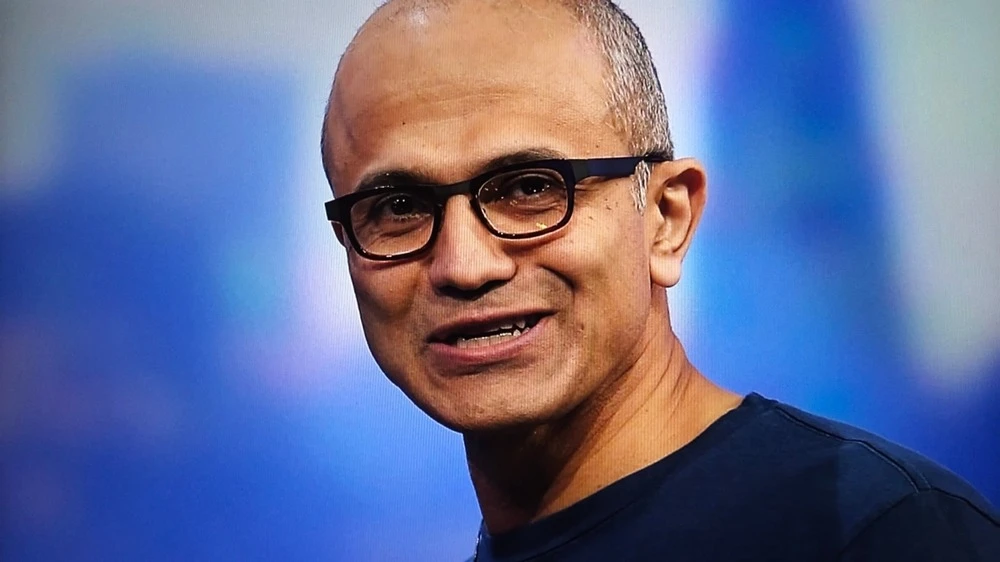
The head of Microsoft is convinced that human capital will not lose its value as artificial intelligence advances / Photo: FotoField / Shutterstock.com
Microsoft CEO Satya Nadella believes that human capital must become one of the key assets for companies in the AI economy. On the social media platform X, he writes that businesses need to build their AI strategies around the knowledge and experience of their employees.
Nadella believes that it is people who set the direction for technology and help AI serve business objectives. Therefore, as models evolve, value will shift toward companies that can accumulate human experience, incorporate it into their own AI systems, and use it as a competitive advantage.
According to Microsoft’s CEO, the main risk stems from the concentration of this value within a few large models. If corporate expertise accumulates on external platforms, companies may lose some of the economic benefits of AI. Nadella considers a scenario in which businesses retain control over their employees’ knowledge and develop it alongside their own AI capabilities to be sustainable.
Oninvest highlighted the key points from Nadella's post.
— This transition is unlike any previous shift in platforms. In the past, we used digital systems to enhance human capital. Now, for the first time, we can create a true feedback loop of mutual learning between humans and machines. This breaks the mold because it changes the very approach to understanding work within the enterprise.
— What is at stake is not some digital tool or system and how it is used, but how organizations continue to learn, create intellectual property, differentiate themselves, and thrive in a world where AI models can continuously absorb the experience of people and organizations, turning it into a mass commodity.
— Every company will have to build what I call human capital and token capital. Human capital includes the knowledge, judgment, connections, ingenuity, and pattern recognition of its people, while token capital consists of the AI capabilities that the firm creates and owns.
— Importantly, human capital does not become less valuable as token capital grows. It only becomes more valuable! I believe that human agency will be the driving force behind the growth of token capital. People will set ambitious goals, connect the dots across different fields, build relationships, and recognize the patterns that matter most. Without human guidance, any computation is just running in circles.
— The real opportunity lies not in choosing the best model, but in building a learning loop on top of the models, where human capital and token capital are capitalized through compound interest. You can delegate a task or even a job to others, but you can never delegate your own learning. A company’s future lies in its ability to accumulate this learning both among people and in AI.
— This requires a new architectural approach in which every business can create agent-based systems that evolve over time, while retaining control over its intellectual property. A company must be able to replace a “one-size-fits-all” model without losing the expertise of its “veteran employees” embedded in its training system. This is the ultimate “test” of your control and sovereignty in the coming era.
— The last thing any of us wants is a world where every company in every sector cedes value to a handful of models that devour everything in sight. If all the economic benefits go to just two or three players, the political system simply won’t be able to withstand it. Society won’t give carte blanche to AI that completely destroys and bleeds dry entire industries.
— Remember what happened during the first phase of globalization, when entire industrial economies were devastated by outsourcing. On the surface, GDP figures looked great, but the displacement of workers was very real, and its consequences are still being felt today. Let’s not carry this dynamic over into the AI era, where a handful of AI systems capture all the economic gains while entire industries find their knowledge being commodified right from under their feet.
— In my view, the priority should not be on creating yet another breakthrough model, but on developing a cutting-edge ecosystem around AI. Only then will the benefits be shared among all companies, industries, and countries. In such an ecosystem, every business will be able to manage its own learning cycle, digitize the organization’s unique experience, and make human and digital capital work in tandem.
This article was AI-translated and verified by a human editor