Millionaires are often unhappy. What can this paradox teach an investor?

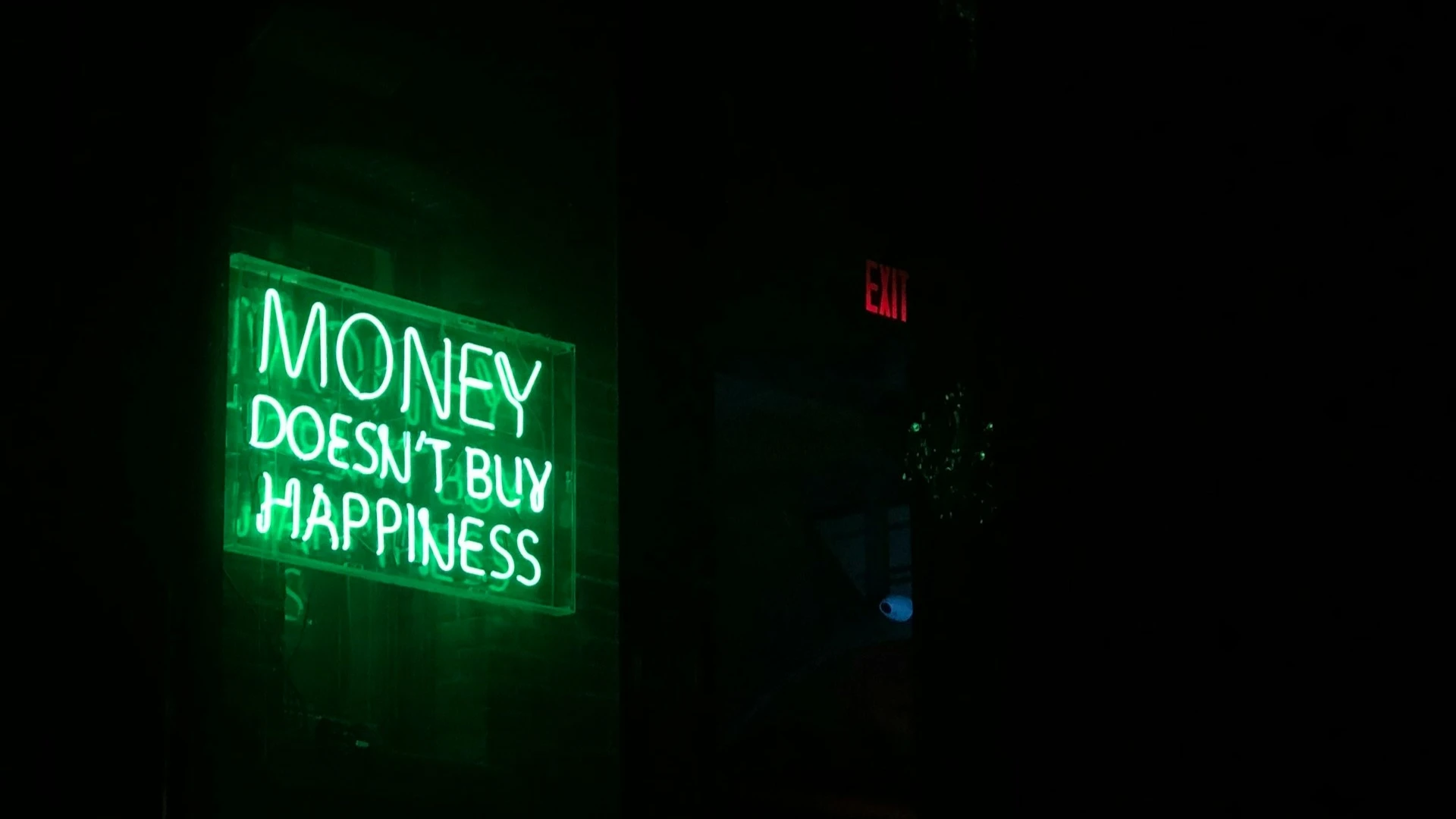
The amount of more than $75 thousand no longer has a significant positive impact on the subjective sense of well-being of its owner. Photo: Morica Pham / Unsplash.com
Digital existential crisis - this is how Didi Das, a partner in Menlo Ventures venture fund, describes the state of the modern millionaire in his post on social network X - wealth brings him little joy. The post went viral and garnered 13 million views and over 2,000 reposts. This may sound like a problem of pampered elites, but in reality it's a vignette of what happens to the average investor as well. Why does money not relieve anxieties but opens up new ones?
When money turns lives upside down
The boom in AI has shown that employees and founders are seeing their stakes in the business turn into "you may never work again" level wealth in a couple years. Das writes in his post about people whose assets have grown from less than $150k to over $50 million in a few years, and notes that many of them feel a "profound loss of meaning" and "upside-down life plans."
Others, with a capital of up to $500,000, feel like participants in a marathon with no finish line. They see their neighbors in the co-working space suddenly appear in Forbes lists, so they start asking questions like: "Am I in the right place? Do I still have a chance to make it?".
Behind such questions is the fear that success cannot be repeated. It is reinforced by a clear break with the usual social environment: the reference group is no longer colleagues on the shop floor, but people with hundreds of millions and billions, almost gurus. Against their background, even tens of millions seem insufficient.
This is where imposter syndrome can arise - a sense of illegitimacy that raises the questions: "Do I really deserve this?" and "Who am I without this money?".
Where do the legs come from
We tend to think that a large amount of money in an account automatically brings happiness and fulfillment. This is due to what psychology describes as the hedonic treadmill phenomenon. Research shows: after strong positive or negative events - from winning the lottery to a serious car accident - people return to their baseline level of subjective well-being after a while. That is, there was indeed joy from a big win, but over time it became simply a new "norm" to which the psyche adapted.
The same thing happens to new millionaires and billionaires: first euphoria, then addiction, and with it the desire to repeat the initial emotional high. At such moments, a dangerous mechanism for investors is triggered: attempts to reproduce the feeling of "I have done something incredible" through increasingly risky decisions.
The second mechanism is adaptive expectations. In economic theory, this term describes the human tendency to build expectations of the future based on past experience.
In investment practice it manifests itself in overestimated expectations of profitability after a series of successful deals, overestimation of one's own skills and underestimation of the risk of a sharp change in the market regime.
This is how today's affluent people get trapped: the recent increase in wealth becomes the new normal for them, and anything less than the new familiar brings discomfort. This can be frustration, anxiety or anger - depending on how a particular person perceives finances and themselves in principle. Let's remember at least the cartoon "The Golden Antelope", where Raja, in pursuit of gold, only came to his senses when he was already dying under piles of coins.
The average private investor feels and often behaves the same way, only the amounts are smaller. After a successful period in the market, past quite decent returns turn into a plan minimum. Adaptive expectations make you look at it as something boring and insufficient, pushing you to look for new, potentially riskier investments.
Millions that don't treat anxiety
In general, nothing cures anxiety; life without anxiety is impossible, because it has an important function that is useful for human survival. It signals us about what is happening in us and around us. Thus, it helps us to "orient ourselves in space" more adaptively.
Therefore, we can recognize that money does solve many real problems - from basic security to access to education, medicine, high quality goods, etc. But wealth does not promise a life without anxiety - on the contrary, at some point it increases psychological pressure. In other words, there is no magic level of capital, upon reaching which life becomes smooth and predictable.
However, a study of the relationship between wealth and happiness, conducted by Nobel laureates Daniel Kahneman and Angus Deaton, shows that there is a "financial happiness cutoff" threshold: once we have about $75,000 of capital, a larger amount no longer has a significant positive impact on a person's subjective sense of well-being.
Some psychologists generally believe that well-being of wealth is an unrelated phenomenon to humans. They believe that the emotions associated with well-being - joy, admiration, anxiety, sadness, anger, attachment - developed in hunter-gatherer groups. They initially had no money, and for those people it was more important to use things as gifts than to keep them. Thus, well-being consisted of having enough food and interacting with other members of the group - hunting, gathering food, dancing, etc.
A separate body of research links mental health and the choice of financial strategies. For example, Cornell University researchers have shown that people with depressive disorders more often prefer excessively "safe" assets, avoiding risk even where it is justified. This is another touch to the portrait: the internal state of an investor affects not only the subjective feeling of happiness, but also the objective results of the portfolio.
Lessons for the private investor
First, it is worth recognizing in advance that hedonic adaptation is almost inevitable. It is like the law of marginal utility in economics: an increase in income per dollar, a new successful transaction and portfolio growth quite quickly cease to bring the previous level of joy. This is an argument in favor of setting investment goals not as "to reach an arbitrary amount N", but as "to ensure a specific way of life" - with clear parameters of housing, education, time for yourself and your loved ones.
Secondly, it is useful to regularly check your return expectations: have they increased simply because the last couple of years have been good or because you have not had any bad trades? To do this, it can be useful to ask yourself the question, "If I were just starting out today, would I consider this result to be the norm or my achievement?".
Third, it is important to consider your own psychological profile. Under the influence of social media and other people's success stories, we may take risks that do not match our real tolerance for loss. In this sense, millionaire case studies are a warning: even those who find themselves on the "happy side" of wealth do not necessarily feel lucky.
There's great news for the private investor in this: much of what affects long-term well-being is neither bought nor sold on the stock market, but can be consciously managed in-house.
This article was AI-translated and verified by a human editor