More money: what the emergence of the first trillionaire says about the structure of the economy

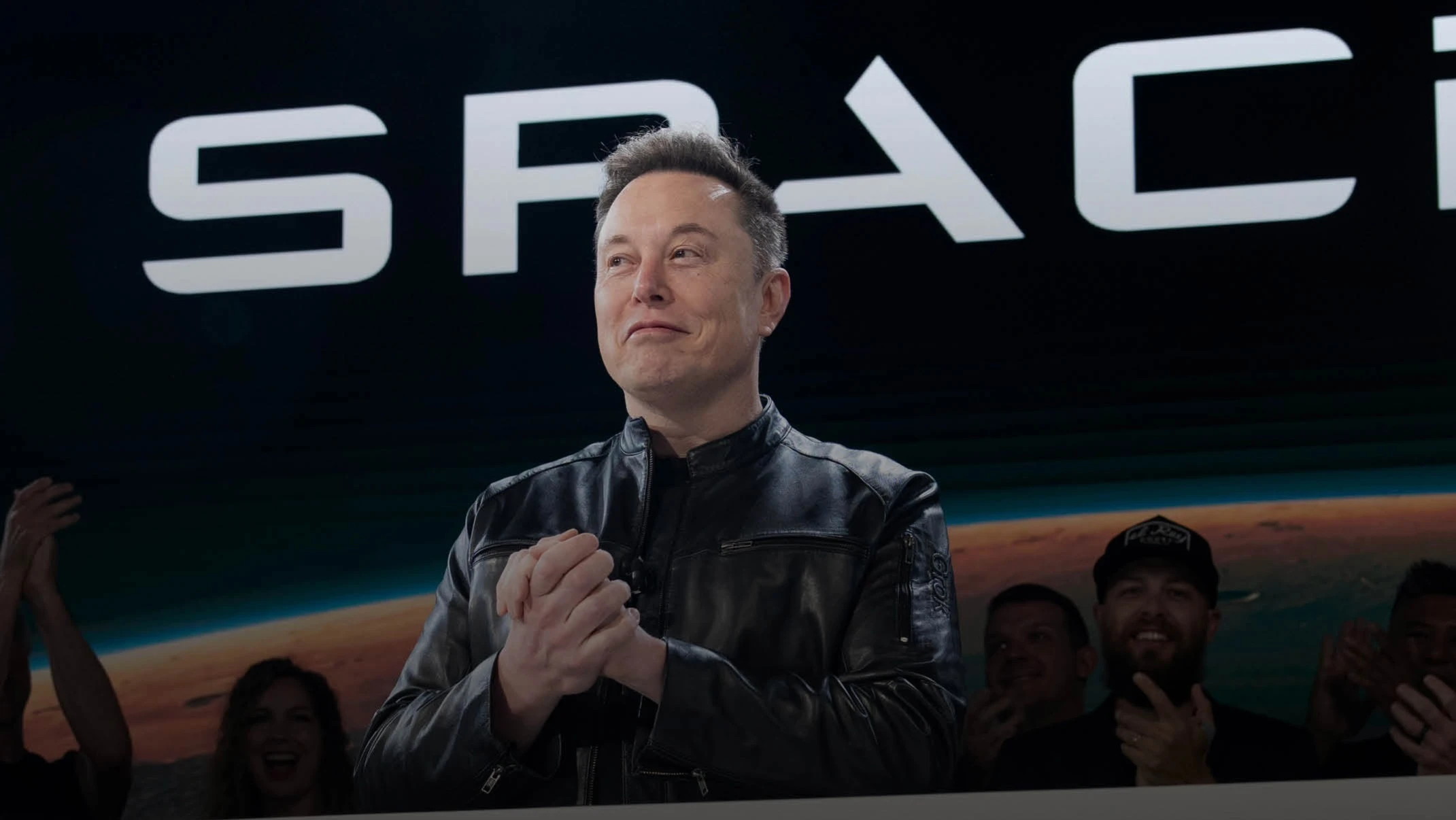
SpaceX IPO makes Elon Musk the first trillionaire in history / Photo: X/Nasdaq
Space X's stock offering made its founder Elon Musk the first trillionaire in Earth's history, with a fortune of $1.2 trillion. On the first day of trading in the company's stock, the media exercised in ways to describe the trillion dollars, such as showing that Musk could finance 68 U.S. election cycles of the 2024 model year. Generally speaking, Musk's fortune is 3.3% of U.S. GDP. That a trillion dollars is a lot is not in doubt. Another interesting thing is that the appearance of the first trillionaire in history means that the very scale of measuring wealth has changed. You can't just accumulate a trillion dollars; such a state is always a function of the very structure of the economy.
In this regard, it is interesting to look at a historical analogy. The first billionaire in the history of mankind was John Rockefeller: in September 1916, his fortune officially exceeded one billion dollars, becoming part of the emerging era of mass production, technological progress and corporations. The very emergence of the billion-dollar man was made possible by a change in the structure of the economy. Until the end of the XIX century, the economy was local, in Rockefeller's time national markets appeared, then corporations with boards of directors, shareholders, hired managers began to appear, wealth began to flow from landowners and bankers to them. At the same time mankind invented mass production, when the competitive advantage became the ability to make not better, but many times cheaper.
What did John Rockefeller do for a living? Oil refining. When oil was discovered in Pennsylvania, there was somewhat of a gold rush, but Rockefeller decided he was going to make money on every barrel produced by others - so he started building refineries and buying up the competition. And so on until Standard Oil became a near-monopoly. He worked on infrastructure, negotiating discounts with railroads. Eventually, he created an infrastructure around oil production that capitalized on the fact that the oil got to the consumer in the form of a final product - kerosene for lighting houses, lubricants, paraffin.
In 1911, the U.S. Supreme Court recognized Standard Oil as an illegal monopoly and ruled to split it into parts, but the value of the parts was higher than the value of the whole company. Exxon Mobil, Chevron, BP and Marathon Oil later grew out of them. Oil became the main resource of the economy and a source of wealth for entire countries for the next century.
The first billion dollar fortune was made possible by the emergence of an entirely new economic order and the shift from craftsmanship and local markets to mass production, standardization, scaling and national, and then global, markets. The emergence of the first trillion dollar state may indicate a similar shift in economic structure.
If you look at exactly what Space X is doing, you'll find that as of 2023, the company provides about 90% of all cargo mass put into orbit globally, giving the company a de facto monopoly in the space industry. More importantly, the Starship program has the potential to reduce the cost of putting cargo into orbit to $300/kg ($2200/kg today). Space X's competitors - Blue Origin, United Launch Alliance, Arianespace, and smaller Rocket Lab or Relativity Space - don't have an equivalent program. But that's not the main point.
The main driver of Space X's growth will be AI, including contracts with Anthropic and Google for computing power; in 2027, this segment is expected to generate $29-31 billion in revenue, surpassing the traditional rocket business. The company expects to capture more than a fifth of the global market for computing power. Here it's time to add a little skepticism: for example, Morningstar analysts estimate the probability of such a scenario at only 7%. "This project requires the implementation of a number of unproven engineering solutions to succeed, but SpaceX is better prepared than others to implement it," Morningstar acknowledged. Skepticism is warranted, but it doesn't negate the fact that computing could be the new oil of the next 100 years.
Microsoft CEO Satya Nadella writes about the same in his column. In his opinion, companies of the future will have to manage not only human capital - the knowledge, experience and connections of employees - but also a new type of asset, which he calls token capital. This refers to company-owned AI systems that can accumulate organizational knowledge and improve with each use. If the industrial age learned to scale energy, the new economy is learning to scale knowledge and intelligence
And Space X is a bet on a computing infrastructure capable of scaling knowledge and intelligence, disguised as a space company. Already, SpaceX's computing contracts for Anthropic and Google exceed NASA's $2.9 billion contract for the Human Landing System program. By 2027, Space X's main revenue will come from computing and satellite internet, not space launches. Computing is analogous to Standard Oil's kerosene, and satellite internet to deliver results to consumers is analogous to early 20th century railroads. Rockets are needed not in and of themselves, but because they help deploy a network of computing in orbit, which is what Space X writes about in its IPO prospectus.
Wealth doesn't change the world per se, but it is a marker of processes in progress. The first billionaire appeared when the economy was learning to scale energy and production. The emergence of the first trillionaire may indicate that humanity is learning to scale intelligence. If this hypothesis is correct, what is important in Musk's trillion is not money per se, but the transition from a post-industrial economy to a computing economy, where control over AI infrastructure will be as important as control over oil and railroads in the industrial age.
This article was AI-translated and verified by a human editor