Morning in New York: Market Prices Seeking Direction

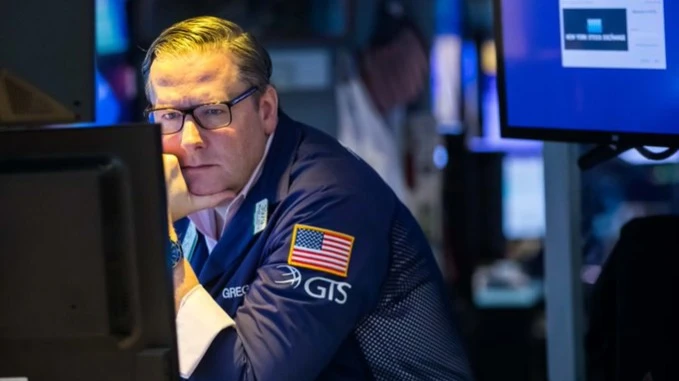
Selling in the U.S. technology sector is putting pressure on the market, while progress in negotiations over the Strait of Hormuz is fueling buying / Photo: X / NYSE
A daily review and forecast of events in the U.S. stock market by Mikhail Denislamov, Deputy Director of Capital Markets Research at Freedom Broker.
We expect
Participants in the upcoming session remain focused on the situation in the AI sector and its prospects. Memory chip manufacturers are once again under pressure. SK Hynix shares fell by about 10%, while Samsung Electronics shares lost about 6%. Against this backdrop, South Korea’s Kospi index dropped by more than 4%, leading to a five-minute suspension of algorithmic trading. Similar sentiment is emerging in the U.S. technology sector: following the release of quarterly reports, some of the sector’s issuers are experiencing a significant correction in premarket trading. The scale of spending on AI development remains at the center of discussion, and strong results alone no longer guarantee support for stock prices.
The situation surrounding the Strait of Hormuz remains uncertain. Tehran has reported that it has agreed with Oman on a route for ships to pass through, but it says that opening the strait depends on the U.S. fulfilling a number of conditions. According to media reports, a temporary shipping regime without tolls is being discussed, but the final terms of the agreement have not yet been approved. The market appears to have already largely priced in the resumption of shipping activity in the short term.
The macroeconomic data coming out this Thursday will not have a decisive impact on stock market movements. Data on initial unemployment claims will be released (consensus: 205,000, following 197,000 the previous week). The final estimate of wholesale inventories for June will also be released. It is projected to be revised upward from the preliminary +0.3% to +0.65% month-over-month.
More than 75% of the companies in the S&P 500 have already reported their second-quarter results. The percentage of companies that beat consensus earnings estimates is approaching 86%, compared with a five-year average of 78%. More than 76% of issuers exceeded revenue guidance. However, this factor is already largely factored into market prices.
Before the start of the main trading session, ConocoPhillips (COP), Constellation Energy (CEG), Warner Bros. Discovery (WBD), Parker Hannifin (PH), Cheniere Energy (LNG), and Datadog (DDOG) will report their quarterly results. After the market closes, Airbnb (ABNB), Cloudflare (NET), Akamai Technologies (AKAM), Roku (ROKU), MARA Holdings (MARA), Rocket Companies (RKT), and Applied Optoelectronics (AAOI) will report their earnings.
Futures on U.S. stock indices are showing mixed trends. We assess the risk balance for the upcoming session as neutral, with elevated volatility. The market is under pressure from the aforementioned sell-off in the memory chip segment on Asian exchanges and a correction in the U.S. technology sector. Progress in negotiations regarding the Strait of Hormuz and falling oil prices are supporting buying activity.
What to Watch for in the Pre-Market
— AppLovin (APP) shares plummeted by about 17% following the release of its second-quarter earnings report. The company’s revenue for the period rose 53% year-over-year to $1.92 billion, compared with a consensus estimate of $1.94 billion. Adjusted EBITDA came in at about $1.6 billion, while guidance had projected a range of $1.615–1.645 billion. Additional pressure came from the third-quarter adjusted EBITDA forecast, which fell slightly short of market expectations.
— Figma (FIG) shares are down by about 15%, even though its quarterly results exceeded market expectations. Revenue rose 48% year-over-year to $370.1 million, and adjusted earnings per share (EPS) more than doubled the forecast to $0.08. The market reacted negatively to the GAAP operating loss of $117.3 million, increased investments in AI, expenses related to the Config conference, and a decline in the free cash flow margin to 14% from 24% a year earlier.
— Celestica (CLS) shares fell 12% following the announcement of a $3 billion offering of common stock. The company remains one of the major beneficiaries of demand for AI and data center infrastructure; however, the large additional share offering increases the risk of dilution for existing shareholders and locks in a portion of the growth achieved previously.
— Western Digital (WDC) shares are down more than 11%, despite a strong earnings report. Revenue rose 44% year-over-year to $3.75 billion, beating the consensus estimate of $3.70 billion, while adjusted earnings per share came in at $3.56 versus $3.31. The outlook for the next quarter also exceeded expectations; however, after the stock has risen more than 200% since the start of the year, the market was likely expecting a more significant upward revision to the guidance.
— Honeywell Aerospace (HONA) shares are down more than 10% following the release of a weak earnings report and a downward revision to its 2026 outlook. The company lowered its organic revenue growth guidance from 7–9% to 4–5%, and its adjusted earnings per share (EPS) forecast of $7.6–7.9 fell significantly short of the consensus estimate of $8.86. The company’s revenue for the quarter rose 5% to $4.52 billion, while adjusted EPS fell 32% to $1.87. Profitability was pressured by supply chain issues and a less favorable sales mix.
— SanDisk (SNDK) shares are down about 8%, even though its quarterly revenue and adjusted EPS came in at $8.97 billion and $39.25, compared with consensus estimates of $8.48 billion and $34.96, respectively. The company’s own revenue guidance for the next quarter, in the range of $10.3–10.8 billion, proved insufficient to justify the sharp rise in the stock price that preceded it, amid high expectations for the data center memory chip segment.
The Market on the Eve of...
Trading on August 5 on U.S. stock exchanges ended mostly lower. The S&P 500 fell 0.17%, the NASDAQ 100 lost 0.83%, the Russell 2000 fell 0.59%, and only the Dow Jones gained 0.49%. In the afternoon, the indices mostly traded around the flat line, but by the close, they had fallen to session lows. Market movements were driven by mixed quarterly earnings reports from major companies. The semiconductor and memory chip sector corrected after the previous day’s rally.
Stocks in the “Magnificent Seven” moved in different directions. The most active buying was seen in Nvidia (NVDA: +3.44%), while Alphabet (GOOGL: -4.03%) saw the sharpest decline. The healthcare sector (XLV: +1.27%) emerged as the top performer, supported by pharmaceutical companies, including Eli Lilly (LLY: +4.86%). Energy stocks (XLE: -2.07%) were the underperformers amid falling oil prices.
The ISM Services Purchasing Managers' Index (PMI) for July rose from 54 points in June to 54.1, compared with a consensus estimate of 54.5 points. The new orders subindex improved, while the employment component moved into contraction territory. According to ADP, private-sector employment rose by 44,000 in July, compared with an expected 70,000. The June figure was revised downward from 98,000 to 95,000. The report noted a decline in manufacturing jobs. These statistics had no noticeable impact on trading activity.
As part of its quarterly refinancing, the U.S. Treasury kept the volume of its issuances unchanged and confirmed that they will remain at the same level in the coming quarters.
Amid news of progress in negotiations on the terms for normalizing shipping in the Strait of Hormuz, WTI crude oil fell another 0.7%, marking its third consecutive session of declines. Gold rose 3.7%, marking its best daily performance since February, while silver gained 3.4%. Bitcoin futures rose 1%.
Neil Kashkari, president of the Federal Reserve Bank of Minneapolis, stated that the time has come to begin gradually raising interest rates. The rhetoric from Fed officials has generally shifted toward tightening monetary conditions. However, market expectations regarding the future course of monetary policy have not changed.
Company News
— Shopify (SHOP: +16.98%) beat consensus estimates for revenue and free cash flow. Its revenue forecast for the third quarter calls for growth of just over 30%. Merchandise sales increased by more than 30% year-over-year for the fifth consecutive quarter. Management specifically highlighted the potential of the company’s product catalog as a data source for AI-powered shopping agents.
— Eli Lilly’s (LLY: +4.86%) earnings and revenue for the quarter exceeded average estimates, as did sales of Mounjaro and Zepbound. The decline in selling prices was offset by adjustments for discounts and rebates. The full-year revenue guidance has been revised upward. Gross margin was supported by lower production costs and sales mix optimization.
— Walt Disney’s (DIS: +3.65%) third-quarter earnings exceeded expectations, while revenue fell slightly short of forecasts. The Experiences segment set new records for revenue and operating profit, driven by a 3% increase in attendance at Walt Disney World and a 4% rise in per-guest spending.
— Nvidia (NVDA: +3.44%) shares were buoyed by a statement from SpaceX (SPCX) CEO Elon Musk, who said that his company is building AI services exclusively on Nvidia solutions, as it considers the Vera Rubin architecture to be the best on the market. By the end of 2027, SpaceX expects to have 5–10 GW of computing power at its disposal.
— Uber Technologies (UBER: -5.29%) reported second-quarter gross bookings and EPS above consensus, driven by its delivery segment. The company’s revenue fell slightly short of average estimates. Guidance for third-quarter ride volume was in line with market expectations, while EBITDA guidance was slightly higher. The company reaffirmed its intention to invest $10 billion in autonomous vehicle projects.
— Media reports indicate that Chief Scientist Jeff Dean and three other prominent researchers are leaving Alphabet (GOOGL: −4.03%) to found Discovery Loop, a startup focused on scientific discoveries using AI. In addition, it has been reported that Demis Hassabis intends to step back from the day-to-day management of DeepMind.
This article was AI-translated and verified by a human editor