Morning in New York: Focus on Rising Treasury Yields and Geopolitical Risks

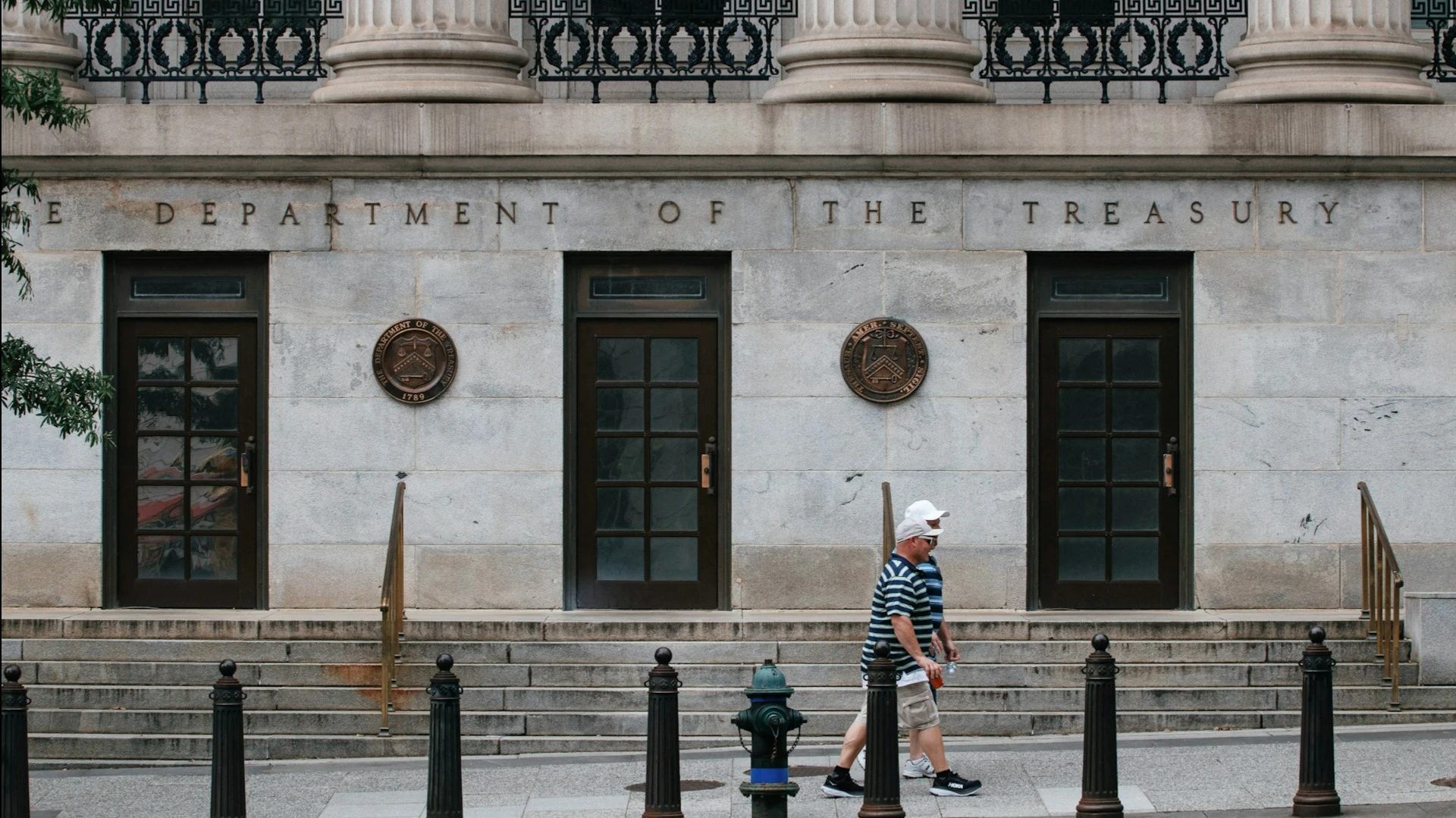
Yields on long-term Treasuries have soared to a two-decade high / Photo: Unsplash/Connor Gan
A daily review and forecast of events in the U.S. stock market by Mikhail Denislamov, Deputy Director of Capital Markets Research at Freedom Broker.
We expect
The deteriorating situation around the Strait of Hormuz remains the main topic of the upcoming session. Following the attack on a cargo ship and the end of the 60-day ceasefire without a new agreement, the U.S. and Iran have not yet shown a willingness to compromise. Against this backdrop, Brent crude has risen above $91 per barrel. This is supporting the energy sector while simultaneously heightening inflationary risks and putting pressure on the transportation industry (including airlines) as well as consumer-facing sectors. Escalating tensions around the Strait are contributing to a sustained elevated risk premium in oil prices.
The rise in yields on long-term Treasury bonds is weighing on stocks. The yield on 30-year Treasuries rose above 5.3%, hitting a high not seen since 2007. Yields on Japanese 10-year government bonds have hit a three-decade high. The combination of high oil prices and rising the cost of capital is particularly detrimental to “growth” companies that are nearing overbought territory.

Among this Tuesday’s major economic releases are ADP data on the number of new job openings as of August 1 (previous week: 8,250), July housing starts (consensus: −6.6%, June: +19%), as well as July data on building permits (consensus: +0.1%, June: −2.6%), and industrial production (consensus: +0.3%, June: +0.1%) and capacity utilization (consensus: 76.3%, June: 76.1%).
Before the start of the main trading session, Home Depot (HD), Baidu (BIDU), and Amer Sports (AS) will report their quarterly results. After the market closes, Keysight Technologies (KEYS), Jack Henry & Associates (JKHY), Toll Brothers (TOL), SQM (SQM), and Mercury Systems (MRCY) will report their results.
Futures on U.S. stock indices are trending lower. Japan’s Nikkei 225 is down more than 2%, and South Korea’s KOSPI is showing a comparable decline. We assess the risk balance for the upcoming session as negative, with moderate volatility. The nearest support level for the broad market index is near 7,700 points, but by the start of trading, it may already be at that level or even lower. A stronger zone of demand is located around 7,630 points. The negative scenario will be invalidated if the expected gap is fully closed and the index returns above 7,745 points.
What to Look for in the Pre-Market
— Nvidia (NVDA) has finalized the terms of the OpenAI project in Ohio and is prepared to provide guarantees totaling up to $105 billion to cover a portion of the lease and energy obligations for the facility being developed by SB Energy. Nvidia will also become the exclusive chip supplier for the site, which will have a capacity of up to 8 GW; the first 800 MW is scheduled to come online in 2028. The deal underscores the scale of demand for AI infrastructure but may also heighten investor scrutiny of the sector’s growing financial obligations.
— Amylyx Pharmaceuticals (AMLX) shares are rising more than 14% ahead of the release of key results from the Phase III LUCIDITY study of avexitide for the treatment of post-bariatric hypoglycemia. This drug is designed to prevent drops in blood sugar in patients following weight-loss surgery. Positive results could significantly increase the likelihood of avexitide advancing toward approval.
— Fabrinet (FN) shares are down more than 7% following the release of its earnings report and outlook for the current quarter. The company’s revenue for the three-month period rose 45% year-over-year to a record $1.32 billion, exceeding its own guidance. Adjusted EPS came in at $4.10, compared to $2.65 a year earlier. Fabrinet’s forecast projects revenue and adjusted EPS in the ranges of $1.38–1.43 billion and $4.10–4.25, respectively. The negative trend is due to heavy buying of the stock based on inflated expectations ahead of the earnings release.
— Aurora Innovation (AUR) shares are down about 5% following news of a planned sale of 2.8 million shares by one of the shareholders. The company itself is not raising capital as part of this transaction; however, such transactions can put short-term pressure on the stock price, especially following a strong rally.
— Andersen Group (ANDG) shares are down about 5.5% following the announcement of a secondary offering of 4.3 million Class A shares. All shares will be sold by existing shareholders, so the company will not receive any proceeds from the transaction. The correction is driven by the upcoming increase in the supply of these shares on the market and potential profit-taking.
The Market on the Eve of...
Trading on August 17 on U.S. stock exchanges closed in negative territory, near intraday lows. The S&P 500 lost 0.52%, the Nasdaq-100 fell 0.17%, the Dow Jones dropped 0.51%, and the Russell 2000 declined 0.35%. The equally weighted S&P 500 outpaced the “classic” benchmark in terms of the pace of its correction following strong gains last week. Rising Treasury yields and oil prices put pressure on stock prices. Software developers and major technology companies mostly traded in the red.
The energy sector (XLE: +1.08%), which had been tracking oil prices, emerged as the top performer. The IT sector (XLK: +0.16%) remained in positive territory thanks to buying of chipmakers’ stocks. Telecom stocks (XLC: −1.89%) and consumer staples (XLP: −1.64%) were among the underperformers.
Yields on long-term Treasuries rose by about 5 basis points, exceeding 5.3% and reaching their highest level since the global financial crisis. As a result, the yield curve steepened. Pressure on long-term bonds intensified due to concerns about the budget deficit, high levels of government and corporate borrowing, and amid discussions about confidence in the Fed. At the same time, rate expectations remain relatively dovish: the market estimates the probability of a rate hike in September at about one-third.
WTI crude oil rose 2.5%, closing slightly below its intraday highs. This movement was driven by news from the Strait of Hormuz, including reports of tanker detentions, Tehran’s warning of further escalation of the conflict, and its refusal to extend the ceasefire. Against this backdrop, the geopolitical premium once again put pressure on the broader market.
The macroeconomic data was mixed, but overall did not shift the session’s main focus. The Empire Manufacturing Index for August exceeded expectations and reached one of its highest levels since December 2021. The report noted rising prices for raw materials and components, accompanied by a decline in selling prices for the second consecutive month. The employment index edged lower. The NAHB Homebuilder Confidence Index rose from 34 points in July to 35, against a consensus estimate of 33. At the same time, the industry continues to face pressure from high construction costs and general economic uncertainty.
Company News
— Intuitive Machines (LUNR: +7.2%) has been selected to participate in a program to develop a multi-satellite communications infrastructure. The expected contract value exceeds $600 million. Thanks to this project, the company will expand its presence in the space communications segment and increase the predictability of its revenue.
— EyePoint Pharmaceuticals (EYPT: −67%) reported disappointing results from a key Phase III trial of DURAVYU for the treatment of wet age-related macular degeneration. Certain secondary endpoints, including a 42% reduction in the need for repeat injections, showed improvement. However, this was not enough to offset the failure to meet the primary efficacy endpoint.
— L3Harris Technologies (LHX: −4.6%) announced that Christopher Kubasik, chairman of the board of directors and CEO, has left the company, effective immediately. The reason cited was conduct inconsistent with the corporate code of conduct. The company emphasized that the situation is not related to financial reporting or operations and reaffirmed its outlook for 2026.
— Centene (CNC: −4.5%) CFO Drew Asher will step down from his position by the end of the year, and after a transition period, he will be replaced by Chris Nechipor, the former CFO of Lincoln National (LNC).
This article was AI-translated and verified by a human editor