Morning in New York: Geopolitics and News from Nvidia Take Center Stage

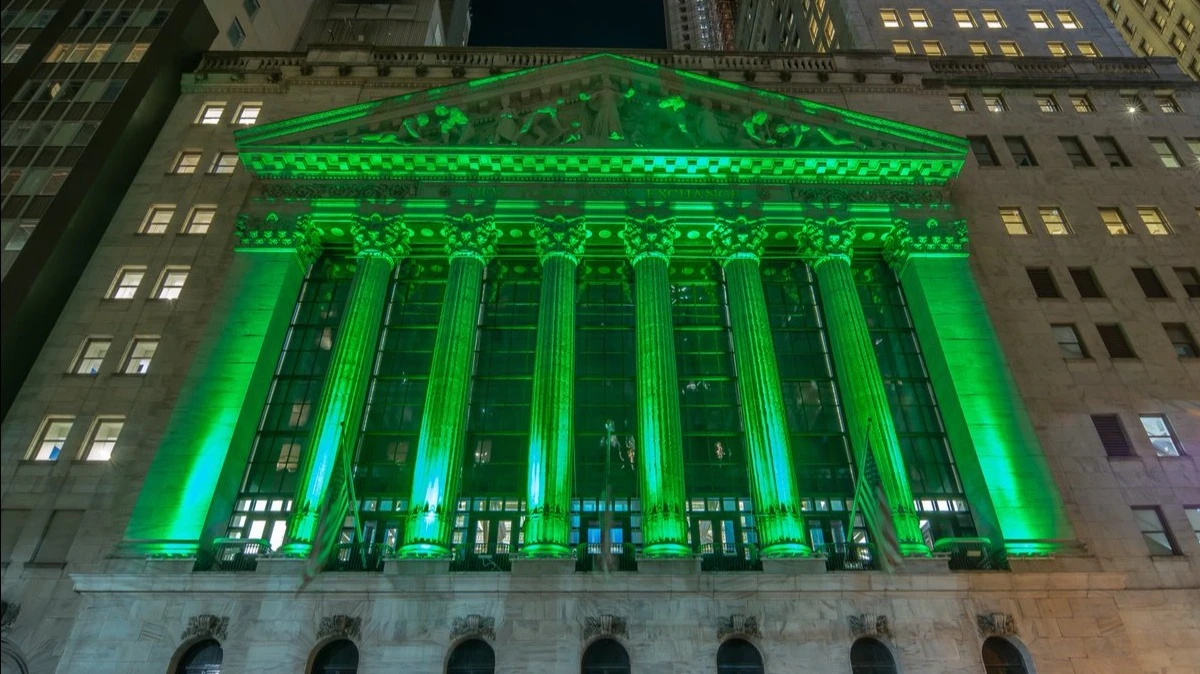
Geopolitical uncertainty will remain one of the key factors affecting the market at the start of the week / Photo: X / NYSE
A daily review and forecast of events in the U.S. stock market by Mikhail Denislamov, Deputy Director of Capital Markets Research at Freedom Broker.
We expect
Geopolitical uncertainty will remain one of the key factors affecting the market at the start of the week. Today, U.S. Treasury Secretary Scott Bessent is expected to unveil the details of a new package of measures against Iran. However, we believe that Washington’s rhetoric should be taken with a grain of salt. Tehran has long been subject to sweeping sanctions and, at the same time, faces pressure from the armed forces of its adversaries. However, this has led neither to a noticeable de-escalation nor to the emergence of a clear path toward resolving the conflict. If restrictions on the Islamic Republic’s economy are tightened, pressure on third countries, financial institutions, and supply chains will intensify. At the same time, in practice, the effectiveness of these measures will depend on the willingness of Iran’s key trading partners to comply with them. Under these circumstances, the market will likely focus less on the harshness of the statements and more on the specific mechanism for implementing the announced measures and whether the U.S. administration has a coherent strategy for resolving the conflict.
WTI crude oil remains above $85 per barrel, meaning that a significant geopolitical premium is already factored into its price. Further upside potential for prices will depend on the risk of supply disruptions, not just on the threat of tighter sanctions against Iran.
An additional risk is the deterioration of trade relations between the U.S. and Canada. Following the breakdown of trade negotiations between the two countries on August 22, Washington ultimately imposed 50% import tariffs on Canadian wine, furniture, dairy products, clothing, leisure goods, and other products with a combined value of approximately $20 billion. This represents approximately 5% of U.S. imports from Canada in 2025, meaning that these actions by Washington will not have a significant impact on the economy.
Before the main session begins, PDD Holdings (PDD) and XPeng (XPEV) will report their financial results for the most recent quarter. Although no major economic data releases are scheduled for today, the new week will generally be rich in macroeconomic and corporate events.
S&P 500 futures are showing a moderate decline, while the more pronounced correction in the Nasdaq-100 points to continued investor caution regarding growth stocks. We assess the risk balance for the upcoming session as neutral, with moderate volatility. We view the KOSPI Composite’s decline of approximately 3%, driven by semiconductor sector performance, as a negative external signal. At the same time, the magnitude of the movement in U.S. index futures does not yet indicate a pronounced flight from risk among investors. Future developments will depend on changes in Treasury bond yields, geopolitical factors, and corporate news, particularly regarding the AI sector.
What to Watch for in the Pre-Market
— Nvidia (NVDA) plans to raise prices for server systems featuring the Vera Rubin and Grace Blackwell accelerators by more than 15% due to rising costs and a shortage of memory chips. This will increase the cost of AI infrastructure purchases for hyperscalers, including Microsoft (MSFT), Alphabet (GOOGL), Amazon (AMZN), Meta Platforms (META), and Oracle (ORCL), and may require another revision of their capital expenditures. In the absence of a comparable acceleration in the monetization of AI-based services, the growth in investment will put pressure on these companies’ free cash flow. In addition, Nvidia is investing $6 billion in the startup Poolside to develop open-source AI models capable of competing with their Chinese counterparts.
— Alibaba (BABA) announced a $10.2 billion stock offering in Hong Kong (710 million shares at a 3.6% discount to the last closing price). This will be the largest secondary offering among issuers listed on that exchange. The company plans to use the net proceeds for further development and implementation of AI infrastructure.
— Chinese chipmaker CCSH expects to raise $4.9 billion in an IPO in Shanghai after posting record profits driven by strong demand for AI solutions.
— The planned discussion between Paramount Skydance (PSKY) and the California Attorney General’s Office regarding a settlement of the antitrust lawsuit seeking to block the acquisition of Warner Bros. Discovery (WBD) for $110 billion fell through due to allegations by the regulatory agency that the company disclosed details of prior negotiations. The lawsuit is supported by 12 states, even though the Department of Justice has already approved the merger, and the case is scheduled to go to trial in March. If the deal is not closed by September 30, Paramount will have to pay WBD shareholders approximately $650 million for each quarter of delay. If the acquisition falls through, the penalty will amount to $7 billion.
— CoVolt Power has filed for an IPO in the U.S., hoping to capitalize on the growing demand for electricity from data centers.
The Market on the Eve of...
Trading on August 21 on U.S. stock exchanges ended in positive territory, though below intraday highs. The S&P 500 gained 0.43%, the Nasdaq-100 rose 0.33%, the Dow Jones rose 0.98%, and the Russell 2000 rose 0.85%.
Chipmakers’ stocks traded in negative territory, while memory manufacturers’ shares rose. Among the “Magnificent Seven,” Tesla (TSLA: +5.14% at the close of trading on August 21) posted the strongest gains.
Treasury yields rose by 3–5 basis points across the yield curve. By the end of the week, the impact of the Ministry of Finance’s announcement regarding an increase in the volume of Treasury bond buybacks had been offset. Against this backdrop, interest in safe-haven assets intensified. Bitcoin futures rose 6.3%.
According to preliminary estimates, S&P Global’s Composite Purchasing Managers’ Index (PMI) rose to 56 points, beating the consensus estimate of 54.3 and reaching a 52-month high. The services PMI reached 56.8 points, compared with a consensus estimate of 53, marking a 20-month high. Meanwhile, the manufacturing PMI fell to 53.2, compared with a consensus estimate of 54.4 points. Price pressures eased, and employment growth reached its highest level since the beginning of 2025.
Company News
— Coinbase (COIN: +8.2% at the close of trading on August 21) and Robinhood (HOOD: +13.7%) were among the top gainers amid a Bitcoin rally, with the cryptocurrency gaining about 22% over the past week—its fastest pace since March 2023—and climbing to $79,000. A rally in crypto assets typically stimulates trading activity among retail and institutional clients, increasing trading volume on platforms. This directly supports the business models of both companies. Coinbase derives a significant portion of its revenue from commissions on crypto transactions, while Robinhood benefits from growth in transaction volume, including in the cryptocurrency segment.
— Tesla (TSLA: +5.14%) accounted for about 17% of the broader market’s gains. Its stock was buoyed by Nevada authorities’ approval of the commercial deployment of up to 5,000 of the company’s robotaxis in Clark County, including Las Vegas, which the market interpreted as another step toward scaling up the autonomous transportation business. The decision also sent a positive signal to the autonomous transportation sector as a whole, as Waymo and Uber have also received permits to launch robotaxis. The news of a recall of 2.98 million Tesla vehicles in China did not put pressure on the stock: the campaign primarily involves a software update, which does not pose significant risks to deliveries or costs. Such campaigns remain standard practice in the automotive industry. In our view, the key drivers of Tesla’s valuation are the potential to monetize autonomous driving technologies and the development of other innovative areas, including robotics, energy storage systems, and commercial electric vehicles.
This article was AI-translated and verified by a human editor