Morning in New York: Looking for a Foothold Ahead of Tech Giants' Earnings Reports

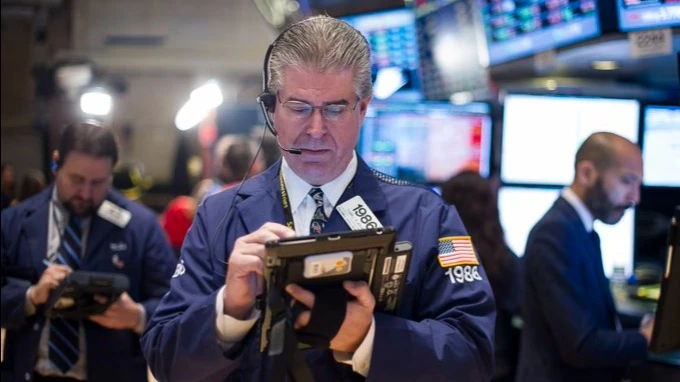
The week begins in the wake of a sell-off that saw the Nasdaq-100 lose more than 5% and the S&P 500 lose nearly 2% / Photo: X / NYSE
A daily review and forecast of events in the U.S. stock market by Mikhail Denislamov, Deputy Director of Capital Markets Research at Freedom Broker.
We expect
The week begins in the wake of a sell-off that saw the Nasdaq-100 lose more than 5% and the S&P 500 lose nearly 2%. Futures on the tech-heavy benchmark are up more than 1%, outperforming the broad-market index, which points to an attempt at a technical rebound. Its success remains to be seen: on Thursday, the Nasdaq-100 had already recouped its intraday losses, but on Friday, the decline resumed, and CoreWeave (CRWV) shares plummeted nearly 12%. Without stabilization in AI companies’ bonds, the rebound may once again prove to be short-lived.
Today’s macroeconomic calendar is almost empty: at 10:00 a.m. Eastern Time (ET), only the NAHB Homebuilder Confidence Index for October will be released (consensus: 31 points; September: 32). Fed officials are observing a blackout period ahead of the October 27–28 meeting.
Oil prices are falling after a week of gains, though Brent remains above $100 per barrel. The correction coincided with U.S. President Donald Trump’s decision to suspend sanctions against Russia and tariffs on major buyers of Russian energy resources, as provided for in the Lindsey Graham Act. Risks to supply remain. Over the weekend, Ukraine launched a large-scale drone strike on St. Petersburg and the Leningrad Region, causing fires at an oil terminal and an oil depot. Iran reported that another tanker had struck a mine in the Strait of Hormuz. Falling oil prices are easing inflation concerns but could put pressure on the energy sector, which had been supporting the market on Friday.
Before the start of the main trading session , Fifth Third Bancorp, Cleveland-Cliffs, and Dynex Capital will report their earnings . After the market closes , AGNC Investment, W. R. Berkley, Steel Dynamics, Crown Holdings, Zions Bancorporation, Western Alliance Bancorporation, and Karooooo will release their financial results. In the reports from regional banks, the most important factors for investors will be trends in interest income, the cost of funding, the state of the deposit base, and the quality of the loan portfolio.
S&P 500 futures are trading in positive territory, with Nasdaq-100 contracts leading the gains and the Dow Jones lagging behind. We expect volatility to remain elevated and assess the risk balance as neutral. Buyers are being encouraged by falling oil prices and demand for tech stocks following the sell-off. Pressure on prices stems from ongoing stress in the AI-company bond segment. The nearest support level for the S&P 500 is at 7,630 points, while resistance is in the 7,740–7,755 range.
What to Watch for in the Pre-Market
— CoreWeave shares rose 3.6%, and Nebius Group shares rose nearly 5% on the back of the AI complex, despite Microsoft’s withdrawal from the capacity-leasing agreement with British neo-cloud provider Nscale at its Essex site. The facility’s connection to the power grid has been postponed until the next decade, although Nscale says its other contracts remain unaffected.
— Broadcom’s stock is rising nearly 3% on reports of a major financing deal for the TPU accelerators the company is developing in partnership with Google. Anthropic is raising approximately $60 billion in debt to lease TPUs with a combined capacity of 1.5 GW. Approximately $42 billion of that amount will be backed by Broadcom. Blackstone funds will invest $9 billion in the project at an annual interest rate of 10%, whereas borrowers with comparable credit ratings typically pay around 7%.
— Micron Technology shares are rising more than 3% on news that Samsung Electronics has accepted Nvidia’s specifications for custom NVHBM memory, the base chips for which will be manufactured using TSMC’s 3-nm process. SK Hynix and Micron have received similar requests, but their decisions have not yet been disclosed. For Micron, the news signals intensified competition for Nvidia’s HBM orders, so the stock’s rise reflects a broader sector recovery rather than a reaction to this specific development.
— Nvidia’s stock is up more than 1%. Its CEO, Jensen Huang, said Friday that the turbulence in the AI market will subside, as the benefits of the technology will soon outweigh investors’ concerns. However, the CEO did not provide any new data on demand, orders, or forecasts. This explains why NVDA’s stock price is lagging behind Broadcom, Micron, and cloud service providers: Huang’s remarks are fueling investor optimism but have not become an independent driver of growth.

The Market on the Eve of...
Trading on U.S. stock markets on October 16 ended in the red. The S&P 500 fell 1.09%, the Nasdaq-100 dropped 2.5%, the Dow Jones declined 0.34%, and the Russell 2000 lost 1.66%.
SPY (−1.11%) underperformed the equally weighted RSP (−0.42%) by 0.69 percentage points, indicating that selling pressure was concentrated in stocks with large weightings in the index. Six of the 11 sector ETFs ended the day in positive territory. The technology sector (XLK: −3.02%) was the underperformer amid a sell-off in the AI sector. The SOX chipmakers’ index fell for the eighth consecutive session, with its decline from its June record high exceeding 23%. The energy sector (XLE: +2.52%) emerged as a growth leader thanks to the continued rise in oil prices.
The Treasury yield curve has steepened: the yield on 2-year Treasuries fell by 4 basis points to 4.71%, the yield on 10-year Treasuries fell by 1 basis point to 5.08%, while the yield on 30-year Treasuries rose by 1 basis point to 5.43%. The decline at the short end of the curve coincided with an increase in the probability that the Fed would keep rates unchanged at its October 27–28 meeting. The settlement price of the November WTI futures contract rose 3.5% to $101.4 per barrel and more than 10% over the week amid threats to supplies from the Middle East.
According to the revised estimate, industrial production grew by 0.7% month-over-month in September, compared with a consensus estimate of 0.4%, following a revised 0.1% increase in August. Capacity utilization rose from 76.4% to 76.9%, compared with the market’s average estimate of 76.5%. Manufacturing output increased by 0.3%, in line with the consensus, while other segments exceeded overall expectations. Growth in import prices accelerated from a revised 0.5% to 1.1% MoM (consensus: 1%), and excluding oil and petroleum products, the figure rose from a revised 0.5% to 0.8% (consensus: 0.6%). This indicates that price pressures are extending beyond energy commodities. The New York Fed’s Services Survey fell from −8.7 to −20.7 points (consensus: −4.1). Fed Chairman Kevin Warsh refrained from signaling any plans to adjust the benchmark interest rate, noting only the synchronized tightening of monetary policy by central banks around the world.
Nearly half of the SPY’s decline was attributable to five stocks, led by Microsoft (MSFT: −1.9%) and Broadcom (AVGO: −4.5%), which each contributed 12 basis points, and Nvidia (NVDA: −1.4%), which lost 11 basis points. Pressure on the sector was exacerbated by a crisis of confidence in AI infrastructure financing. CoreWeave (CRWV: −11.9%) shares plummeted amid concerns about the company’s high debt burden, while data center operators’ bonds continued to decline in price. Stocks of large “value” companies remained virtually unchanged (−0.1%), while “growth” stocks fell 1.9%. Capital flowed into the energy sector and defensive sectors. This time, the rotation did not offset the weakness in technology stocks. The market reacted cautiously to earnings reports from financial companies. Shares of Travelers (TRV: +1.5%) and Truist Financial (TFC: +1.1%) rose following their earnings releases. At the same time, M&T Bank’s (MTB: −1.5%) interest income and Citizens Financial’s ( CFG: −0.1%) fee income came in below expectations.
This article was AI-translated and verified by a human editor