Morning in New York: Nvidia Sets the Tone for Trading

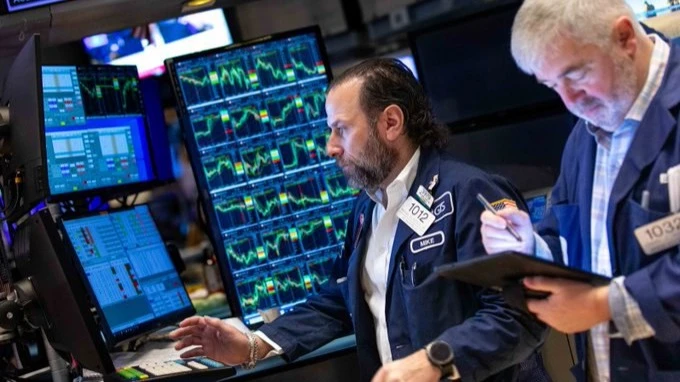
The highlight of the day will be NVIDIA's earnings report / Photo: X / NYSE
A daily review and forecast of events in the U.S. stock market by Mikhail Denislamov, Deputy Director of Capital Markets Research at Freedom Broker.
We expect
The highlight of the day will be Nvidia’s (NVDA) earnings report, which is scheduled to be released after the market closes at 4:20 p.m. Eastern Time (ET). This is the company’s first earnings release since Jensen Huang stepped down. For now, the company is being led on an interim basis by its CFO, Colette Kress.
The consensus estimates Nvidia’s revenue at $109 billion (+90% YoY), while our own forecast is $108 billion (+/-2%). The market consensus for earnings per share (EPS) is $2.47. Since early November, Nvidia’s stock has fallen by nearly 24%, so expectations appear low. We believe that management’s confident outlook for the current quarter and confirmation of the status quo regarding its strategy could halt the sell-off in the company’s stock. Ahead of Nvidia’s earnings report, options pricing implies a price movement of about 8% up or down. Meanwhile, on the four previous earnings reports, the stock reacted with an average price fluctuation of 4.8%.
At 8:30 a.m. ET, retail sales figures for October will be released. Following an acceleration in growth in August and September, the consensus forecast calls for a 0.2% month-over-month increase in the total figure and a 0.4% month-over-month increase in the core figure (excluding vehicle sales). Freedom Broker analysts’ estimates are 0.1% and 0.3% MoM, respectively. If retail sales growth exceeds average market forecasts, it will be seen as a sign of sustained inflationary pressure.
At 9:15 a.m. ET, industrial production data (consensus: +0.1% MoM) and capacity utilization data (76.8%) will be released. At 10:00 a.m. ET, inventory data and the NAHB index will be released (consensus: 29 points, unchanged from October).
Remarks will be delivered by the presidents of the Federal Reserve Banks of St. Louis, Cleveland, and New York—Alberto Musalem, Beth Hammack, and John Williams, respectively. The market will be paying particular attention to the remarks by Federal Reserve Board member Christopher Waller. Futures markets are pricing in a 100% probability of a rate hike in December, so signals regarding the magnitude of this adjustment are important to the market.
Before the market opens, Home Depot (HD), Walt Disney (DIS), JD.com (JD), Tencent Music (TME), and Viking Holdings (VIK) will report their earnings. After the market closes, Nvidia (NVDA), Dolby Laboratories (DLB), ZTO Express (ZTO), and La-Z-Boy (LZB) will report their results.
S&P 500 futures are trading in negative territory. We assess the risk balance for the upcoming session as neutral, with elevated volatility. Buyers will be supported by stabilizing Treasury yields, capital flows into defensive sectors, and lowered expectations for the AI sector. Among the negative factors, we note uncertainty regarding Nvidia’s leadership, tighter export controls, nervousness ahead of Anthropic’s IPO, and expectations of a rate hike. Nvidia’s earnings forecast will be the key factor, but it will be released after the market closes, so investors will prefer not to increase their risk exposure during the trading session. Volatility in the Nasdaq-100 QQQ ETF is projected at 22.5% for the coming month, compared to 37.1% for the same period last year. Over the week, the spread widened from −4.3 to −14.6 percentage points. We believe that options are pricing in a significant decline in volatility.
What to Watch for in the Pre-Market
— AECOM (ACM) shares are up 6% following its fourth-quarter earnings report, in which adjusted EPS rose 20% year-over-year, to $1.63, beating consensus estimates, although revenue fell 7% to $3.9 billion. The order backlog increased 13% to a record $28 billion. The company provided an EPS guidance range of $6.15–6.35 for fiscal year 2027, with organic net service revenue growth of 4–6%. The quarterly dividend was increased by 10% to $0.34 per share. Free cash flow in 2027 is expected to be approximately $300 million, taking into account approximately $500 million in costs for two projects in the construction management segment.
— Intel (INTC) shares came under additional pressure following the disclosure of Nvidia’s investment portfolio. During the third quarter, the company reduced its Intel stake by approximately 25%, from 214.8 million to 161.1 million shares. Intel shares continued to decline during evening trading. The reduction in the stake is notable given the previously announced strategic partnership.
— SharonAI (SHAZ) shares are down 3–5% as its third-quarter revenue rose from $0.5 million a year earlier to $9.9 million, which was significantly below consensus estimates. The total value of contracts, including a five-year deal with a global AI lab worth $1.32 billion, approached $9.6 billion. Management forecasts annual recurring revenue (ARR) to grow from $50 million in September to $400–450 million in January 2027 as clusters based on NVIDIA chips are rolled out. We believe the market is reacting negatively to the gap between contract volume and actual revenue.
— Shares of drone manufacturer Red Cat (RCAT) plummeted 25% after the company withdrew its revenue forecast for 2026. According to management, expected funding and contracts did not materialize as scheduled, and the results of the Gauntlet II phase of the Drone Dominance program deprived the company of one of its revenue streams. In the third quarter, the company’s revenue rose 22% year-over-year to $11.8 million, falling significantly short of average market estimates. Additionally, the company announced a bid to acquire the Austrian company Steyr Motors.
The Market on the Eve of...
Trading on November 16 on U.S. stock exchanges closed near the day’s lows. The S&P 500 fell 1.92%, the Nasdaq-100 dropped 2.67%, and the Dow Jones declined 1.41%; and the Russell 2000 lost 1.70%. Treasury yields rose as the yield curve steepened: yields on short-term securities fell by 4–5 basis points, while the 10-year yield dropped to 5.12%. The dollar index gained 0.2%, returning to levels seen before the introduction of tariffs in April 2025; gold fell 0.9%; Bitcoin corrected by 5.7%; and WTI crude oil fell by 3.2%.
Chipmakers and cloud companies remained under pressure. The equally weighted S&P 500 (RSP) edged lower, though it outperformed the main index by 90 basis points. Only the consumer staples (XLP: +0.27%) and utilities (XLU: +0.18%) sectors posted gains. The underperformers were the IT sector (XLK: −3.24%), the energy sector (XLE: −1.96%), which was negatively affected by the correction in oil prices, and the industrial sector (XLI: −1.85%), where the main losses were borne by engineering and defense companies. For example, L3Harris (LHX: -3.9%) started the week in the red due to an investigation into a recent suspension of air travel in the U.S.
Nvidia (NVDA: -4.12%) contributed 25 basis points to the broad market index’s decline. Although supporters of Jensen Huang are discussing his return as CEO, the board of directors is not considering this option. Treasury Secretary Scott Bessent proposes appointing a new CEO from outside the company. Amazon (AMZN: -3.34%) contributed negatively to the S&P 500’s performance by 14 basis points, Alphabet (GOOGL: -4.07%) and Micron (MU: -7.62%) each contributed 11 basis points, and Broadcom (AVGO: -3.92%) contributed 10 basis points.
Pressure on the sector was exacerbated by the U.S. Department of Commerce’s decision to close loopholes that allowed Chinese companies to access cutting-edge AI chips through overseas data centers. Alibaba (BABA) unveiled a new flagship AI model, but its stock failed to rally on the news.
Telus (TU: +12.2%) received a non-binding purchase offer from Québecor. Tyson Foods (TSN: +8.7%) reported better-than-expected results. The FDA did not approve Summit Therapeutics’ (SMMT: -16.5%) lung cancer drug. Robinhood (HOOD: -7.5%) reacted negatively to fintech firm Kalshi’s plans to launch stock trading.
The New York Fed’s Business Activity Index came in below expectations due to a sharp slowdown in the growth of new orders. Cleveland Fed President Beth Hammack noted that inflation was moving in the “wrong direction” but advocated for a gradual adjustment to monetary policy.
This article was AI-translated and verified by a human editor