Motley Fool analyst warns against temptation to buy EV maker Lucid on the dip

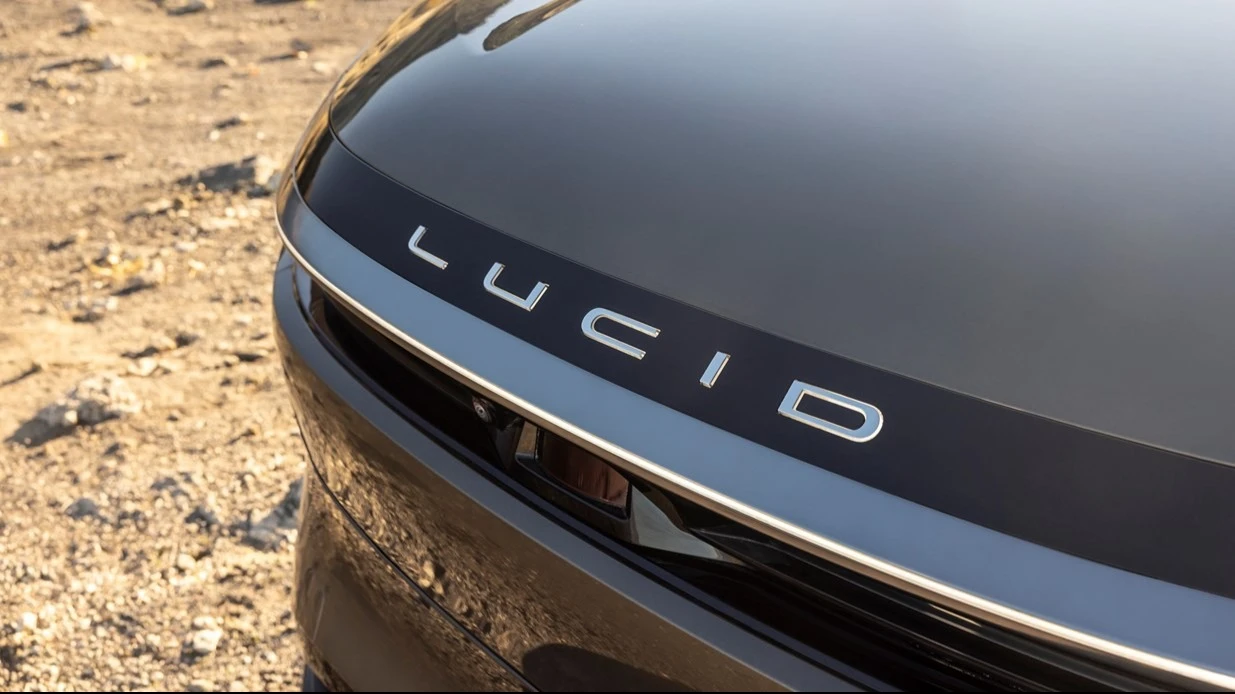
EV maker Lucid is preparing to release a mass-market model, but it's too early to buy the stock, according to the Motley Fool / Photo: Lucid
Investors should avoid buying shares of electric vehicle maker Lucid in the hope of a rebound, argues Motley Fool contributor Chris Neiger. Over the past three years, the company’s stock has fallen about 90%, a decline that may make the shares look attractive ahead of the planned launch of a lower-priced EV model. But that appeal is misleading, the analyst believes, the core issue being that Lucid remains deeply unprofitable.
Details
Buying Lucid shares is "probably not a good idea" right now, Neiger wrote. Over the past three years, the automaker’s stock has collapsed roughly 90% to $9.55 per share. “If you're hoping to scoop up Lucid stock in the hopes that it'll rebound, I understand the temptation. But it's probably not a good idea,” he says.
Case for Lucid
Lucid produces “one of the most impressive electric vehicles on the market,” according to the Motley Fool article. Its Air sedan holds the world record for range, at 749 miles (about 1,205 kilometers) on a single charge. Operationally, the company has shown progress. In 2025, Lucid doubled production to 18,378 vehicles, while deliveries rose 55% to 15,841 units.
In 2026, Lucid plans to challenge Elon Musk’s Tesla Model Y with a new electric vehicle priced from about $50,000, TipRanks reported. That would mark a major shift for the company, which has so far focused on higher-end luxury EVs. The Air sedan starts at about $70,000, according to the Motley Fool article. Neiger argues that a cheaper model could help Lucid broaden its customer base.
Case against Lucid
Despite those positives, Lucid stock is not as attractive as it may appear at first glance, Neiger wrote. The company’s losses are the primary concern. According to Lucid’s most recent quarterly report, the company posted a net loss of $978.4 million in the third quarter of 2025 on revenue of $336.6 million. Neiger expects it will be difficult for Lucid to narrow its losses as it prepares to launch new models and ramp up production.
He also points to weakness in the broader EV market. U.S. EV sales fell 36% year over year in the fourth quarter of 2025, according to Cox Automotive. The market has also been pressured by the elimination of a $7,500 U.S. federal tax credit for EV purchases, which expired on September 30.
What other analysts say
Wall Street’s view on Lucid remains cautious. The stock has nine “hold” ratings, two “buy,” and two “sell.”
Late last year, Barron’s listed Lucid among 22 stocks investors should avoid in 2026, citing academic research suggesting that companies with elevated short-selling costs are more likely to underperform the broader market. The methodology, developed by Kent Daniel of Columbia Business School, Alexander Klos of Germany’s Kiel University, and Simon Rottke of the University of Amsterdam, focuses on the fee that short sellers must pay to borrow shares that they can then sell short.
The average target price for Lucid shares is $16.67 per share, about 75% above the closing price on Friday.