Nasdaq has tightened its rules. Nearly 200 small companies are at risk of delisting.


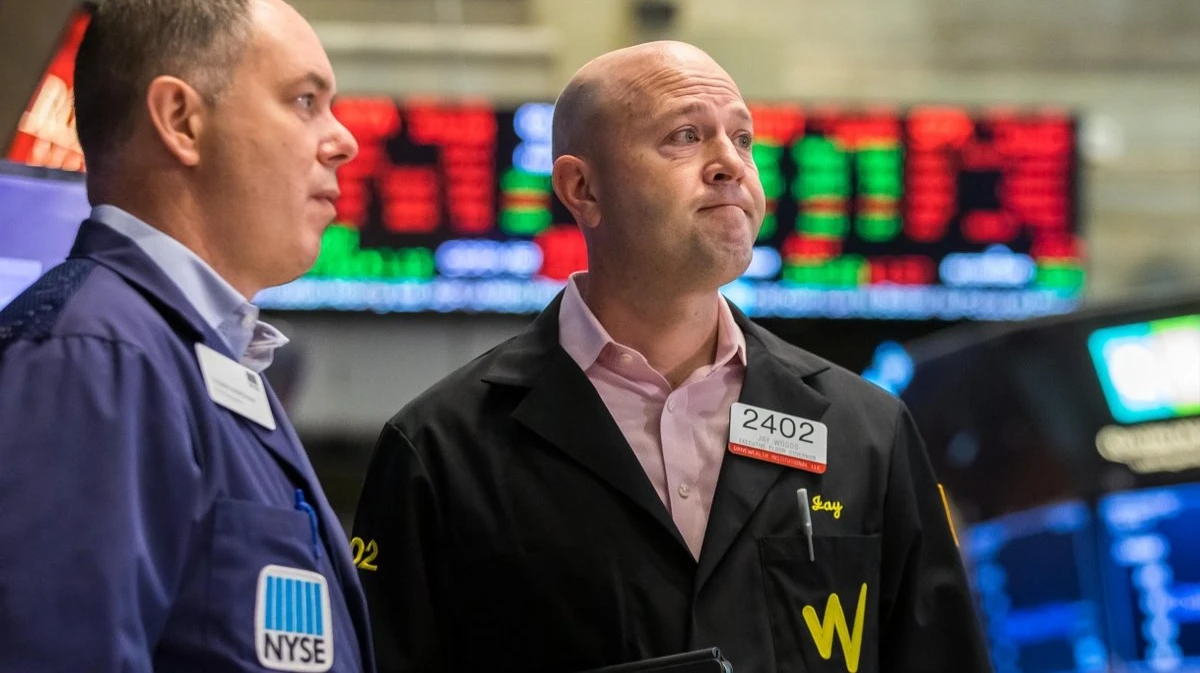
Nasdaq has changed its rules to simplify the delisting process for companies with a market capitalization of less than $5 million for 30 consecutive days / Photo: JHVEPhoto / Shutterstock.com
Nasdaq will be able to immediately delist shares of companies whose market capitalization has been below $5 million for 30 consecutive days. As a rule, this indicates business problems and makes such securities vulnerable to manipulation, the exchange explained. According to calculations by Freedom Broker analysts at the request of Oninvest, nearly 200 issuers are currently at immediate risk of delisting.
What's in the new rules, and why are they needed?
Companies whose shares are listed on Nasdaq must maintain a minimum market capitalization of at least $5 million. If this requirement is not met for 30 consecutive trading days, the exchange has the right to immediately suspend trading in such issuers’ securities and initiate delisting proceedings. The U.S. Securities and Exchange Commission (SEC) approved the rules allowing this on July 22.
The previous standards set the minimum market capitalization requirement at $35 million. If a company failed to meet this requirement, it was given 180 days to return to that level and could extend the deadline by another 180 days.
This gave issuers facing temporary difficulties a chance, Nasdaq explains. But a prolonged drop in market capitalization below $5 million is not such a case, the exchange believes. In its view, this indicates significant problems at the company and renders the shares unsuitable for continued listing.
As soon as investors assign a low valuation to a company, it becomes difficult to maintain a fair and orderly market for its securities, which negatively affects all participants, according to one commentator (who remains unnamed) who told Nasdaq that
Low-priced stocks are more likely to be targeted by fraud and manipulation, according to the exchange, citing the views of its sources. One of them stated that “market participants have witnessed the widespread use of low-priced stocks by unscrupulous individuals <...>,” and estimated that “retail investors suffered losses of about $15 billion as a result of speculative trades in 2025.”
Which companies are at risk?
According to analysts at Freedom Broker, for issuers valued at $5–20 million, the risk of losing their listing is becoming one of the key factors in the investment case.
According to the Finviz screener, there are currently 557 stocks on the Nasdaq with a market capitalization of less than $20 million, of which 196 are at immediate risk of imminent delisting (market capitalization of less than $5 million), they note.
For example, at the close of trading on July 22, the market capitalization of GeoVax Labs, a developer of an Ebola vaccine, stood at 4.9 million; that of Intelligent Bio Solutions, the inventor of a rapid drug test, was $4.3 million; and that of La Rosa Holdings, a real estate brokerage , was $1.49 million.
Overall, about one-third of small-cap companies are registered in Asia, and some of them may already have been targeted for manipulation on social media, according to Bloomberg.
For example, in July 2025, the research firm Bear Cave published a report claiming that “foreign groups” were manipulating the stock of the Chinese micro-cap company Pheton Holdings based on “rumors that pharmaceutical giant Gilead Sciences would soon acquire it or become its partner.” This led to a sharp surge in the stock price followed by a crash, which the researchers deemed a “sign of a pump-and-dump scheme.” The company’s shares are currently delisted.
On various days in July 2025, the shares of seven Chinese micro-cap companies trading on Nasdaq plummeted by 80% or more in a single trading session, and their combined market capitalization fell by $3.7 billion. Shortly before the crash, all of these companies had been actively promoted to investors on social media and messaging apps, leading to heavy buying and rising stock prices. Analysts told the Financial Times that this closely resembled a “pump-and-dump” scam.
The SEC estimates that hundreds of small-cap companies would not have met the new standards over the years. In 2025, according to the regulator, 91 publicly traded companies had a market capitalization of less than $5 million for 30 consecutive days.
What Analysts Are Saying
Nasdaq first unveiled its proposals in January, and even then they received support from Wall Street giants such as Citadel Securities, Charles Schwab, and the securities trade group Sifma, according to Bloomberg.
However, it met with fierce opposition from small companies, lawyers, and consultants, many of whom argued that it would have a negative impact on legitimate startups.
“This rule will have a significant impact on small businesses, make it harder to raise capital, and create undesirable incentives for short selling in small companies,” Mark Indelia, president of the Coalition of Small Public Companies, told the news agency. He believes that the new measures “are inconsistent with the [SEC’s] current slogan of ‘making IPOs great again.’”
Since the beginning of 2026, only 13 micro-cap companies have gone public on the Nasdaq and the New York Stock Exchange, compared with nearly 80 by mid-2025.
Freedom analysts believe the overall effect on the market is largely positive: fewer extremely illiquid IPOs, serial reverse splits, and potential pump-and-dump schemes. The downside, they argue, is fewer available sources of capital for early-stage biotech companies, pre-revenue tech companies, and other issuers who need the public market precisely during periods of financial difficulty.
Nasdaq’s decision could influence how other exchanges approach the balance between investor protection and access to public capital, writes Thomas J. Thompson, chief economist at the advertising agency Havas Edge, on LinkedIn. He believes this decision points to the direction in which U.S. capital markets are heading: for decades, the focus has been on innovation to help more companies gain access to public markets, while also emphasizing the importance of maintaining confidence in those markets.
“Higher listing standards can improve market quality and strengthen investor confidence, but they can also make it more difficult for bona fide early-stage companies to maintain their status as public companies or raise capital during difficult times,” Thompson writes.
Freedom points out another problem: to restore its stock price, the company will need to raise capital, restructure, or enter into a deal. This increases the likelihood of emergency share offerings and significant dilution of existing shareholders’ stakes, Freedom notes.
Analysts point out that a “delisting gap” effect is emerging. “As the $5 million mark approaches, investors may sell their securities in advance due to the risk of being moved to the over-the-counter (OTC) market. This could reduce liquidity and put additional pressure on market capitalization,” writes Freedom.