Oil is nearing $100, the Fed is easing market jitters, and Nvidia is acquiring Hugging Face
Highlights of the Week


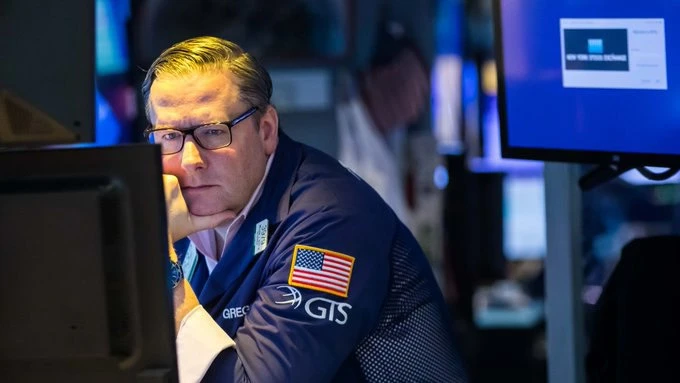
Rising Treasury bond yields, combined with higher oil prices, have hit high-priced tech stocks particularly hard. Photo: Shutterstock.com
The escalation in the Middle East has once again sent shockwaves through the markets, with oil nearing $100 per barrel, while a global sell-off of government bonds has pushed yields in the U.S., Japan, and Europe to multi-year highs: Investors fear that rising oil prices will once again fuel inflation and force central banks to keep interest rates high for longer.
Meanwhile, in the corporate sector, the race for AI continues: Broadcom has seen explosive growth in AI revenue, and Nvidia has agreed to acquire Hugging Face for nearly $13 billion. So, let’s take it one step at a time.
Oil has once again become the main risk for the markets
After a month of relative calm, the U.S. and Iran resumed attacks against each other. On September 1, the U.S. carried out strikes against targets belonging to Iran’s Islamic Revolutionary Guard Corps, after which Brent crude rose by about 5% at its peak and approached $95 per barrel.
Another alarming report has come from the Strait of Hormuz: two oil supertankers were damaged by projectiles of unknown origin, and the number of ships carrying raw materials passing through the strait has dropped sharply. Against this backdrop, Brent crude rose above $92.
For the markets, the problem isn't just oil itself. High energy prices increase inflationary risks and, at the same time, limit the scope for rate cuts. Therefore…
Investors triggered a sell-off of government bonds
The global bond market experienced a sharp sell-off. Yields on global government bonds have returned to their highest levels in nearly two decades, and yields on 10-year Japanese bonds have reached 3% for the first time since 1996. We wrote more about this here.
U.S. markets also felt the pressure: rising Treasury yields, combined with higher oil prices, hit high-priced tech stocks particularly hard. On the first day of September, the Nasdaq 100 lost about 1.3%.
But the main question now is more like this: Can the stock market continue to rise if the cost of money and government bond yields remain high? Our colleagues addressed this question in this article. We also received assistance in analyzing this issue from Zachary Griffiths, Head of Fixed Income and Macro Strategy at CreditSights (a division of Fitch). The highlights of his interview can be found here.
The Fed gave the market a breather
Toward the end of the week, Federal Reserve Board member Christopher Waller said he was prepared to support keeping the rate at its current level at the September meeting.
After that, the probability of a rate hike—which traders had estimated at 63.2%—fell to about 50%. The S&P 500 rose 1.08%, the Nasdaq Composite rose 1.42%, and the yield on 10-year Treasuries fell to 4.746%.
Broadcom Has Proven: The AI Boom Continues, but the Bar Has Been Set Too High
One of the week’s major corporate events was Broadcom’s earnings report. The company’s revenue from AI semiconductors reached $16.7 billion, up 221% year-over-year. Management expects approximately $21.7 billion in AI revenue as early as this quarter and about $115 billion in fiscal year 2027.
And yet, the stock price fell after the earnings report: the overall revenue forecast came in slightly below the consensus, and investor expectations were already extremely high.
Perhaps the key takeaway for the entire technology sector can be summarized as follows: demand for AI remains enormous, but it is no longer enough simply to show strong growth. Companies must consistently exceed the market’s already very high expectations.
Nvidia is acquiring Hugging Face for $13 billion
Meanwhile, Nvidia has made one of its biggest bets on the software side of AI. The company has agreed to acquire Hugging Face—a developer platform and repository of open-source AI models—for $12.93 billion. The deal gives Nvidia control over a significant part of the developer ecosystem.
It appears that Nvidia is gradually attempting to control not only the computing infrastructure but also the software layer of the AI ecosystem.
Burry Bets Against AI Again
On the other side of the market is Michael Burry, famous for betting against the mortgage market before the 2008 crisis. This week, he once again criticized Palantir and stated that the company’s market capitalization could fall from approximately $440 billion to less than $100 billion. In his view, Palantir is more like a consulting firm than a traditional software developer, and its valuation is largely driven by fears surrounding AI.
GoPro is becoming an AI company
Another interesting story came from the small-cap segment, involving GoPro. On September 1, its stock rose by about 40% following the announcement of a merger agreement with Starman Optical, a developer of optical transceivers. In two days, the company’s market capitalization more than doubled.
At the same time, GoPro recently warned of serious financial problems, including rising prices for memory cards due to demand from the AI infrastructure sector. For more details, see the article by our colleague Maria Dranishnikova.
What Should Investors Do?
“Buy the whole world,” recommends Vladimir Savenok, an investor and founder of the consulting firms “LK Finance” LLP and “Personal Capital,” in an interview with his colleague Daniil Zhelobanov. He also spoke about the timeless values of investing, his investment role models, and his lucky investment. Be sure to read it if you haven’t already.
What Else Have We Written About?
— Revolut has received conditional approval for a license in the U.S. This paves the way for direct access to the Federal Reserve’s payment systems, the ability to accept federally insured customer deposits of up to $250,000, and the issuance of personal loans and credit cards. Find out what this could mean for investors in our article.
— Check out our Instagram for some great photos of those who made the most of this summer's record-breaking heat.
This article was AI-translated and verified by a human editor