Nvidia CEO: SaaS companies will sell AI agents. What does this mean for the investor?

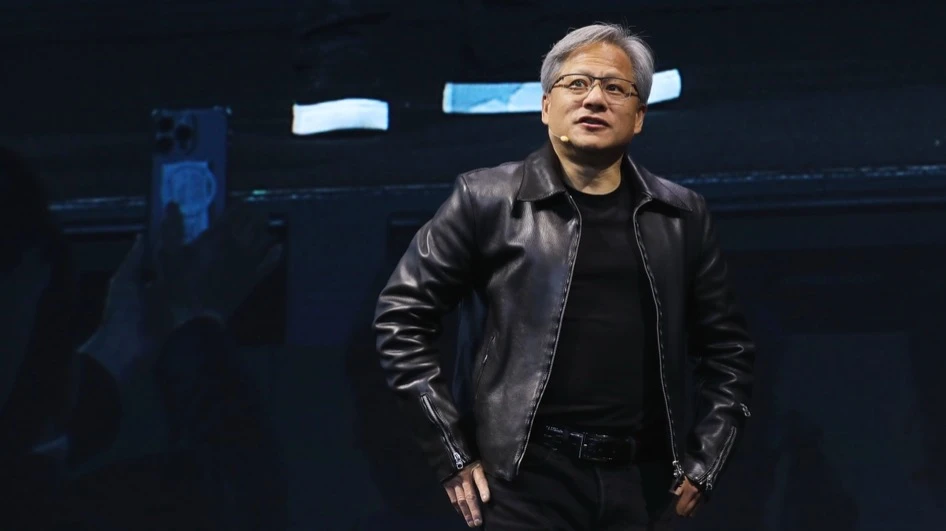
Nvidia CEO Jensen Huang said at the company's GTC 2026 conference that SaaS companies that sell software now will eventually sell AI agents. That's how they will become AaaS. Photo: glen photo / Shutterstock.com
In February, software vendors' shares collapsed due to investors' fears that AI was threatening their business. Now the SaaS sector has almost recovered from the "software apocalypse". And Nvidia CEO Jensen Huang said that SaaS companies will eventually become AaaS - and sell AI agents. Vladimir Tsuprov, an investor and author of the Telegram channel VTs, wrote what this means for Nvidia itself and how to invest in the growing AI-agent sector.
The new AI transformation
Have you been waiting for the AI bubble? Get AaaS! For those who are out of the loop, let me explain. SaaS is when companies provide software to users, and they use it to create content or analyze data. AaaS is agentic AI as a service, the model of tomorrow, when users will give tasks to AI agents, and they will find data, make decisions, and deliver the finished result.
For example, you need an HR management system. Instead of searching and comparing ready-made solutions and gathering requirements, you "buy" a customized AI agent. It will instantly build a ready-made product for your tasks and help you translate scanned records and Excel tables into a structured database. At the same time, it will calculate how many vacation days an employee Vasya took, how much he spent on cabs, etc. Simply put, you describe the task in human language and get a clear report. And then you just say: "move the logo", "add a field with passport data" - and the report is finalized to suit your every whim.
I didn't make that up, it was Nvidia CEO Jensen Huang who said it. At the company's annual GTC conference, he said that SaaS companies will eventually become AaaS companies, and instead of selling software, they will offer AI agents to help customers create their own software.
Jensen Huang is the CEO of Nvidia, the largest provider of such solutions and the most expensive company in the world, with a capitalization above $4 trillion. And there is no reason not to believe him.
What is needed for AaaS? You need inferencing - that is, generating AI responses.
The introduction of AI agents will obviously not lead to the abandonment of conventional software. But it can be revolutionary in terms of replacing workers who do routine work. There will be no abandonment of corporate data storage and document management systems, and AI agents will play strictly by the rules.
They will not be able to give a 50% discount to a customer if it is prohibited by corporate rules at the system level. They won't be able to give even a 10% discount if it requires the confirmation of another agent or person. Errors in reports, planning and other tasks that AI agents can make, humans will be able to identify only after the fact. But there is already experience in solving this problem - in AI-agent programming assistants (it's not AaaS yet, but it's close) - Codex/Copilot. The task orchestrator now repeatedly checks the written code, reducing the probability of giving the user solutions with obvious errors.
When the AI-agent assistant is brought to a level where its "business mistakes" are less frequent than a human's, and it gains "sufficient autonomy", then it will be trusted in the same way that an employee is trusted now.
What's in it for Nvidia?
AI agents are resource-intensive, and AaaS will multiply the number of requests to AI. This will require even more graphics cards and data centers.
Does this mean you should buy Nvidia stock? It's not that simple. The stock looks cheap on a three-year forward-looking Price/Earnings multiple (13), but there is a nuance: the company sells graphics cards with very high margins. When training models, there are few alternatives so far.
But inferencing and AaaS involves counting model responses. And here the competition is potentially wider than in model training. First of all, together with Nvidia, AMD and non-public Cerebras are playing on the market. The latter is particularly interesting for its architecture: it has a very large specialized chip that, due to its high power and less dependence on inter-chip communication, can dramatically accelerate the output of AI responses. The company is preparing for an IPO, presumably in April this year.
How to invest in AaaS
The key question is whether Nvidia will be able to maintain its super margins given the accelerating competition. I don't know. That's why I'm not investing in AI through Nvidia.
The growth of the AI industry provokes huge growth in related industries as well - data center construction, power generation, copper mining, supply of climate control equipment, without which data centers cannot operate. These are the so-called "shovel manufacturers." Examples include Jacobs Solutions, Eaton Corporation, Vertiv Holdings, WESCO International, and Bentley Systems. In addition, there are ETFs that track stocks of companies in the electric power and utilities sectors: VPU, XLU.
And if you look at the next stage, when AaaS will appear on a computer in every home, it is logical to expect AaaS in hardware. I am talking about robots with brains. We remember that terminators were born on production lines, and Elon Musk has already promised to produce robots in the millions.
Robots are a lot of sensors, servos, electronics, mechanical components, etc. Given U.S. leadership in AI, and given the security issues, we should expect Americans to manufacture their robots in places other than China.
Here you can pay attention to the promotions of robotics equipment suppliers - for example, Avnet, Arrow Electronics, Timken and TE Connectivity.
Does not constitute an investment recommendation
This article was AI-translated and verified by a human editor