Luxury brand Burberry has made a profit for the first time in two years. Why did the shares collapse?
Wall Street analysts still believe in the upside potential of Burberry's stock, but the number of buy recommendations has decreased

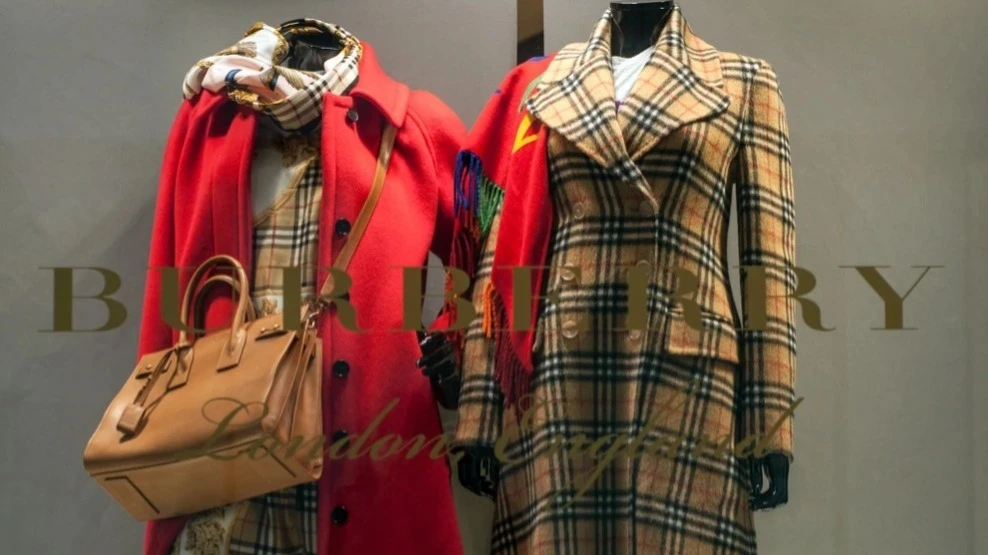
Burberry's new management brought mannequins back into the boutiques to get rid of the art gallery atmosphere / Photo: NeydtStock/Shutterstock.com
British luxury brand Burberry reported an operating profit after a prolonged period of losses, but its shares fell in price: investors did not like the vague forecast for the current fiscal year. The maker of luxury trench coats and scarves warned that uncertainty in geopolitics and the economy could make buyers more cautious.
Details
Burberry's management refused to give the market detailed financial benchmarks, limiting itself to the statement about the preservation of positive dynamics. As a result, the company's shares during trading in London collapsed by almost 7% - this intraday fall was the most serious since September 2025, states Bloomberg
Burberry's quarterly results looked better than the market reaction: although revenue for the fiscal year ended March remained at 2.4 billion pounds ($3.24 billion), operating profit reached 115 million pounds ($155.4 million) versus a loss of 3 million pounds ($4 million) a year earlier. Comparable sales returned to growth, though falling slightly short of market expectations, and operating profit including adjusting items jumped more than sixfold to 160 million pounds ($31.1 million to $216.2 million) from 26 million, beating consensus forecasts, Bloomberg reported.
Where's the weak spot
The main source of anxiety was the region in which Burberry includes Europe, the Middle East, India and Africa: last quarter, comparable sales there fell by 2%. The company directly linked the decline to the war in Iran, the Financial Times reports: the conflict has led to fewer tourists visiting the brand's stores.
The head of the company Joshua Shulman tried to reassure investors: he said that the impact of the conflict is "quite localized", and the Middle East accounts for only 2% of Burberry's sales. At the same time, he admitted that he had to "take into account" the general consumer environment, Bloomberg notes.
What's the new head doing
Shulman, a veteran of Coach and Michael Kors, took over Burberry in 2024 after a marked drop in sales and abandoned his predecessors' focus on the heavy luxury segment. Under him, the company has lowered prices, cut costs and redesigned its showrooms: mannequins with ready-to-wear looks have returned, taking away the boutiques' art-gallery atmosphere and making the brand easier to understand for the average shopper. The Financial Times describes the turnaround as a return to simpler, more practical items that combine style with durability.
What the analysts are saying
While Burberry's business in Europe is stagnating, the Chinese market remains a key pillar of the company. The luxury manufacturer is investing in campaigns with local celebrities such as actor Wu Lei, and last quarter sales in the country rose by 10%. This, however, is not yet enough to allay questions about the pace of recovery, with JPMorgan analyst Chiara Battistini noting that Burberry's progress is probably "not going as fast as some stock market bulls had hoped".
RBC Brewin Dolphin's Catherine Hannon gave a softer assessment: she said the entire luxury sector is working harder than ever in the face of geopolitical uncertainty, "but the financial results released today suggest Burberry is regaining its footing".
Investor caution is also reflected in FactSet data: over the past three months, the number of analysts recommending Burberry shares for purchase (Buy and Overweight ratings) has dropped from 11 to 8. Nevertheless, the consensus has remained at "above market" (Overweight).
Context
Shares of some luxury brands have fallen so much in price against the backdrop of the Iranian war that investors have a reason to buy them on the downturn. For example, in mid-April, Prada shares were trading at a P/E multiple of 12, a record low in the company's public history, which averaged 28. Brunello Cucinelli shares were also trading at a discount to their usual levels, despite a 14% increase in sales in the first quarter, The Wall Street Journal pointed out.
Abnormal discounts also affected the traditional "safe havens" of the sector: according to WSJ, Hermes and LVMH multiples fell by mid-April by 20% and 15% below the ten-year averages. At the same time, the position of Hermes looks stable, as the brand is oriented to the super-rich customers. Their consumer activity does not depend on household inflation and may suffer only in the event of a stock market crash, according to the leading US financial newspaper.
This article was AI-translated and verified by a human editor