Nvidia is urgently searching for a replacement for the “irreplaceable” Huang. Who could be his successor?
Top executives from Apple, Intel, AMD, Micron, and other companies are being mentioned as potential candidates


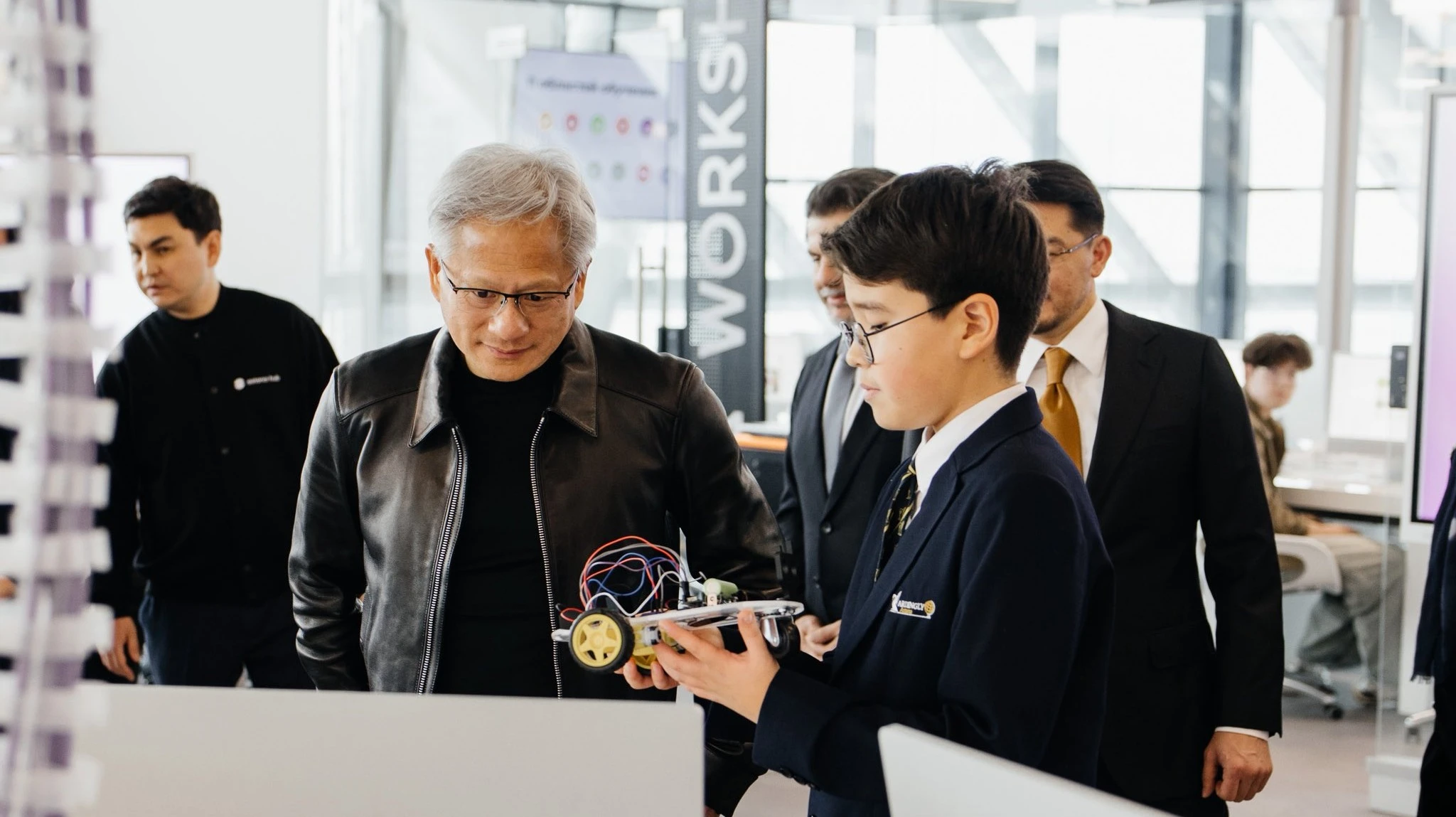
Nvidia has begun searching for a replacement for Huang. Who might take the helm of the company? / Photo: x.com/nvidia
Nvidia has begun searching for a candidate to replace Jensen Huang as CEO following reports of his extramarital affairs, according to Bloomberg. The company has hired an outside recruitment firm to identify potential successors.
This is no easy task, even for the world’s most valuable chipmaker, the agency notes. Over more than three decades at the helm of the company, Huang combined deep technical expertise with operational skills and personally shaped Nvidia’s strategy at every stage. In addition to developing AI accelerators, which now dominate the artificial intelligence market, he transformed the company into one of the key players shaping the development of the entire industry and overseeing an extensive network of customers, suppliers, partners, and portfolio investments. Mizuho analyst Jordan Klein called Huang “irreplaceable” in the eyes of investors, and several strategists warned that his resignation would cause the company’s stock to plummet.
Who might catch the eye of headhunters looking for a new CEO at Nvidia?
Colette Kress
If Nvidia has to look for a successor, it will most likely come from within the company, Yegor Tolmachev, a senior analyst at Freedom Broker, told Oninvest. One of the candidates, in his opinion, is the company’s CFO, Colette Kress. She has held the position since 2013 and previously worked at Cisco, Microsoft, and Texas Instruments.
Colette Kress is the company’s best-known executive after Huang, at least among investors, according to Bloomberg. Boards of directors often appoint chief financial officers when they need to stabilize the situation quickly. However, the market typically views such an appointment as a temporary solution rather than a long-term choice—especially in the technology sector.
It’s more likely that Kress will serve as interim CEO: she’s an experienced financier, but she lacks the technical background that Huang has, Tolmachev notes. Investor Michael Burry wrote about the same thing in his blog, Cassandra Unchained, on November 12. According to him, among Nvidia’s executives, “there is no one who has a comprehensive understanding of the company’s operations on a global scale.”
Ian Buck
Vice President Ian Buck is responsible for Nvidia’s data center products, including AI chips, and is well known to the company’s customers. He also created CUDA—a key software platform that made Nvidia’s chips suitable for artificial intelligence tasks. However, he lacks the management experience that investors typically expect from the head of a large public company.
On the other hand, Baka has the technical background that Kress lacks, which makes him a candidate for the CEO position, Tolmachev notes.
René Haas
Rene Haas, CEO of Arm Holdings, leads a leading chip architecture developer that works closely with Nvidia. A former top executive at Nvidia, he manages a complex ecosystem of customers and partners and has a deep understanding of both the AI chipmaker’s business and the technology market as a whole, according to Bloomberg. In 2020, Nvidia attempted to acquire Arm—a company controlled by SoftBank Group—but the deal fell through due to objections from antitrust regulators.
Lisa Su
AMD CEO Lisa Su leads Nvidia’s closest competitor in both technology and customer base. Under her leadership, AMD has surpassed Intel—a pioneer in chip manufacturing—in technological leadership, and the company’s stock has risen nearly 170-fold. Nevertheless, AMD lags far behind Nvidia in scale, and its AI chips are still a long way from matching the market penetration of Nvidia’s products, Bloomberg notes.
Lisa Su heads a company that is “Nvidia’s only real competitor,” as The Information also reported. She has managed to drive rapid revenue growth for the company after several years of stagnation. Of course, the competition between the two chipmakers could complicate such an appointment. Furthermore, Su is Huang’s cousin, which is another obstacle. Therefore, René Haas may prove to be a more suitable candidate. He knows the industry inside and out and even spent seven years at Nvidia early in his career, according to The Information.
Lip-Bu Tan
Intel CEO Lip-Bu Tan is the best candidate for Nvidia, said DA Davidson analyst Gil Luria on TITV, a video project by The Information.
“He’s really a very good CEO at a very bad company,” Luria said. “There’s only so much this capable leader can do for Intel: the company is broken from top to bottom. Nevertheless, he’s accomplished a lot, turned things around, and significantly boosted the stock price—even after a sharp correction. But his options are still limited. He understands the entire ecosystem very well, knows all the players, and has good connections in Asia, so there would be continuity. He could be an interesting candidate for the position.”
Lip-Bu Tan is a veteran of the semiconductor industry. He served as CEO of the IT company Cadence Design Systems from 2009 to 2021. During his tenure, the company’s revenue more than doubled, and its market capitalization soared more than 30-fold. Since 2025, he has been leading Intel, which was once the undisputed leader in the microchip market but has since lost ground to competitors, including Nvidia.
Johnny Srugi
Johnny Sruji, head of Apple’s hardware division, leads one of the industry’s most successful in-house chip development programs. These chips power the iPhone, Mac, and the company’s other devices. Thanks to this experience, he is highly respected for his expertise in chip design, product integration, and long-term technology planning. However, he has spent most of his career within Apple’s closed ecosystem and has never had the opportunity to publicly promote and sell products—something Huang is known for, according to the agency.
Matt Garman
Matt Garman, head of Amazon Web Services, like Huang, combines technical and managerial experience. He leads a large-scale business that rents out computing power through an extensive network of data centers, including Amazon’s own chips. One drawback of his candidacy: Amazon is believed to have lagged behind competitors such as Microsoft and Google at the start of the race for AI infrastructure, according to Bloomberg.
Sanjay Mehrotra
Sanjay Mehrotra, CEO of Micron Technology, knows how to run a chipmaker during both boom and bust cycles. Under his leadership, the company’s stock has risen by more than 2,700% amid a surge in memory prices driven by demand fueled by artificial intelligence. But his experience is focused primarily on manufacturing and memory, rather than on graphics processor architecture and the software ecosystem, Bloomberg notes.
Amin Vahdat
Amin Vahdat of Google oversees the company’s Tensor Processing Unit (TPU) program—yet another competitor to Nvidia in the AI chip segment. He is highly qualified technically, but, as with several other candidates with engineering backgrounds, he has less experience managing a large public company with a scale, commercial complexity, and level of investor attention comparable to Nvidia’s, Bloomberg notes.
Members of the Huang Family
Three members of the Huang family currently work at Nvidia itself—his children, Spencer and Madison, as well as his son-in-law, Nico Caprez. Caprese serves as vice president of global AI infrastructure development—the most prominent of the three positions—and is actively involved in negotiations with so-called “neo-cloud” providers and other data center partners. Huang has previously stated that he does not want to burden his children with the responsibility of running Nvidia and that they “must earn it themselves.”
This article was AI-translated and verified by a human editor