OPEC's "breakdown": what questions about the future of the organization remain after the UAE's withdrawal from it

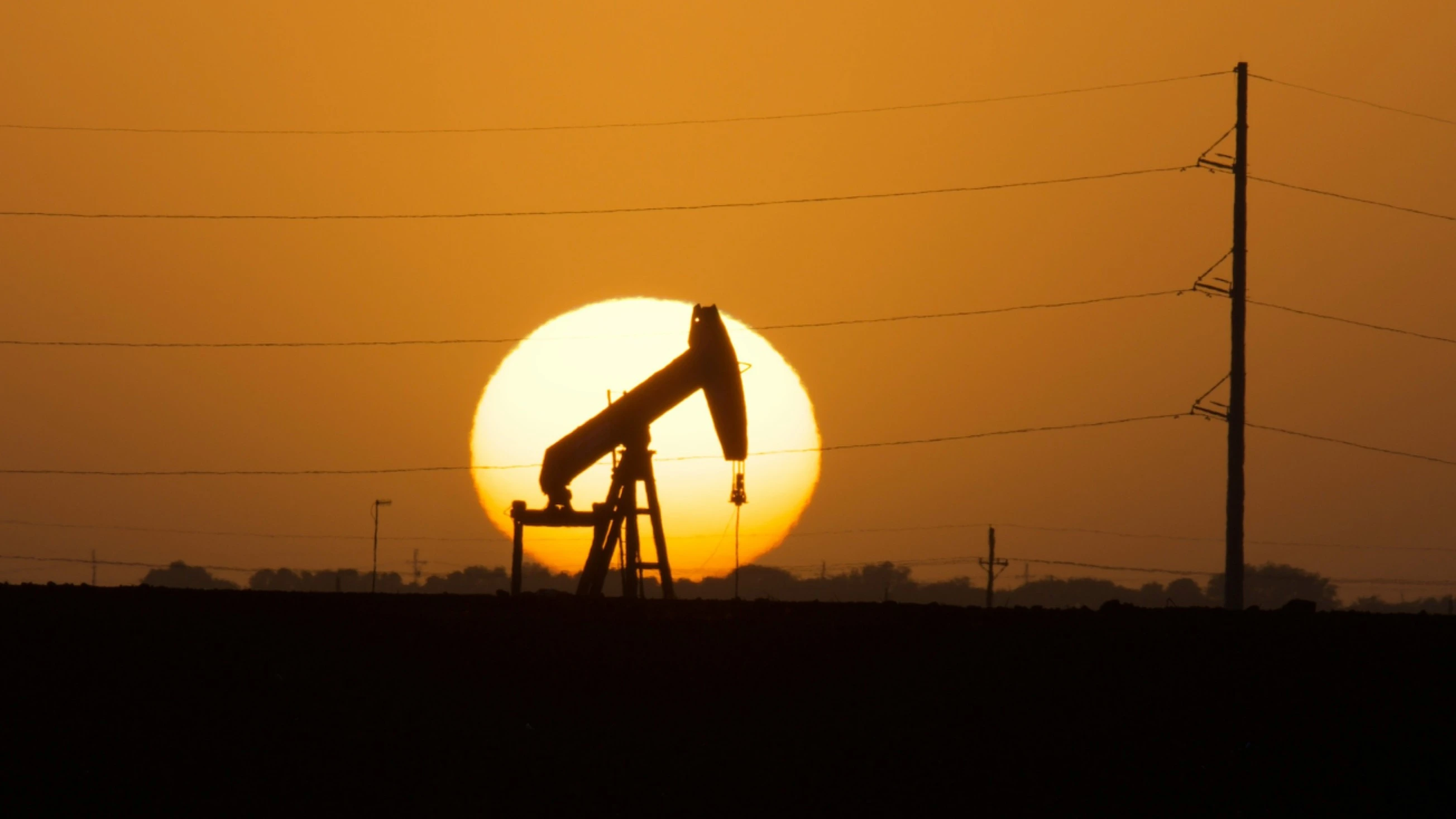
The collapse of OPEC or a significant weakening of the organization's role in the oil market is most beneficial to oil importers and the US as a political player / Photo: Duncan Sanchez / Unsplash.com
The UAE left OPEC and OPEC+ on May 1. Will this decision provoke the exodus of other countries from the organizations and who will fight for their preservation? Alexey Golubovich, analyst at Arbat Capital Advisory Services Limited (UK), analyzed the consequences of this decision for the association of oil exporting countries and the oil market.
What other issues remain after the UAE's withdrawal from OPEC
The Emirates became the fourth country to leave the oil exporters' association in the last seven years - previously Angola, Ecuador and Qatar left it (all mainly due to their unwillingness to comply with oil production quotas).
This raises a number of questions about the implications of the UAE's decision:
- Who is interested in starting the withdrawal of countries from OPEC and why?
- What benefits will the elimination or weakening of OPEC bring to the major oil producers?
- Who's next to go?
- Which countries will fight to keep OPEC, and what interests might Russia have?
- How will the prospect of OPEC collapsing or weakening affect the price of oil?
Who benefits from the collapse of OPEC
To date, only the UAE has announced its withdrawal from OPEC. For Venezuela, this can only be seen as a likely scenario. It could leave OPEC if U.S. President Donald Trump wants it to, the Globe and Mail wrote.
The collapse of OPEC or a significant weakening of the organization's role in the oil market is most beneficial to oil importers, particularly Asian countries such as Japan or South Korea, as well as to the US as a political player.
The reason is that the coordinated actions of OPEC and OPEC+ members led to higher oil prices. And if this coordination does not happen, in the medium-term horizon it will mean more competition for market share and a lower oil price if logistics through the Strait of Hormuz normalize.
The U.S. has long criticized OPEC for "inflating" prices, and the current easing of rules for Venezuelan oil (in March, the U.S. allowed, with some restrictions, the sale of Venezuelan oil and oil products to U.S. companies) is motivated by an attempt to increase supply in the market against the backdrop of the war with Iran. At the same time, American consumers and the US administration, which does not need a surge in inflation, benefit from cheaper oil. But American shale producers do not.
Among the Gulf countries, the UAE is the main beneficiary. The Emirates have always had a problem: they invested in capacity expansion, but OPEC+ quotas limited the monetization of these investments. The UAE produced about 3.4 million bpd before the war, including quotas, and could potentially increase production to 5 million bpd. Analysts at HSBC estimate that the UAE could increase production to 4.5 million bpd.
The country has had a long-standing disagreement with Saudi Arabia over quotas, in addition to pursuing a course of "strategic autonomy."
"The "rift" between the UAE and Riyadh is not just about OPEC - it encompasses regional politics and competition for capital, among other things.
What benefits will the elimination or weakening of OPEC bring to oil producers?
The main advantage is the freedom to sell the maximum at a higher price (for those who can physically bring the oil to market).
Now the deficit is caused not only by quotas, but above all by the war and the blockage of the Strait of Hormuz: the International Energy Agency (IEA) estimated the drop in supplies through the strait in March from 20 million bpd to just over 2 million. Only Saudi Arabia and the UAE have alternative routes in the region.
Thus, the benefit of the "partners" is asymmetric. The UAE and Saudi Arabia get more options because they have bypass routes - through the port of Fujairah and the Red Sea, respectively.
And Iraq, Kuwait, Qatar, Bahrain and Iran depend on Hormuz. The available "bypass capacity" for the Gulf countries was estimated by the IEA at only 3.5-5.5 million barrels per day, i.e. much less than the previous volume of trade through the strait.
But there is a downside: if everyone starts producing "as much as they can" after Hormuz is opened, the market will quickly move from shortage to surplus. Before the war in Iran began at the end of 2025, the market was already oversupplied with oil, which, according to forecasts, could increase further in 2026.
Who's next to go?
Venezuela may benefit from leaving OPEC, but only as a medium-term investment and political bet, not just as a way to sharply raise production. It, along with Lebanon and Iran, has already been exempted from the cartel's production restrictions.
Venezuela has the challenge of rebuilding a broken industry and attracting capital. Withdrawal from OPEC may be a signal: investors should not fear that production will then be capped by quotas.
The country expects reforms of oil legislation, autonomy for private operators to rebuild the industry, but investors are still waiting for the authorities to specify contractual terms. But the immediate effect of the exit is weak: Venezuela's oil production in March amounted to about 0.98 million bpd, and the stable capacity estimate is about 1 million bpd, which is not comparable to the UAE.
The next likely source of tension is Kazakhstan, but it is OPEC+, not OPEC. The country has previously repeatedly failed to meet quotas. And OPEC+ has demanded compensatory cuts from it. But the country doesn't have the scale of excess capacity like the UAE to ramp up oil production. Kazakhstan's OPEC+ quota for Ma is 1.6 million bpd, and estimates show the country can produce only slightly more than that level.
Among current OPEC members, the closest "market logic candidate" is Iraq, which publicly denies exit. Nigeria and Libya would like to produce more, but due to infrastructure problems and internal instability, a high price is more important to them than freedom from quotas.
Who will fight to keep OPEC together
Saudi Arabia is the main defender of OPEC and OPEC+, as these organizations strengthen its role as the largest producer able to manage global oil prices. OPEC and OPEC+ allow it to turn spare capacity into an instrument of political and price power.
Without OPEC, Saudi Arabia can increase production and knock some of its competitors out of the market, but it will lose its main tool to keep the price down and control the market. The country can produce about 12.5 million barrels per day, but in recent years has kept production below 10 million because of quotas.
Iraq, the second largest intra-OPEC producer, is also disadvantaged in the near-term logic by withdrawal, elimination or weakening of the association. The country has production growth potential but depends on a stable high price and on exports through a region badly affected by the Hormuz crisis. The country has no plans to leave OPEC+, it wants "stable and acceptable" prices, two Iraqi officials told Reuters.
Iraq, Kuwait, Algeria, Iran and most African members are likely to be officially in favor of staying for now. For them, OPEC is as much about diplomatic weight as it is about prices. OPEC membership adds to it, and that was one of the reasons Iran stayed in the association even during periods of heavy conflict with the Gulf states.
Russia will fight to keep OPEC+. Membership in the organization is necessary to reduce price fluctuations on the energy markets. It is also important for Moscow to maintain a common interest with Riyadh. In the short term, Russia benefits from the high price caused by the war and the blockade of Hormuz. In the medium term, it is disadvantaged by the collapse of the "discipline", because once supplies through Hormuz are restored, this could lead to a sharp increase in supply, a fall in oil prices and an increase in the discount of Urals to Brent.
The political aspect for Russia is that OPEC+ remains one of the few major international formats where Russia is a systemic participant, along with Saudi Arabia, Iraq, UAE, Kazakhstan and other producers. The loss of OPEC+ would also mean for Russia the loss of its channel of influence on global energy. Reuters points out that OPEC+ would produce almost half of the world's oil and oil products in 2025.
Impact on oil price: one month, three months, 2026
It turns out that OPEC is "breaking down" not because the market has become free, but because the war has uncovered old conflicts - quotas, export routes, the rivalry between Saudi Arabia and the UAE, US pressure on the Gulf states, and the desire of individual states to monetize capacity before the long-term decline in oil demand.
For oil prices, this means high volatility and a war premium in the coming weeks. After the opening of Hormuz, there is a growing risk of a strong price decline in the event of a full restoration of supplies to pre-war levels or even an additional 1-1.5 million barrels on the market and a drop in confidence in the quota mechanism.
In the coming month: the main factor influencing prices is traffic through the Strait of Hormuz and the fear of further disruptions.
On April 30, futures for Brent rose above $126, and for WTI - up to $109. At the same time, the market is not expecting a short-term increase in supply from the UAE until the Hormuz passage is restored.
Base corridor for the month: Brent - $105-115 per barrel, with the risk of spikes above $125 on escalation.
On the three-month horizon: if the Strait of Hormuz opens, the oil price could fall faster because the market will start to book future additional oil supplies from the UAE and a weakening of OPEC+ discipline.
But if traffic through Hormuz remains disrupted, reducing the number of OPEC members will do little to help - oil will be physically "trapped" in the region.
The three-month base range for Brent prices is $90-110 a barrel if traffic partially normalizes, $115-135 if there is a new military escalation, and $80-90 if Hormuz opens quickly and there is a chain reaction of OPEC exits or quota non-compliance.
Until the end of 2026: the possible breakdown of OPEC discipline is a factor that could lead to lower oil prices in the second half of the year. But it does not eliminate the war premium.
Our assessment: if OPEC+ is maintained but weakened, Brent is more likely to be at $80-95 per barrel by year-end, and $70-85 if OPEC+ actually collapses after the opening of Hormuz.
If the war and blockade drags on, oil will be $105-125 and higher, even with further OPEC cuts.
This article was AI-translated and verified by a human editor