Oura, Zuckerberg and Kardashian’s “favorite” smart ring maker, goes public. Analysis

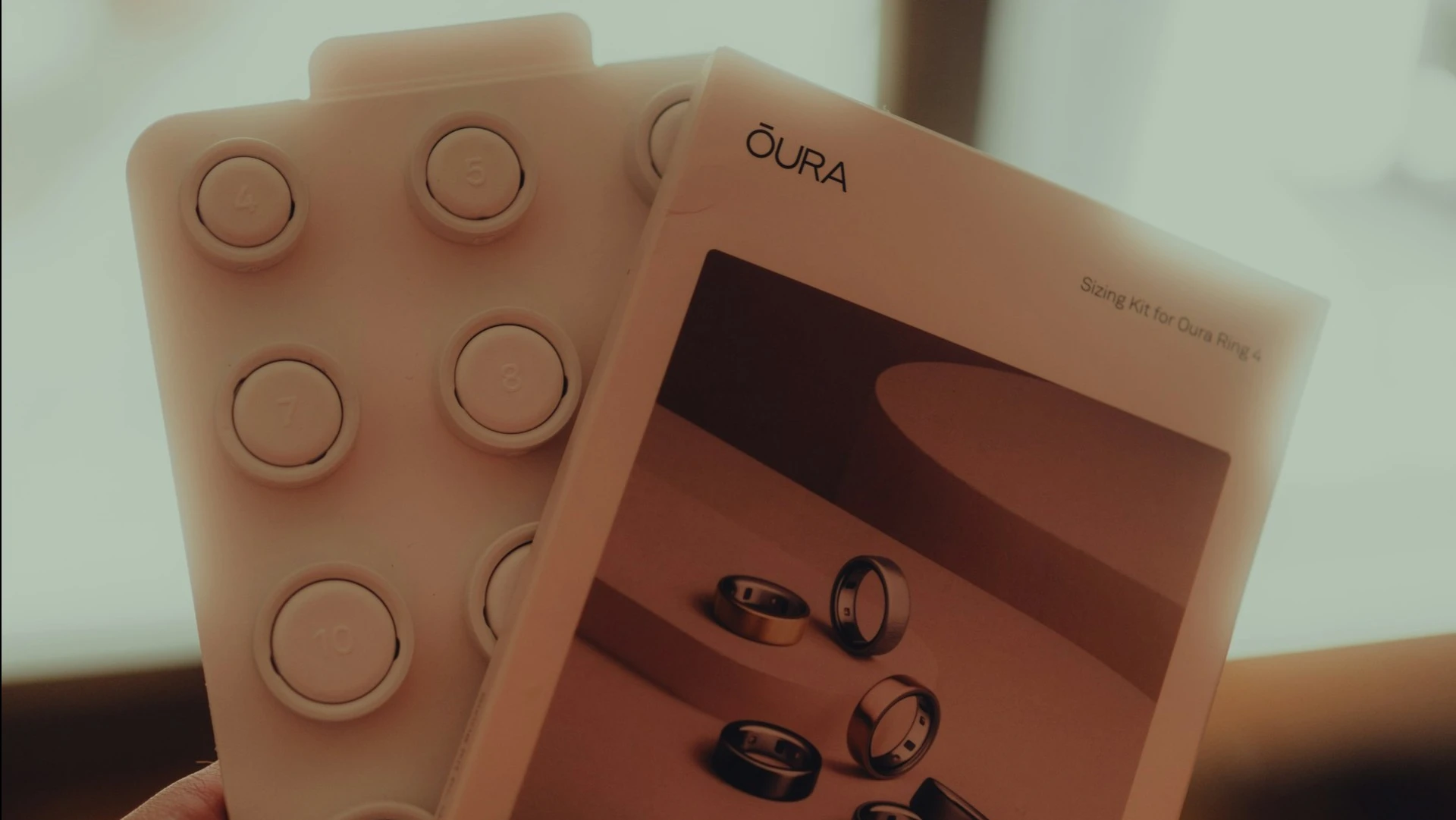
Oura is preparing for an IPO. One of its main risks is the potential loss of patent protection. Photo: Petr Urbanek / Unsplash
The Finnish company Oura manufactures and sells smart rings. It plans to go public in the U.S. by the end of this year. What should its potential investors be looking out for right now?
The favorite wearable gadget of top executives and celebrities
The Oura smart ring is a favorite wearable gadget among many top executives, including Mark Zuckerberg, Fortune reported in 2024. Kim Kardashian, Gwyneth Paltrow, and Prince Harry have also been spotted wearing these rings.
The manufacturer itself reported last September that it had sold more than 5.5 million rings since the product’s launch in 2015, with more than half of those sales occurring in the past year.
The company was founded by three Finnish engineers in Oulu in 2013; none of them are currently involved in day-to-day management. The founders and a number of Oura employees own approximately 25% of the company’s shares. The remainder is held by institutional investors such as The Chernin Group (TCG), Forerunner Ventures, MSD Capital, and Lifeline Ventures.
At first, Oura only produced rings that tracked sleep quality and the body’s recovery level. Then it began adding other products related to the data collected by the ring: subscriptions for more comprehensive analytics and personalized insights in the app, AI-powered health coaching, and features for monitoring women’s health.
In February of this year, the company launched its own proprietary large language model, specifically designed for a female target audience.
And back in May, Oura confidentially filed an IPO application with the U.S. Securities and Exchange Commission. The company decided to go public in the U.S. to gain access to the American capital market and has already moved its parent company from Oulu to San Francisco.
The company is expected to go public by the end of this year. The underwriters for the upcoming IPO are Goldman Sachs, Morgan Stanley, JPMorgan, Allen & Co., and Jefferies.
The estimated offering price, the size of the offering, and a more precise timeframe for the IPO have not been disclosed. Company representatives Noora Pelkonen and Anna Brchisky have not been able to respond to Oninvest’s questions on these matters within two months.
In its most recent funding round—in October 2025—the company was valued at $11 billion and raised more than $900 million from investors. Oura reported at the time that its valuation had nearly doubled in less than a year. In total, it has raised about $1.5 billion in venture capital and debt financing over the past ten years.
How Can You Make Money in the Health Care Industry? Investors Want to Know, Too
Plans for an IPO are bringing the European wearable electronics brand into Wall Street’s spotlight just as investor interest in consumer health tech is rebounding, Euronews reports. Oura’s revenue exceeded $660 million in 2025. The company’s CEO, Tom Hale, told CNBC that sales could approach $2 billion in 2026. Subscriptions account for about 20% of Oura’s revenue, notes Redeye in a July 20 research report (available via Oninvest).
In a research note dated July 14, 2026 (available on Oninvest), Barclays notes that the health-conscious narrative has gained popularity among users thanks to the rapid spread of wearable technology. Devices such as the Apple Watch and Oura Ring allow users to receive immediate and personalized feedback on sleep quality, heart rate, and recovery.
As healthcare shifts toward prevention, technologies such as the Oura Ring are becoming important tools for personalized medicine, according to a study of the femtech market by Barnes Reports.
Oura has successfully carved out a distinct niche in the wearable device ecosystem by combining health tracking with fashion and jewelry. In essence, it has created a new category of devices that do not look as bulky as wrist-worn gadgets, according to analysts at Perry Hope Partners in their study, Consumer Smart Wearables Market 2026 Competitive Review.
In addition, in July of this year, Oura secured the U.S. company Eli Lilly as an investor (the amount of the investment was not disclosed). Through this partnership, the company will be able to enter the rapidly growing market for GLP-1 drugs used to treat diabetes and manage weight, such as Ozempic, Wegovy, and Mounjaro. More than 100,000 Oura users have already logged their GLP-1 medication use in the app. And the company recently introduced a new feature that combines biometric data with context specific to GLP-1 use to give users a more complete picture of their health. This allows people to better see how their habits and physiology change over time. Eli Lilly did not respond to Oninvest’s questions regarding the prospects for an IPO and the development of Oura’s business model.
Evgeny Antoshkin, founder of the sleep-tech project Lezonder, considers Oura’s business model to be quite sustainable. According to him, its main feature is that it “allows the company to make money without scaring people away” with a subscription price of $69.99 per year in the U.S. and €69.99 in the EU. The company has virtually no competitors in its segment—“no one has come close to them yet,” the expert notes.
Patent Wars
Oura's share of the global smart ring market is nearly 79%, according to estimates by Smart Analytics Global. Euronews lists market giants among its competitors. First and foremost, these are Apple, Samsung, and Garmin, which manufacture smartwatches.
At the same time, as Gadgets Now reports, the company is vigorously defending its dominant market position through various channels.
Over the past four years, Oura has filed seven lawsuits and complaints, targeting seven companies.
Oura filed its first lawsuit back in 2022—against the French company Circular SAS. It alleged that the company had copied the Finnish product both in terms of its physical design and in terms of how biometric data is measured and subsequently used to calculate an energy score. Ultimately, in June 2024, the parties entered into a multi-year licensing agreement under which Circular pays Oura royalties for the right to sell its products in the United States. Oura subsequently withdrew its lawsuit.
One of the largest cases involved a dispute with Ultrahuman and RingConn. In 2025, Oura secured a preliminary ruling in its favor from the U.S. International Trade Commission, which found that both competitors had infringed on Oura’s patents. In a statement, Oura called this a “decisive legal victory.”
In the fall of 2025, Oura expanded its legal offensive and filed new complaints. This time, the complaints were against Samsung and Reebok, as well as Zepp Health and Nexxbase. The Finnish company alleged that these companies were copying the ring’s design, the placement of its built-in sensors, the battery, and manufacturing methods. As a result, Nexxbase, the manufacturer of the Luna Ring, decided to voluntarily refrain from entering the U.S. market for the entire duration of Oura’s patents. It will not import or sell its rings in the United States, including gadgets from existing inventory.
Oura's Main Risks
One of the main risks for the company is the potential loss of patent protection. According to McKool Smith, Oura’s key patent for wearable rings is already being challenged—the company is now facing counterclaims, including from Ultrahuman and Zepp Health. Thus, the very legal foundation of Oura’s market leadership could be at risk.
In the world of gadgets, such disputes are not uncommon, according to The Verge. Competing against giants like Samsung poses a real threat to Oura: if it loses, it will give smaller smart ring manufacturers ammunition against it.
Furthermore, the very issue of “defensive” patents will become less and less relevant, argues Evgeny Antoshkin of Lezonder. In the wearable smart device market—particularly in the smart ring segment—the quality of the hardware and various sensors is already becoming a less important factor in competitive advantage. The AI component of the product—specifically, the quality of the algorithms that process user data—will become increasingly important.
In addition, since the summer of 2025, Oura has been a defendant in three separate lawsuits. Among the plaintiffs, Reuters names former NFL quarterback Drew Brees, physician and author Peter Attia, and marketer-investor Gordy Bala.
According to the publication, all three had entered into agreements related to the promotion of the company’s smart rings, but after attempting to exercise their options, they were met with a refusal from Oura. Cases like these often turn out to be protracted and costly.
In its July research note, Barclays highlights another risk. Since owners of wearable devices are, on average, wealthier and significantly more health-conscious than the average consumer, investors should be cautious about forecasts for growth in Oura’s subscriber base beyond its already established core of loyal customers.
This article was AI-translated and verified by a human editor