Pentagon chief's broker tried to buy defense stocks ahead of war with Iran - FT
The U.S. military department called the story "completely false and fabricated"

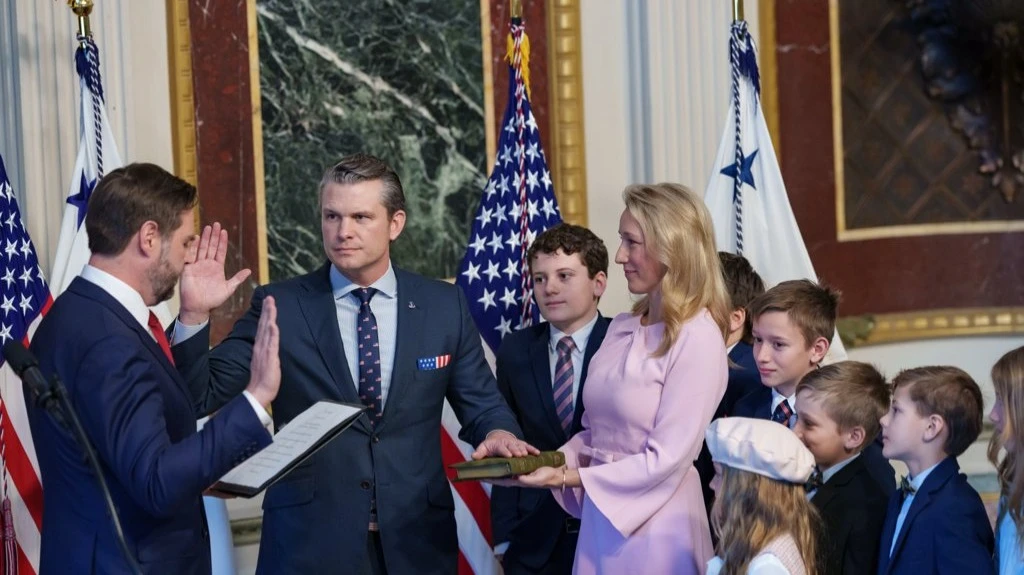
US Defense Secretary Peter Hegseth is a major proponent of war in Iran, says Financial Times / Photo: x.com/DeptofWar
US Defense Secretary Pete Hegseth's broker tried to make large investments in leading defense companies weeks before the US-Israeli strike on Iran, the Financial Times (FT) reported, citing sources. The publication came amid increased scrutiny of suspiciously timely bets ahead of key policy decisions by President Donald Trump.
Details
The FT piece, citing three sources, says that in February 2026, shortly before the US attack on Iran, Hegseth's broker at Morgan Stanley contacted investment firm BlackRock to discuss the possibility of a multi-million dollar investment in its Defense Industrials Active exchange-traded fund (ETF). Its largest positions include combat data analytics solutions provider Palantir, as well as defense conglomerates RTX, Lockheed Martin and Northrop Grumman, for which the Pentagon is a major customer.
According to the FT, the deal did not take place in the end, as the securities of this ETF, launched in May 2025, were not yet available for purchase by Morgan Stanley clients at that time. The newspaper does not specify how independent the broker was in making investment decisions on Hegseth's behalf, nor whether the minister himself was aware of his actions. BlackRock and Morgan Stanley declined to comment.
Pentagon spokesman Sean Parnell told X that the story was "completely false and fabricated" and demanded a retraction. "Neither Secretary Hegseth nor any of his representatives approached BlackRock about such an investment," Parnell assured.
What is the current head of the Pentagon known for
Hegseth - a former Fox News television commentator - is one of the main ideologues behind the Iran war and has often emerged as one of the most vocal supporters of the military campaign against the Islamic republic in the Trump administration, often bragging about US military might, the Financial Times writes. Trump has previously noted that the current Pentagon chief was the first person in his entourage from the national security community to lobby for the outbreak of war, the publication recalls.
Abnormal rates under Trump
Reuters on March 30 highlighted a series of high-yield trades on financial markets and prediction platforms such as Polymarket and Kalshi that preceded unexpected decisions by a sitting U.S. president and could be linked to White House leaks:
- Oil Market (March 2026): Shortly before Trump announced a five-day delay in strikes on Iran's energy infrastructure, unknown individuals opened positions worth $500 million in Brent and WTI crude oil futures within one minute. Oil prices collapsed by 15% after the announcement.
- Trejeris and Forecast Markets (February 2026): Shortly before the elimination of Iran's former supreme ruler Ayatollah Ali Khamenei as a result of airstrikes, traders on the Polymarket and Kalshi forecasting platforms placed large bets on the Iranian leader's imminent departure from office. At the same time, the debt securities market saw an abnormal flow of capital into protective assets - despite unexpectedly high inflation, investors bought 10-year U.S. Treasury bonds on February 27.
- Venezuelan case (January 2026): an unknowntrader recorded about $410 thousand profit on the Polymarket platform, having bought contracts for the removal of Venezuelan President Nicolas Maduro from power in advance. The market assessed the chances of such a scenario as low, and after the news about the US special operation in Caracas on January 3, the price of contracts increased many times.
- Options Market (April 2025): Minutes before Trump's announcement to suspend duties, unknown traders invested $2.14 million in call options on the growth of the US stock market. A 9.5% jump in the S&P 500 index allowed them to record more than $21 million in "paper" profits.
What about defense stocks
Since the start of the war in Iran on February 28, the STOXX Europe Targeted Defense index of arms manufacturers' stocks has fallen more than 10%. The losses of the U.S. defense benchmark Dow Jones U.S. Aerospace & Defense for the same period exceeded 13%.
The clue lies in investors' positioning, or more precisely, in the overload of positions, Reuters writes. During strong market turmoil, investment funds start automatically selling assets to quickly reduce risks and get to the cache. Instead of selective sale of assets, they proportionally reduce all positions in the portfolio, due to which the securities that had previously shown the greatest growth fall under the maximum sell-off. This explains why quotations of the defense sector - an obvious beneficiary of geopolitical conflicts - paradoxically sagged during the Iranian war, the agency notes.
This article was AI-translated and verified by a human editor