The stock market approached its highest valuation in history - the days of the dot-com bubble

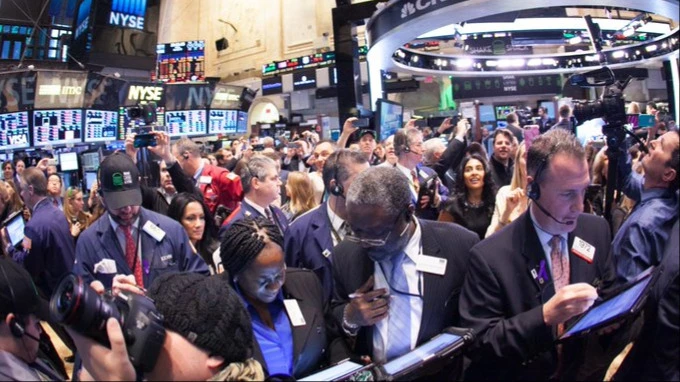
The popular stock market indicator has almost caught up with the record level of the dot-com bubble / Photo: X / NYSE
Popular among analysts indicator of long-term assessment of the U.S. stock market is now 5% below the mark reached during the dot-com bubble of the late 1990s, reports Yahoo Finance. If the indicator, rises above, the stock market will become the most expensive in history, notes the publication.
What the indicator shows
The Shiller P/E ratio, named after Nobel Prize winner Robert Shiller, who coined it, is also referred to as "cyclically adjusted P/E". The regular P/E indicator reflects the ratio of a company's stock price to its projected annual earnings, but can also be calculated for the entire S&P 500 index or individual sectors. The Shiller multiple compares the value of the index to the average real inflation-adjusted earnings of its constituent companies over the past 10 years, thus smoothing out short-term fluctuations in financial performance.
It is considered one of the main indicators of long-term evaluation of the U.S. stock market: the higher it is, the more expensive stocks look by historical standards. Now the indicator is 42.18, writes Yahoo Finance. Before the collapse of the dot-com bubble, the value reached 44, and the average for the last 100 years is about 16-17.
Can the AI bubble burst?
Although markets experienced a large sell-off during trading on May 15, they have generally shifted into a strong upward mode in Ma. Investor sentiment improved due to a combination of a strong reporting season confirming sustained investment in AI infrastructure and some easing of tensions around the conflict with Iran.
Large-scale construction of data centers for artificial intelligence is now supporting U.S. economic growth, explains Yahoo Finance. The market expects Nvidia, the largest AI chip maker, to report impressive results next week.
But what the market does not know - and this is a risk that investors may underestimate - is how the new Fed chief Kevin Warsh will react to the acceleration of inflation in the country, emphasizes Yahoo Finance. If anything has the potential to trigger a sharp overheating and subsequent collapse of markets in the near term, it's Worsh's tougher-than-expected stance immediately upon taking office, the publication writes. "Inflation remains a problem in the long run and could be a problem for the entire market," warned Northwestern Mutual Chief Investment Officer Brent Schutte.
This article was AI-translated and verified by a human editor