Rising Prices and Paleontological Discoveries: What Kazatomprom's Financial Reports Revealed

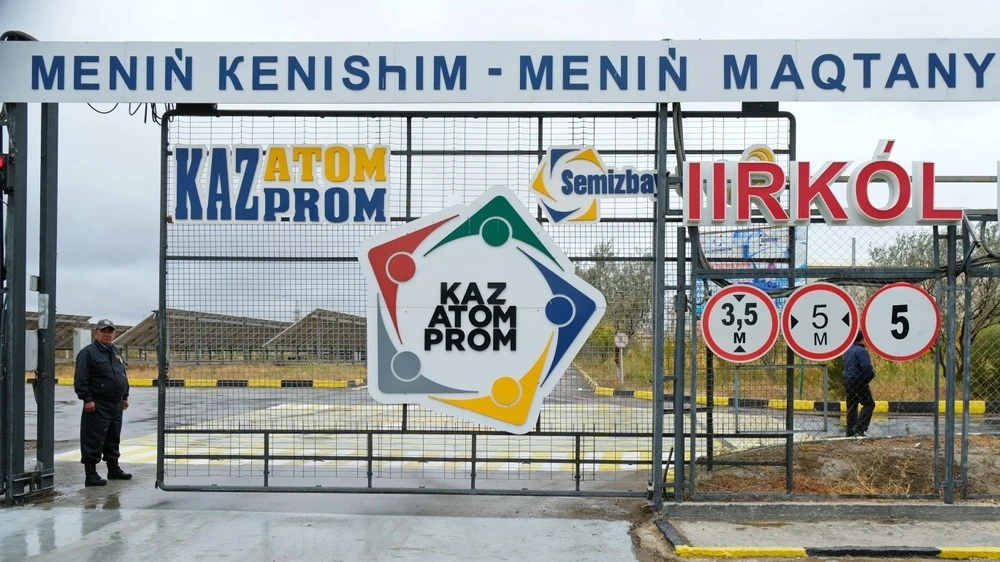
Countries Are Betting Big on Nuclear Power: 38 Nations Have Signed a Declaration to Triple Nuclear Power Generation by 2050 / Photo: Vladimir Tretyakov / Shutterstock.com
The National Atomic Company "Kazatomprom"—the world's largest producer of natural uranium—has released its financial results for the first half of 2026. The financial statements show a company that is benefiting from the cycle in terms of revenue but is currently giving up a significant portion of those gains to costs and exchange rate fluctuations, writes Oninvest analyst Aldiyar Anuarbekov:
In 2026, the uranium market is characterized by two distinct prices. After surging above $100 per pound in January, the spot price consolidated and stood at around $87.55 per pound as of August 19, 2026. TradeTech’s long-term contract indicator reached $97 per pound as of June 30—a historic high and the best level since 2008. The gap is explained by the structure of demand: utility companies purchase the bulk of their raw materials through long-term contracts rather than on the spot market, and, as investment firm Sprott notes, for the 14th consecutive year, they have been contracting for volumes that are less than what their reactors consume. According to the U.S. Energy Information Administration, the unmet demand of U.S. nuclear power plant operators for 2025–2035 amounts to 186 million pounds of U₃O₈. At the same time, countries are increasing their commitment to nuclear power: 38 countries, including Kazakhstan, have signed a declaration committing to a threefold increase in nuclear generation by 2050.
One of the beneficiaries of this arrangement is Kazakhstan’s “Kazatomprom.” The company mines natural uranium using the in-situ leaching method at 27 deposits, grouped into 14 mining assets, and accounts for about 20% of global primary production. Its global depositary receipts are traded on the London Stock Exchange and the Astana International Exchange; its controlling shareholder is the Samruk-Kazyna Fund, which holds a 63% stake.
Revenue was driven by the price
On August 21, 2026, the company published its consolidated financial statements under IFRS for the first half of the year. Revenue rose 9% year-over-year to 717.83 billion tenge ($1.5 billion), compared with 660.17 billion tenge a year earlier. Operating profit remained unchanged at 252.55 billion tenge ($519.9 million), compared with 253.67 billion. Net income, however, fell by 9% to 240.43 billion tenge ($494.9 million). This was due to the fact that the net foreign exchange loss resulting from the tenge’s appreciation against the dollar increased to 19.35 billion tenge ($39.8 million) from 12.74 billion, financial income fell to 24.32 billion tenge ($50.1 million) from 30.91 billion, and financial expenses rose to 14.52 billion tenge ($29.9 million) from 9.04 billion.
Adjusted EBITDA rose 2% to 371.25 billion tenge ($764.2 million), but EBITDA attributable to the company’s shareholders fell by 12% to 264.84 billion tenge ($545.1 million)—minority partners in joint ventures retained a larger share of the profit. Earnings per share fell by 22% to 604 tenge ($1.24), and cash flow from operating activities decreased by 55% to 239.59 billion tenge ($493.2 million). Here and throughout, tenge figures for the first half of the year have been converted using the official exchange rate of the National Bank of Kazakhstan as of June 30, 2026—485.82 tenge per dollar.
Revenue was driven by price, not volume. The group’s average selling price rose 16% to $67.88 per pound, while the average spot price at the end of the month increased 25% to $86.83 per pound. The gap persists due to existing long-term contracts with fixed components and price caps agreed upon in a different pricing environment. Production on a 100% basis increased by 9% to 13,291 metric tons of uranium, while consolidated sales decreased by 1% to 7,586 metric tons. Sales by Kazatomprom itself fell by 13%, which the company attributes to timing and changes in the delivery schedule based on customer requests, rather than a change in the portfolio structure. The group’s finished product inventory rose by 23% to 8,245 metric tons—the result of higher production coupled with lower sales volumes. According to estimates by investment bank Stifel, the group fulfilled 38% of its annual sales plan in the first half of the year, meaning that the bulk of shipments will occur in the second half.
Reasons for the Increase in Production Costs
The weak point in the financial statements is cost of production. The cash cost of uranium production (C1), on a comparable basis, rose by 37% to $24.48 per pound. All-in sustaining costs (AISC) rose by 25% to $38.45 per pound. The company cites three reasons:
an increase in the mineral extraction tax rate from 9% to 12.4%;
a rise in the price of sulfuric acid;
and the strengthening of the tenge, in which most of the expenses are denominated.
The company confirmed its production and sales forecast for 2026 but revised all financial targets, assuming an exchange rate of 490 tenge per dollar instead of the previous 540. Revenue is projected at 2,100–2,200 billion tenge ($4.3–4.5 billion at the assumed exchange rate) instead of 2,200–2,300 billion, cash cost of uranium production—$25.50–27.00 instead of $23.50–25.00; AISC—$39.00–40.50 instead of $35.00–36.50; capital expenditures for mining operations—435–450 billion tenge ($888–918 million) instead of 415–430 billion.
Corporate News
We would like to highlight two corporate events from the first half of the year. On July 29, the company completed the payment of dividends for 2025—1,292.27 tenge per share ($2.73), or a total of 335.16 billion tenge ($708 million), which corresponds to 75% of free cash flow (calculated at an exchange rate of 473.4 tenge per dollar, which the company used when transferring funds to the depository). Meanwhile, construction of the TQZ sulfuric acid plant—which is intended to eliminate dependence on imported reagents— has been halted for an unexpected reason: during excavation work, the contractor stumbled upon paleontological finds, and in accordance with the law on the protection of historical and cultural heritage, work has been suspended until the excavations and laboratory analysis are completed. The plant’s commissioning has been postponed—a delay of 6–12 months.
Investment firms have taken different approaches to the stock—all three ratings were issued prior to the release of the half-year financial report. On August 3, 2026, analyst Paul Kiryanovs of BofA Global Research reaffirmed his Buy rating with a price target of $93 per depositary receipt. On August 5, Ralph Profiti of Stifel maintained a Buy rating with a price target of $85. On August 10, Anna Antonova of J.P. Morgan raised her price target for December 2027 to $90 from $89, while maintaining a Neutral rating. Kazatomprom publishes a list of analysts covering the company on its website.
“Kazatomprom” benefits from the cycle in terms of revenue, but so far it has seen a significant portion of those gains offset by costs and exchange rate fluctuations. Revenue is denominated in dollars, while a substantial portion of operating, production, and capital expenditures is denominated in tenge. The second factor is the partnership structure: the four enterprises jointly operated with Russia’s Uranium One—Karatau, Akbastau, “Budennovskoye,” and YUGHK— account for approximately 32% of adjusted production, based on the company’s 2025 data. Sanctions against Rosatom and its affiliates are listed by Kazatomprom as the top item on its list of key risks.
This article was AI-translated and verified by a human editor