Nuclear Resilience: Which Companies Made the List of the World's Most Valuable Mining Companies?

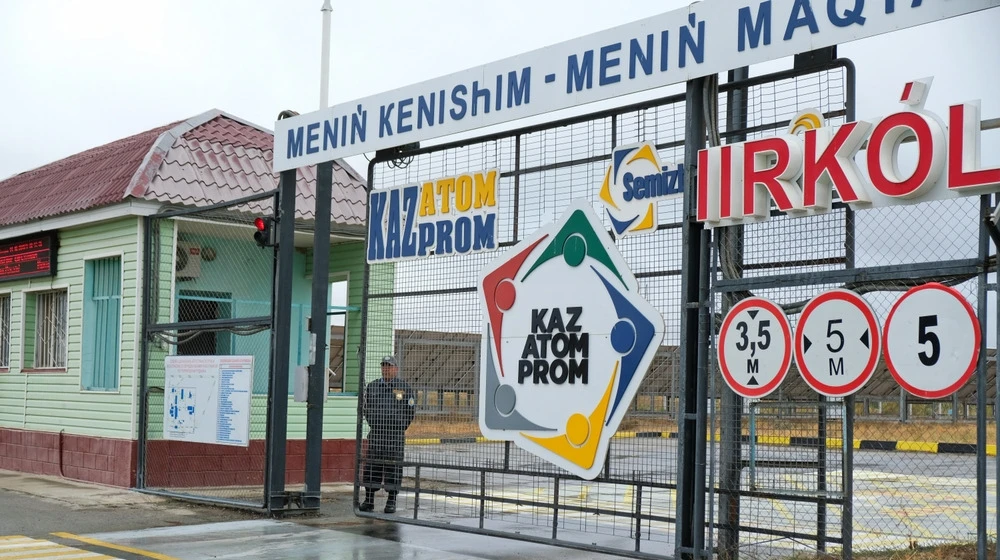
"Kazatomprom" maintains its position in the global rankings. Photo: Vladimir Tretyakov / Shutterstock.com
"Kazatomprom," the world's largest uranium producer, retained its 37th place in Mining.com's ranking of the world's 50 most valuable mining companies as of the end of the second quarter of 2026.
"The world's largest uranium producers, Cameco and Kazatomprom, remained off the ranking for several years following the Fukushima disaster. Now their positions appear more stable than ever," the commentary on the ranking states.
Kazatomprom’s market capitalization is estimated at $18.6 billion, representing a 32% increase; however, the ranking’s compilers note that the figure declined by 7.7% over the last quarter. Canada’s Cameco, which partners with Kazatomprom at the Inkay deposit, also retained its position from last year—though it ranks twenty spots higher than its partner, at 17th place, with a market capitalization of $41.9 billion. “The stock follows the long-term contract cycle rather than the spot market, where the price of uranium concentrate has fallen from its January highs and has stalled at around $85,” the compilers note in their commentary, highlighting the projected “multi-year structural bull trend.”
NAC "Kazatomprom" accounts for approximately 40% of global uranium production; all of its deposits are located in Kazakhstan. As of 5:00 p.m. Almaty time on July 29, 2026, the company's shares on the LSE were trading at $63.4.
Top-Ranked Teams
At the end of the second quarter, the combined market capitalization of the companies in the ranking stood at $2.19 trillion, down $228 billion from the previous quarter, meaning that growth since the beginning of 2026 totaled just $22 billion.“After the first quarter, the companies in the ranking overcame the fallout from the outbreak of war between the U.S. and Iran and reached the $2.41 trillion mark; in the following quarter, nearly all of that gain was lost,” the authors note.
Leading the list are Australia’s BHP, with a market capitalization of $208.7 billion and year-to-date growth of 36.1%, and Rio Tinto ($162 billion, 17.2%), as well as Mexico’s Southern Copper ($143 billion, 20%).
In terms of the number of companies on the list, Canada (13), China (9), the U.S. (6), and Australia (5) lead the way. In terms of share of total market capitalization, the picture is slightly different: Canada accounts for 20.6%, but Australia is close behind at 20.4%. China’s share is 13.6%, and the U.S.’s is 12.9%.
Major losses
The losses were distributed unevenly. In the precious metals sector, the authors describe them as “evenly distributed and significant.” This sector still
comprises 17 companies and accounts for more than a quarter of the
value of the index. However, for example, the market capitalization of the Canadian gold miner Agnico Eagle exceeded $100 billion in January, and in just three months, the company lost $28 billion, or 26% of its value. For the most part, losses among companies in the sector remain within the 18–23% range, with the notable exception of China’s Shandong Gold, whose share price fell by 38.1%.
The only company in the ranking that fared worse than Shandong Gold is the Indonesian copper company Amman Mineral, which has fallen 52.9% in value since the start of the year and remains on the list only because the entry threshold was lowered over the past three months from $18 billion to $13 billion. Rounding out the top ten underperformers is China’s Zijin Mining, which in October 2025 acquired the Kazakhstani RG Gold project (the Raigorodok deposit) for $1 billion and pledged to invest another $600 million in its development. Over the past six months, the company’s market capitalization fell by 19% to $101 billion, causing it to drop from third to fifth place.
Despite the media hype, the rare-earth metals sector suffered significant losses: “MP Materials burst onto the scene in 2025, jumping straight to 40th place after its stock tripled in value thanks to a deal with the Pentagon—but since then, it has lost about half its value, which now stands at around $9 billion, ” according to a comment
by the authors. “Following this brief appearance, the Las Vegas-based company now falls well below the threshold, and Australia’s Lynas, with a market capitalization of about $12 billion, also fails to make the top 50. The only representative of the sector remaining is the state-backed China Northern Rare Earth, which ranks 28th with a market capitalization of $26 billion.”
This article was AI-translated and verified by a human editor