Round Numbers: Can Stocks Withstand a U.S. Benchmark Treasury Yield Above 5%?

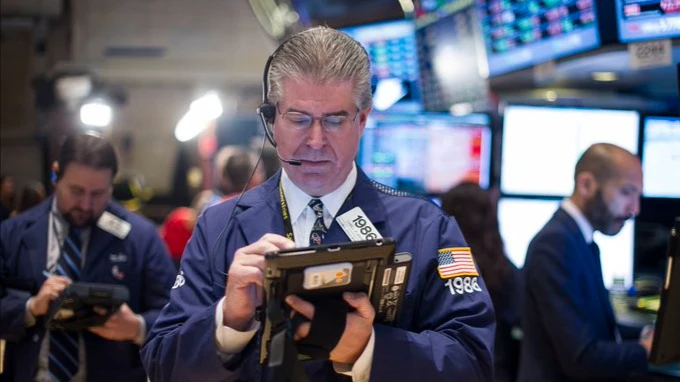
The last time yields on 10-year bonds rose this high was on the eve of the global financial crisis in 2007 / Photo: X / NYSE
U.S. stocks closed lower at the end of trading on September 15: the Dow Jones fell 0.6%, the S&P 500 dropped about 0.5%, and the Nasdaq Composite fell 0.8%. The stock market is under pressure from a new spike in oil prices and anticipation of the U.S. Federal Reserve’s interest rate decision, which will be announced on Wednesday. These factors have intensified the sell-off in the bond market.
The yield on benchmark 10-year U.S. Treasury bonds jumped to 5.041% on Tuesday—a 19-year high, according to CNBC. It then pulled back slightly but remained at the 5% level. This is a bad “sign” for the stock market: historically, rising Treasury yields have heightened investors’ concerns about the impact of high interest rates on stocks, Business Insider reports. But this won’t necessarily halt the bull market, according to Wall Street analysts surveyed by CNBC.
What's Happening in the Debt Market
In recent weeks, global bond markets have been the focus of equity investors: Government bonds are being sold off amid growing fears that the ongoing conflict between the U.S. and Iran will fuel inflation and force central banks to adopt a more hawkish stance, CNBC explains. Ahead of the release of the Fed’s meeting minutes, traders estimate the probability of a 0.25 percentage point rate hike at more than 90%. Such a decision could have an impact on the entire global economy, the network notes.
“Investors are finally beginning to take these concerns seriously,” Melissa Brown, global head of investment solutions research at SimCorp, told CNBC. In addition to the U.S. national debt exceeding $40 trillion and inflation remaining “stubbornly high,” oil prices rising above $100 per barrel “are making people wary,” the analyst commented.

On September 15, the yield on 10-year U.S. Treasury bonds rose above 5.04%. Business Insider notes that comparable levels were seen in 2007—a few months before the start of the global financial crisis.
Yields on 20-year and 30-year securities had already exceeded 5%, but it is the 10-year bonds that carry the most “weight” in the eyes of investors, as they directly affect the cost of borrowing, including mortgages and corporate loans, Interactive Brokers senior economist Jose Torres told the publication.
What does this mean for stocks?
A 5% yield on Treasuries does not in itself signal anything catastrophic, according to Business Insider. However, this particular threshold has become a key benchmark for the market, largely because in recent decades, the yield on 10-year U.S. Treasury bonds has rarely risen above it, Padraic Garvey, ING’s regional head of research for North and South America, explained to the publication.
“Traders pay attention to round numbers, and (...) 5.5% and 6% could become the next benchmarks,” warned Torres of Interactive Brokers. “For an economy that has developed since the global financial crisis, such a yield is already a level that financial markets will find difficult to sustain.” According to the economist, the 5% mark also has symbolic significance: it indicates that investors now find themselves in a situation where interest rates will remain high for longer.
The Federal Reserve's tightening of monetary policy and rising bond yields could pose some challenges for stocks, according to CNBC. Higher interest rates put pressure on valuations because they reduce the present value of companies’ future earnings—one of the main factors determining the value of their securities. And higher-yielding bonds offer investors a relatively risk-free alternative to stocks and encourage them to increase defensive holdings in their portfolios, the network notes.
So far, growth in corporate earnings has offset the pressure that high interest rates have placed on the stock market, but the 5% mark is a key inflection point, according to Barclays strategists. “Above this level, rates have typically become a more persistent source of pressure on stocks,” CNBC quotes the analysts as saying. If the yield on 10-year Treasury bonds settles above 5%, the market will likely require higher earnings per share—that is, lower stock valuations, the bank explained. And since earnings growth is expected to slow, the necessary revaluation may increasingly come at the expense of lower stock prices, Barclays analysts wrote.
In terms of their impact on the stock market, yields have already firmly entered the “danger zone,” according to an HSBC note published in May. At that time, the bank defined a “danger zone” as 10-year bond yields above 4.7%.
However, Goldman Sachs and a number of other Wall Street firms do not see this as a reason to become pessimistic about the market as a whole. In their view, investors should instead adjust their strategy, according to CNBC. Goldman expects the “bull market to continue” thanks to strong earnings growth and solid corporate balance sheets, the bank’s analysts wrote on September 11. Furthermore, as history shows, the market is capable of withstanding monetary policy tightening, according to Goldman’s note. According to the strategists’ calculations, in the 12 months following the start of the Fed’s rate-hiking cycle, the S&P 500 index has, on average, returned at least 9%. In the first three months, stocks typically came under pressure but then rebounded as investors refocused their attention on improving corporate earnings.
"This year, stocks have generally 'held up well against rising bond yields,'" JPMorgan noted in a report published on September 14. Strong corporate earnings and optimistic forecasts contributed to this, according to CNBC. Therefore, analysts believe that the positive correlation between stocks and bond yields may persist for now. Earlier, JPMorgan had described the stock market decline caused by escalating geopolitical tensions as a buying opportunity, the network noted.
What Goldman Recommends
Goldman Sachs suggests categorizing stocks by their “duration,” referring to the time it takes for the securities to start generating income, according to CNBC. Stocks with short durations derive a significant portion of their value from the profits and cash flows that companies are generating right now. For securities with long duration, the valuation depends more heavily on earnings expected many years from now, so they are generally more sensitive to rising bond yields.
Goldman Sachs included Whirlpool, Lennar, Conagra Brands, Biogen, Cigna Group, Super Micro Computer, and Accenture in its list of stocks with short durations. Strategists believe that stocks with long durations may come under greater pressure if yields continue to rise. They identified Cava, Las Vegas Sands, Coca-Cola, Moderna, Bloom Energy, Applied Digital, IonQ, TeraWulf, and CoreWeave as such stocks.
Overall, the sensitivity of stocks to interest rates varies widely, Goldman Sachs notes. Among the sectors that typically perform best when interest rates rise, the bank highlighted consumer staples, energy, the financial sector, and healthcare.
This article was AI-translated and verified by a human editor