Samsung will return up to $80 billion to shareholders—a record for the company and the entire South Korean market

Samsung Electronics to Return a Record $80 Billion to Shareholders / Photo: Tobias Arhelger / Shutterstock
Samsung Electronics will return a record $80 billion to shareholders in the form of dividends and share buybacks. The South Korean chipmaker is facing pressure from investors demanding that it distribute a portion of its massive profits from the AI boom, according to the Financial Times.
Details
Samsung announced that it will return between 90 trillion and 110 trillion won ($65–80 billion) to shareholders this year, depending on business performance, investment needs, and cash flow. This program is the largest in the company’s history, with the amount roughly five times higher than the previous record set in 2020. Furthermore, it represents the highest amount of shareholder payouts among all Korean issuers, Samsung said.
"This record payout is intended to make the benefits of the company's growth tangible for shareholders," the company said, adding that when determining the amount of the payout, it took into account the need to preserve opportunities for further growth.
Samsung plans to repurchase 15 trillion won worth of its own shares between August 24 and November 21, and to distribute approximately 30 trillion won in cash dividends in the third quarter. A decision on the remaining fourth-quarter payouts will be made in January.
Why Is This Important?
Samsung's decision followed an announcement by its South Korean rival, SK Hynix, which this week reported plans to buy back shares worth 40 trillion won ($29 billion) and return more than half of the free cash flow generated between 2025 and 2027 to investors. Analysts at JPMorgan expect SK Hynix to announce further payouts totaling at least $130 billion, according to the FT.
Analysts interviewed by the publication note that the generosity of the world’s two largest memory chip manufacturers signals their confidence: they have sufficient financial resources to maintain stock prices while simultaneously increasing capital expenditures. This will help allay concerns about the sustainability of massive spending on AI.
Samsung and SK Hynix posted record profits thanks to the construction of AI data centers that use their semiconductors. Samsung’s operating profit in the first half of the year jumped more than 12-fold year-over-year, exceeding $100 billion, while SK Hynix’s profit grew five-fold, reaching about $70 billion. Analysts expect the combined operating profit of both companies for the full year to exceed $400 billion.
“The absolute amount [of shareholder payouts] looks impressive, but relative to the company’s strong revenue growth, it’s not such a dramatic increase,” said Choi Won Lee, chairman of Life Asset Management. “This shows that the company has strong financial resources to increase payouts and ease investor discontent,” he added. “The recent decline in the stock price is not due to a change in fundamentals, but rather a pullback following a rapid rally.”
What about the stocks?
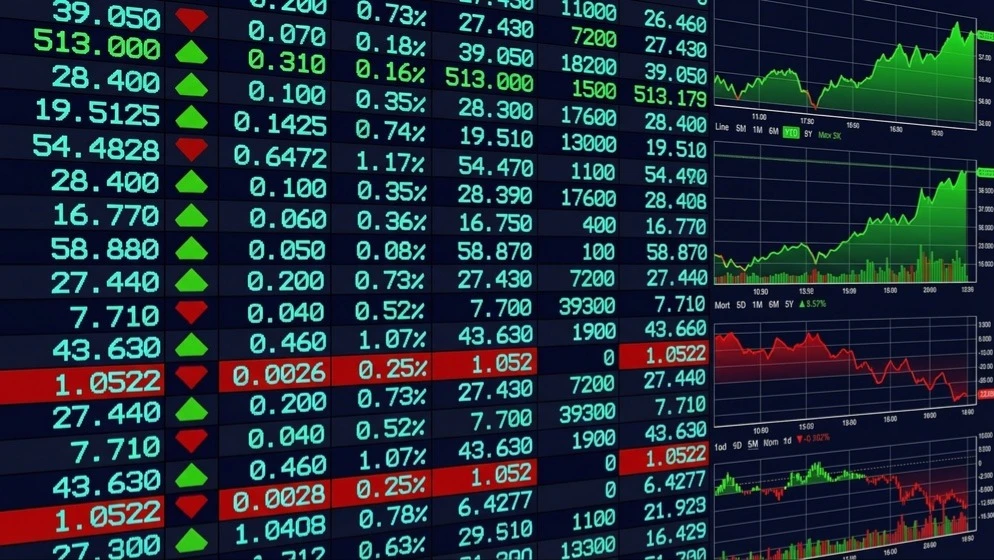
Investors are increasingly wondering whether demand for memory chips has peaked in this traditionally cyclical industry, the FT notes. Shares of Samsung and SK Hynix have fallen 22% and 41%, respectively, from their June highs, although over the past year, the stocks are still up nearly fourfold and sevenfold, respectively. At the close of trading on August 21, Samsung’s stock was up nearly 4%, while SK Hynix’s was up nearly 3%.
36 out of 37 analysts who cover Samsung stock recommend buying it, and only one has a "Hold" rating. The picture is similar for SK Hynix: 38 out of 39 analysts advise increasing holdings in the company.
This article was AI-translated and verified by a human editor