Sergey Bogdanov of Yellow Rocks!: How to Restart a Venture Business Abroad
After moving from Russia, he was able to raise international funding and, together with his partners, launched a startup support program. His goal is to support projects by entrepreneurs from the CIS.
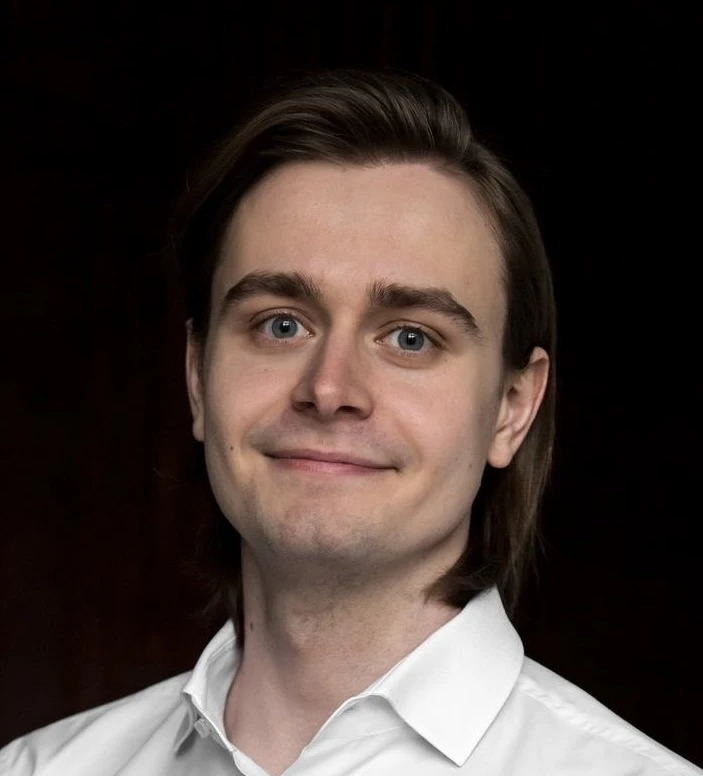
Sergey Bogdanov, CEO of Yellow Rocks! Photo: personal archive
After hostilities broke out in Ukraine, the volume of investment and the number of closed deals in Russia’s venture capital market plummeted: Western capital and many Russian entrepreneurs and investors left the country. Sergey Bogdanov, founder and managing partner of Yellow Rocks!, is one of those who managed not only to relaunch his business abroad but also to build a large Russian-speaking community around it. Venture investor Pavel Myasnikov (P.M.) and Oninvest journalist Yulia Petrova (Y.P.) spoke with him about why Yellow Rocks! believes in founders with Russian “roots,” and which investment areas he considers promising.
From Serial Founders to Investors
— P.M.: Sergey, I know you came to the venture capital market from the business world. Tell us about your first projects.
— I started my business while I was still a student. When I was a junior at Samara Aerospace University, I founded “Sterka.ru”—a service that delivers office supplies to offices in my hometown of Samara, and later throughout the Volga region. The business grew quite well and is still operating today, though I’m no longer involved.
A little later, in 2004, while I was already a graduate student, I headed the university’s newly created innovation and commercialization department, looked for interesting research projects within the departments, and tried to sell them to companies. I’ll admit, selling them wasn’t easy.
But thanks to that experience, I became passionate about starting my own technology business. In 2005, I became one of the founders of the Center for Vehicle and Building Acoustics (CAMIZ), which manufactured sound-absorbing structures, and in 2010, I co-founded the company “Eco Energy.” It installed solar power plants and wind turbines. I had a business idea— to tap into the growing trend in Russia toward green technology and energy. But it didn’t pan out. CAMIZ was liquidated. “Eco Energy” still exists, but the company didn’t take off as we’d originally hoped: there are simply too few niches for small businesses in the green energy sector in Russia.
— Y.P.: Do you still hold any stakes in these or other businesses in Russia?
— No, after 2022, I withdrew from all Russian projects.
— P.M.: How did a serial entrepreneur — someone who is constantly looking for funding for his business ideas — become a venture capitalist, that is , someone who provides that funding to founders?
— It happened naturally. In the 2000s, the business community in Samara was growing rapidly, and I had built up a strong network of local entrepreneurs. I started organizing informal get-togethers for our business circle. We called them “Venture Café.” There, we shared experiences and discussed challenges. For example, we often talked about how difficult it was to attract initial investment. That’s how the idea was born to create an accelerator that would help local startups. And in 2013, with the support of the regional government, we launched StartupSamara. Then, in 2017, we established a regional venture capital fund.
YellowRockets was then founded at StartupSamara and began launching a series of accelerators. At that time, there was a growing demand for innovation in the country. We made money by helping businesses find developers to create the solutions they needed. During those years, we launched a large number of corporate accelerators for major companies.
— Y.P.: By the way, how did you come up with such an unusual name — YellowRockets? Is yellow your favorite color?
— To be honest, my favorite is red. Yellow is the most positive color in the spectrum—the color of the sun, which gives life to everything; the color of wealth; the color of leadership. You’ve probably heard of the “yellow leader’s jersey” in various sports? It’s even clearer with rockets: rapidly growing startups are often compared to them.
At YellowRockets, we soon began taking on federal and international projects. First, we started working in Russia under a franchise agreement with the Founder Institute, one of the most well-known American startup support programs founded by entrepreneur and startup mentor Adeo Ressi from Silicon Valley. At that time, the Founder Institute was already operating in Moscow and St. Petersburg. I met Adeo in the U.S. and reached an agreement with him to develop the franchise in other regions.

Second, projects have emerged in other countries. For example, in 2019, together with representatives from the ABRT venture capital fund, we launched the first accelerator for Astana Hub in Kazakhstan.
Third, our event business took off. In 2016, we held our first international forum for investors in early-stage startups in Samara. But then the number of participants from abroad began to grow. In 2019, people from the U.S., Canada, Germany, France, Israel, Singapore, Turkey, and other countries came to Moscow for Vox Angelis [the forum’s name—ed. Oninvest]. In 2019, we even had the renowned business angel Charles Sidman, one of the founders of the American Angel Capital Association. In addition, we reached an agreement with the European Business Angels Association for them to present their awards at the forum. In 2020, the forum did not take place due to COVID-19 restrictions, and it has not resumed since.
— Y.P.: How did you establish your first international foundation?
— We conceived the fund in 2019 together with business angel Dmitry Sutormin, and through mutual acquaintances, we brought in about 10 private investors and $3 million. Despite the pandemic, this fund managed to post strong results over its first three years, achieving a 5x return based on current total value per investment (TVPI) metrics. This allowed us to raise significantly more capital for our next fund.
The YellowRockets.vc Fund has invested in startups in the fields of automation and robotics, augmented and virtual reality, the Internet of Things, AI and big data, security, as well as those developing solutions in the areas of esports, education, new forms of employment, the “Uberization” of services, and changes in the social environment as a whole. Startups were eligible for investments of up to $150,000 if they already had an established team, a minimum viable product, initial sales, and a large, well-defined market. YellowRockets.vc invested up to $400,000 in seed-stage teams that already had a proven business model, sales growth, and a functioning unit economy. The fund’s portfolio included Buddy, GPU Audio, Electroneek, and other companies.
— P.M.: When I first started managing money, I was really afraid of losing it at first. What about you? What helps you make investment decisions?
— Losing money is always unpleasant, but it’s important to understand that what matters most is the long-term result; then individual setbacks aren’t so bad. This, by the way, helps you understand the skill involved in playing poker. Few people think about this, but both venture capital investing and poker aren’t about momentary luck; they’re about the ability to make decisions under high uncertainty and stick to strategies over the long run without getting carried away by emotions. If these conditions are met, skill ultimately overcomes variance.
— Y.P.: Do you participate in your own funds as an investor?
— There’s a common belief that if you’re an investor with capital, you should allocate no more than 10% of your total liquid capital to venture investments. But those for whom venture capital is their main business—myself included—often break this rule. We typically reinvest 50–70% of our funds back into our venture capital funds.
Why is that? The venture capital market is highly emotional. If I invest $1 million in the stock of a company with a massive market capitalization, it won’t even notice: if I’m not there, someone else will invest the $1 million. There are advantages, though: on the stock market, you can quickly sell your shares. In the venture capital market, you can’t quickly exit a startup. But on the other hand, if I invest the same amount in a startup at an early stage, I’ll be giving that business idea a chance to come to fruition.
How many companies can we start in our lifetime? On average, 4–5. Energetic entrepreneurs like Oleg Tinkov might start around 10. Venture capital investments give us the opportunity to participate in the creation of hundreds of projects. Many won’t take off, and we’ll pay for their mistakes out of our own pockets. But some may turn out to be future unicorns.
— Y.P.: Do you invest in the stock market? What was your most successful investment?
— I used to invest, but, like many Russian investors, my assets were frozen in Euroclear. They still haven’t been unfrozen. My most successful investment was in Tesla. I bought into it in 2020 and was very happy when I sold it that same year with a 3-4x return. But then I realized I had sold the shares too early and could have held onto them for much longer.
How does Yellow Rocks make money?
— Y.P.: How did the events of 2022 affect the Russian venture capital market and YellowRockets’ business?
— After 2022, the Russian-speaking venture capital segment was scattered across the globe: fund teams and investors left the country. I moved to Portugal, where a decent venture capital community had formed by that time. And YellowRockets evolved into a new venture capital management firm called Yellow Rocks!: “Yellow Rockets” with a Russian background started to seem out of place. But we’re still “rocking it,” which is exactly why it’s Rocks!
Despite all the “adventures”—including visa issues, logistical challenges, the relocation of the team and the business, and the formation of a new pool of investors and founders outside of Russia—in 2022, Yellow Rocks! raised its second international fund worth $21 million, with 70 private investors participating either directly or through their holding companies.
Yellow Rocks! is based in San Francisco and Lisbon. The fund invests up to $2 million in early-stage companies, including pre-seed and seed rounds, with the possibility of participating in subsequent Series A rounds.
The fund’s primary focus is on fast-growing startups with a clear strategy for global scaling in the fields of AI, fintech, edtech, and the Future of Work [the future of the workforce — Oninvest note]. Yellow Rocks!’ portfolio includes more than 60 companies, such as ANNA, Global Work, Social Links, Cattle Care, Wirestock, and others.
We are currently raising capital for our new fund, YR Capital IV Opportunity, and plan to raise a comparable amount. However, half of this fund will be invested in late-stage startups, including the top portfolio companies from our previous funds.
Another focus of the fund is on projects led by Russian-speaking founders entering the global market. Nearly half of the companies in the U.S. with a market capitalization of over $1 billion were founded by immigrants. At the same time, Eastern Europe ranks among the top five regions that have produced the largest number of founders of unicorn companies in the U.S. Our goal is to build a portfolio of 20–30 leading early-stage international startups founded by entrepreneurs from the CIS.
Yellow Rocks! has made a conscious decision to remain in the retail segment of the venture capital market. Our minimum investment threshold is $100,000. And we offer investors with even smaller investment amounts—starting at $10,000—the opportunity to join us in individual deals. By bringing together private investors to jointly fund a single startup, we have likely become one of the leaders in terms of the number of LPs [Limited Partners, passive investors who invest money in a venture capital fund but do not participate in its management—ed. Oninvest] in the Russian-speaking segment. We already have about 200 of them.
— Y.P.: Does this network really help with business?
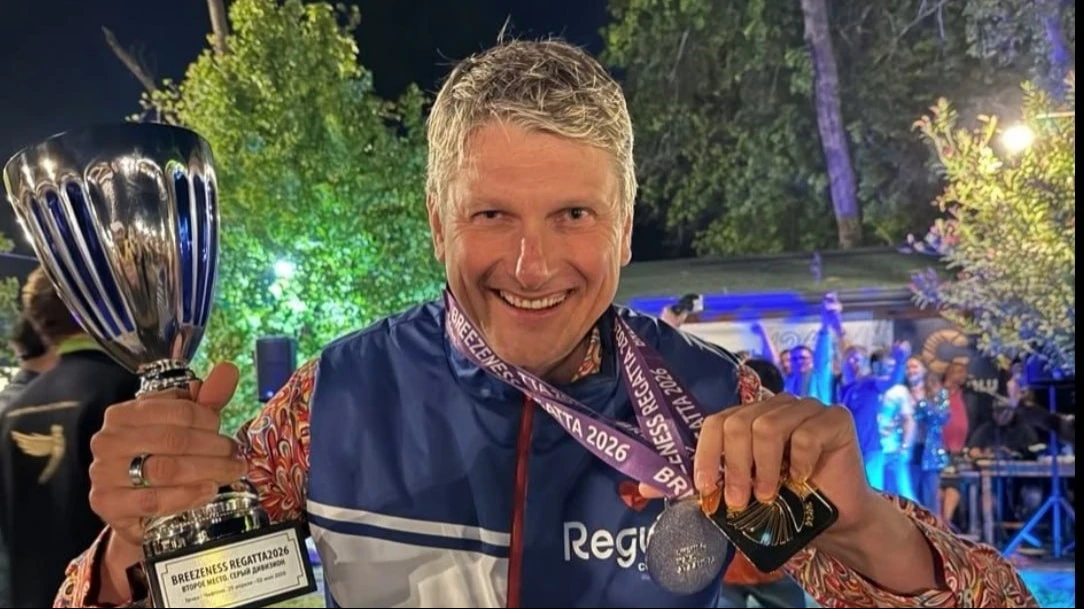
— It helps a lot. Yellow Rocks! continues to grow our event business, an area where we’ve always excelled. We bring together people connected to the venture capital market and the startup community for various events: regattas, trips, conferences, strategy sessions, webinars, meetups, and so on. Of course, the number of events themselves has decreased: from June 2026 to May 2027, we have 15 planned, whereas during our time in Russia, we used to hold up to 100 per year. But now these events have gained new value: they provide the fragmented Russian-speaking venture capital community with an opportunity to gather in one place and exchange news, plans, and ideas.
In addition, if you demonstrate a strong return on investment, investors not only increase their investment amounts from fund to fund, but also introduce us to startups that interest them and actively participate in discussions about deals.
— P.M.: Another interesting project has emerged from the network, and Yellow Rocks is involved! — Pre-Seed to Succeed (P2S). Please tell us about it.
— Together with three venture capital funds—Igor Ryabenko’s AltaIR Capital, Nikolai Kirpichnikov’s Smart Partnership Capital, and Alexander Korchevsky’s I2BF Global Ventures—we’ve launched a joint program called “Pre-seed to Succeed” to support pre-seed-stage startups that already have a minimum viable product and their first customers. For the four of us, this is a win-win strategy. We all bring interesting companies into the program and evaluate the projects together. Our combined expertise saves human and financial resources and reduces the risk of failed investments. And the startups receive funding directly from several VCs after passing through a joint investment committee.
Since the program’s inception, more than 4,300 applications have been submitted, and 55 investment committee meetings have been held. Together with our partners, we have invested a total of $13.6 million in 18 companies. The P2S portfolio includes Global Work, Litero, Stayf, Resolv, Chatfuel, Jupid, Lovon, and other companies.

To summarize the latest achievements: Global Work’s revenue grew 18-fold in 2025, and at the end of last year, the company closed a $2.35 million follow-on funding round from existing investors.
Resolv automates back-office operations for home services contractors (rebates, permits, warranties) and raised $1 million in a pre-seed round in April 2026.
Jupid is developing an AI-powered accounting tool for small businesses that can be integrated into digital banks. In April 2026, the project closed a pre-seed funding round of $840,000.
Lovon, featuring an AI voice coach, was recently named Product of the Day No. 1 on Product Hunt [a platform that awards developers of the best tech products—Oninvest note].
Which industries do venture capital funds focus on?
— Y.P.: How many startups does Yellow Rocks! review each year? And how many deals do you close?
— We have a large pipeline. Every year, we review 3,000–5,000 startups, but we invest in less than 0.5% of the applications we receive. Most, of course, are weeded out immediately upon a cursory review. The projects we select in the initial stage then go through several rounds of screening, due diligence, and two investment committee reviews. The final decision to invest is made at the last stage. For us, “green flags” include having a serial entrepreneur with experience launching startups among the founders, the company having received investment from another fund we trust, and strong growth potential.
— P.M.: I get really upset if I’ve been watching but missed a good startup. How about you?
— Of course, I’m worried too, but I take a philosophical view of it. The important thing to understand here is that every fund has, at some point, turned down a startup that went on to make its competitors’ portfolios very profitable.
One of the startups we missed out on is the British company Dwelly, which operates in the proptech sector. At the time, we didn’t believe in the roll-up model: the company acquires small, independent real estate agencies, brings them together on a single technology platform, and uses automation and AI to improve the efficiency of the entire business.
However, in less than two years, Dwelly has built a portfolio of more than 10,000 properties and has become one of the top 15 largest rental agencies in the UK. In February 2026, Dwelly raised $93 million for further acquisitions and platform development. It seems that in this case, we underestimated both the team and the potential of the business model itself.
— P.M.: Please tell us about the most successful deal in your latest fund.
— One of our recent successful—though atypical—investments is a company that develops mobile apps for learning foreign languages, featuring AI avatars as personal tutors (Sergey declined to name the company due to agreements with it—Oninvest note).
As we see it, the mobile app market today is a true “red ocean.” It’s characterized by fierce competition and a high density of players, and success depends largely on marketing budgets. Because of these specific conditions, we don’t usually invest in this market. But this startup surprised us with its metrics: in just six months, it increased its revenue from $500 per month to $50,000. We invested in the company at the pre-seed stage and exited six months later with a 12.5x return.
Then the guys moved on to the next round of venture funding. It was a fairly large round, and we were offered the chance to completely exit the project. And since the mobile app market still seemed challenging to us, we decided to lock in our success at that stage.
— Y.P.: What sectors do you generally invest in? What do you see as promising?
— First, in fintech, especially if the company has Russian-speaking founders. The banking industry in Russia and the CIS countries was built from the ground up and has developed very rapidly. Some cutting-edge, high-tech players have emerged in this sector. When their founders begin building international businesses, they inevitably bring their standards and expertise with them. In terms of service quality and the technologies they use, such companies are highly likely to outperform their European and American competitors. We enjoy investing in them.
Second, we’re keeping an eye on edtech. For example, our portfolio includes Buddy.AI and Praktika.AI—companies that have developed AI tutors for learning foreign languages. Both startups have Russian-speaking founders.
Third, we believe in startups focused on workflow automation and the SaaS industry—everything that falls under the umbrella of the “Future of Work.”
— Y.P.: Everyone’s talking about the crisis in the SaaS industry right now. Doesn’t that worry you?
— No, because when it comes to investments, we choose companies that make niche products. These highly specialized solutions are typically adopted by all key market players over time, and they gradually become a kind of market standard for quality, allowing companies to maintain a stable income. For example, our portfolio includes a startup called Cattle Care, which provides video analytics for cattle farms. Using computer vision and AI, they monitor the health of the herd, detect livestock diseases early, and ensure the quality and accuracy of farm operations. The founders themselves have worked in the agricultural sector, so they are well-versed in the finer details and needs of farmers.
— P.M.: Why does YR! focus more on the U.S. and, to some extent, Europe, rather than expanding into Latin America, Southeast Asia, and Africa?
— First, the size of the U.S. and EU markets is incomparable to that of Latin America and Southeast Asia. Second, in Western markets, all processes are already well-established, and the procedures are clear. If we can earn the same “X” in the U.S., why take risks in jurisdictions with opaque judicial systems, ever-changing legislation, and a host of “hidden” pitfalls we’re unaware of?
— P.M.: To what extent has the tightening of U.S. immigration laws affected the venture capital market? What consequences will this process have for founders and venture capital investors?
— The rise in uncertainty and the increasing cost of hiring international professionals have been the most painful challenges for startups, primarily due to changes in visa policies, including the H-1B program. This has made it more difficult to attract talent and has made entering the U.S. market more time-consuming and costly.
In the long term, the U.S. retains its leadership in terms of capital, but companies are increasingly building distributed teams and relocating their headquarters to jurisdictions with more predictable visa policies. Immigration risk has effectively become an additional cost factor for founders.
— Y.P. What are your thoughts on Kazakhstan’s startup ecosystem and venture capital market?
— Since 2019, when we first came here to launch an accelerator for Astana Hub, Kazakhstan has made tremendous strides in developing its venture capital market, drawing on global best practices from startup nations such as Israel, where they have learned to balance government involvement with private initiative.
Kazakhstan has followed a similar path, laying a solid foundation for building a venture capital ecosystem. This includes Astana Hub, which supports a huge number of startups, as well as the “Fund of Funds,” which pools investors’ money and distributes it to smaller venture capital funds and accelerators, and the state-backed Direct Investment Fund. It is important that this entire infrastructure does not become bogged down in bureaucracy, does not start conservatively allocating funds only to ultra-reliable businesses, and allows itself to make mistakes and try again. And most importantly, the government should not compete with private VCs but only temporarily fill the gap where they are lacking.
Kazakhstan has seen its first examples of global success—the “unicorn” Higgsfiled AI, founded by Erzata Dulat and Alex Mashrabov, who created a neural network for generating video content. Such stories are a great source of inspiration not only for local founders and investors but also for international capital. As a result, the number of new startups, local business angels, and foreign investors will grow like a snowball.
This article was AI-translated and verified by a human editor