SpaceX's AI revenue will grow 100 times by 2030 - Goldman Sachs
Elon Musk's space company's total revenue is expected to grow more than 25 times in the same time frame, according to Goldman calculations

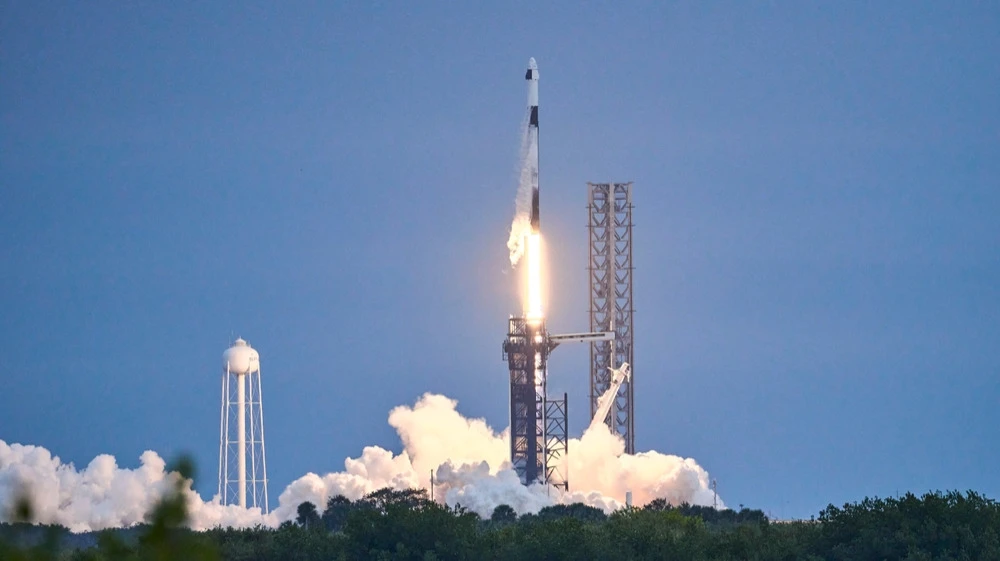
The revenue of Elon Musk's space company, according to Goldman calculations, will grow to $474 billion by the end of the decade / Photo: Evan El-Amin / Shutterstock.com
The aspiration of Elon Musk's private space company SpaceX to reach a valuation of $1.78 trillion as a result of the IPO is based on the expectation of a hundredfold growth in revenue of its artificial intelligence division by 2030, according to Goldman Sachs. The investment bank discussed these projections with one of the potential investors in the offering, the Financial Times writes.
Details
Goldman Sachs estimates that the revenue of SpaceX's AI division will increase from $3.2 billion in 2025 to $322 billion in 2030. At the same time, the total revenue of Elon Musk's space company, according to Goldman's calculations, will grow more than 25 times - from $18.7 billion last year to $474 billion by the end of the decade. Goldman's model was presented verbally to the investor amid the start of the SpaceX IPO roadshow, the Financial Times writes, without naming the investor.
Goldman forecasts that SpaceX's AI revenue in 2026 will grow 388% year-on-year to $15.6 billion. In 2027, it should increase to $34.5 billion. These estimates were confirmed to the publication by another source.
According to SpaceX's IPO prospectus, the company operates in the "largest potential market" (total addressable market) in human history. In particular, the company's AI division operates in an area that SpaceX estimates to be worth $26.5 trillion in the long term. This figure is significantly larger than the roughly $2 trillion addressable market the company indicates for its Starlink satellite internet and space business.
Goldman Sachs expects Starlink's revenue in 2030 to be $144 billion - less than half of what it estimates the AI business will generate. Revenue at SpaceX's rocket division, Goldman predicts, will grow to $8.3 billion in 2030, up from $4.1 billion last year. Goldman also expects SpaceX's operating income (adjusted EBITDA) to increase from $6.6 billion in 2025 to $352 billion in 2030. Last year, the company had a negative free cash flow of $13.8 billion. Goldman expects that by 2031, SpaceX will reach a positive free cash flow of $72 billion.
SpaceX declined to comment to the publication. Goldman Sachs also did not comment on the forecasts. Goldman Sachs beat Morgan Stanley, JPMorgan, Citigroup, Bank of America and UBS in the struggle for the role of the leading organizer of the IPO SpaceX, recalls FT. The offering is expected to generate tens of millions of dollars in fees for Wall Street banks.
Context
The ambitious valuations reflect the scale of the bets that the largest technology companies are making on artificial intelligence, writes the FT. It is this investment boom that has become one of the reasons why the US stock market has shown a series of records, the publication notes.
For such optimistic AI predictions to come to fruition, Grok's family of models must not only catch up with but surpass the developments of Anthropic, Google and OpenAI in key areas such as programming, cybersecurity, AI agents and chatbots, says the FT. However, the division, made up of absorbed startup xAI, has previously faced constant internal turbulence. Musk parted ways with all ten of the company's co-founders in two years, recalls the FT. In addition, products performed below expectations, causing the business to attract only a fraction of the user and corporate subscriptions needed to reach reported revenue levels.
Musk also leased the Colossus 1 data center to competitor Anthropic. The 300-megawatt facility in Memphis, Tennessee, was underutilized due to Grok's failure to achieve widespread distribution, the FT writes.
This article was AI-translated and verified by a human editor