Tech Stocks Face a "Perfect Storm": Online


Photo: Shutterstock.com
Global stock markets are falling due to a sell-off in the technology sector. Investors are once again questioning whether the major IT companies’ massive investments in artificial intelligence will pay off. We’re tracking market developments in this live feed.
6:20 p.m. CET: What's happening in the markets midway through the U.S. trading session?
— The Nasdaq Composite, which tracks technology stocks, has slightly recouped its losses for the day—it is down 1.46%;
— The S&P 500, a broad U.S. stock market index, is down 0.95%;
— The Dow Jones Blue Chip Index is up slightly, gaining 0.17%.
— The Russell 2000 Small- and Mid-Cap Index, which on June 23 was the only major U.S. stock index to open in positive territory, has reversed course and is down 0.32%.
The "Wall Street Fear" index has slowed its rise slightly compared to the 17% jump seen in the first minutes of the U.S. trading day—it is up 9.9% from the previous close, to 18.99 points.
17:21 CET: Nervousness in the semiconductor market has intensified ahead of Micron's earnings report, according to Wedbush analysts.
They view the plunge in Korean stocks as a “breather” following the market’s nearly 100% rise this year, and Samsung’s loss of its status as South Korea’s most valuable company to SK Hynix as “a symbolic move that has caused some investors to worry about the chip market overheating.”
“Our recent research in Asia and our tracking of AI demand in the corporate sector show no signs of slowing down,” they note. “This continues to make us optimistic about investing in AI market leaders over the next year.”
5:00 p.m. CET: The Dow Jones Blue Chip Index has turned slightly higher after a decline. Apple is up 0.8%.
Paradoxically, “a good way to hedge stock risks might be… other stocks,” rather than cash or bonds, says Peter Berezin, chief strategist at BCA Research. “In the early stages of the dot-com crash, tech stocks plummeted while the rest of the market was rising,” Seeking Alpha quotes him as saying. “We may now be entering a similar phase.”
11:11 p.m. CET: “ A perfect storm”—that’s how eToro analyst Bret Kenwell described what’s happening with tech stocks.
"This morning is the perfect set of circumstances for a sell-off in tech stocks," he told MarketWatch. Kenwell pointed to yesterday’s sell-off in the “Magnificent Seven,” which led to an overnight sell-off in Asian semiconductor stocks. Together, these events dampened investor interest in the tech sector.
It is important for investors to remember that this sector had risen significantly before the sell-off. “If stocks rise by 200% and then fall by 10%, that’s inevitable,” he said. “A healthy correction is to be expected.”
3:55 p.m. CET: It appears that investors are trying to take advantage of the sell-off and are buying up shares that have fallen in price. Half an hour after the market opened, the Nasdaq 100 index had narrowed its decline to 1.6%. Shares of Alphabet, Oracle, and Nebius are down less than 1%.
Nevertheless, Micron's stock plummeted by more than 10%.
15:31 CET: The market opened without any surprises:
The Nasdaq 100 technology index is falling the most—by 2.4%;
The S&P 500 broad-market index is down 1.7%;
The Dow Jones Blue Chip Index is down 0.6%.
15:25 CET: The decline in “Magnificent Seven” stocks presents a good opportunity for investors, given that short-term trends in the U.S. stock market remain “bullish,” said Mark Newton, head of technical strategy at Fundstrat.
“Right now, it makes more sense to look for signs of a return to outperformance than to bet on a further decline in these stocks,” the strategist believes. A stabilization in the prices of the “Magnificent Seven” would be an important positive factor for the entire market, especially if oil prices, bond yields, and the dollar exchange rate continue to fall at the same time, Newton said.
15:10 CET: The market capitalization of the Nasdaq 100 index could fall by $1 trillion as a result of the sell-off in tech stocks, Barron's reports, citing data from Dow Jones Market Data.
14:36 CET: Leading the decline today are stocks that had been rising rapidly due to investor interest in artificial intelligence. The WSJ divides them into three groups:
Chipmakers: Shares of Qualcomm, Marvell Technology, and Micron Technology are down 6–8% in premarket trading.
Data Centers: Oracle, which signed a major contract to provide computing power to OpenAI, is down 2.8%. CoreWeave and Nebius are down more than 7%.
"The Magnificent Seven": Alphabet, Nvidia, and Tesla are down more than 2%.
14:24 CET: Investors ignored a statement by Donald Trump, who wrote on the social media platform Truth Social that U.S. negotiations with Iran are “going well.” Stocks are still trading lower in premarket trading: S&P 500 futures are down 1.3%, and Nasdaq futures are down 2.7%.
14:02 CET: “Any comparisons [between the current market situation and the bubbles] of 1999–2000 are, in our view, completely misplaced,” says Daniel Morris, chief market strategist at BNP Paribas Asset Management (quoted in The Wall Street Journal). According to the analyst, tech companies are largely meeting expectations for earnings growth, which is ultimately driven by real demand for AI services and, by all accounts, is grounded in reality.
"The current sell-off is 'a form of profit-taking, but we still view the medium-term outlook [for technology companies] as very positive,'" Morris added.
13:55 CET: IBM shares remain one of the few “bright spots” amid today’s technical sell-off in the market, as noted by CNBC: they rose by just over 4% in premarket trading. JPMorgan analysts have upgraded IBM’s rating to “Overweight” (“above market”). In their view, software development will continue to drive the company’s stronger financial performance.
13:47 CET: “We may not like it,” but investors’ current behavior is healthy, said Mark Dauding, Chief Investment Officer for Fixed Income at RBC BlueBay Asset Management, in an interview with Bloomberg TV. Some of the recent moves in the stock market, in his view, “were distinctly speculative in nature, fueled by retail investors’ pursuit of short-term gains,” which they are now locking in.
1:30 p.m. CET: What's happening in the markets two hours before the U.S. markets open?
— Nasdaq 100 technology futures are down 2.75%;
— S&P 500 futures are down 1.34%;
— Dow Jones Blue Chip Index futures are down 0.5%.
European stocks continue to fall: the Stoxx 600 is down 0.93%, the French CAC 40 is down 0.74%, and the German DAX is down 1.13%.
The VIX volatility index, also known as the “Wall Street fear index,” jumped nearly 15%, approaching the psychological threshold of 20 points. This level indicates heightened volatility in the market.
13:10 CET: “Whatever the immediate cause [of the current sell-off in tech stocks] may be, there is a growing sense that the market has ignored nearly all negative developments related to AI investments over the past few weeks,” — wrote Rich Privorotsky, a strategist in Goldman Sachs’ global banking and markets division, in a research note on June 23 (quoted by MarketWatch).
According to the analyst, the AI market has been “stretching like a rubber band”—and now the only question is “how much further this rubber band can stretch.” “If cutting-edge AI models are increasingly being developed in the East at significantly lower costs than in the West, <…> then the largest capital allocators are also the ones most exposed to the risk of overinvestment,” according to a Goldman Sachs strategist.
12:40 CET: The Nasdaq 100 index is more than 30% above its late-March levels, according to Bloomberg. Some investors believe the sell-off will be short-lived.
"A market decline, even amid high volatility, is a good thing: it creates entry points for other investors," said David Kruk, head of the trading division at La Financière de l'Échiquier.
12:18 p.m. CET: It’s still too early for investors to leave the “tech party,” wrote Chris Konstantinos, a strategist at RiverFront Investment Group, in a note to clients last week. He said he is maintaining an overweight position in the tech sector in his portfolio, according to Business Insider.
Konstantinos identified the discrepancy between companies’ reported earnings before taxes and interest and their free cash flow as the main warning sign—it was precisely this discrepancy that served as an early indicator of the crash in 2000. Today, these metrics are moving in tandem, which indicates that reported earnings are backed by real cash, the strategist believes. “As long as this correlation does not reverse, we believe that fundamental indicators support maintaining positions in mega-cap technology stocks with high free cash flow,” he concludes.
12:05 CET: U.S. Treasury yields are falling. The yield on 10-year U.S. Treasuries fell by more than 2 basis points to 4.481%, while the yield on 2-year Treasuries dropped by more than 4 basis points to 4.190%. This was driven by concerns that the Fed, under the leadership of Kevin Warsh, might raise interest rates, which triggered a sell-off in the technology sector, according to CNBC.
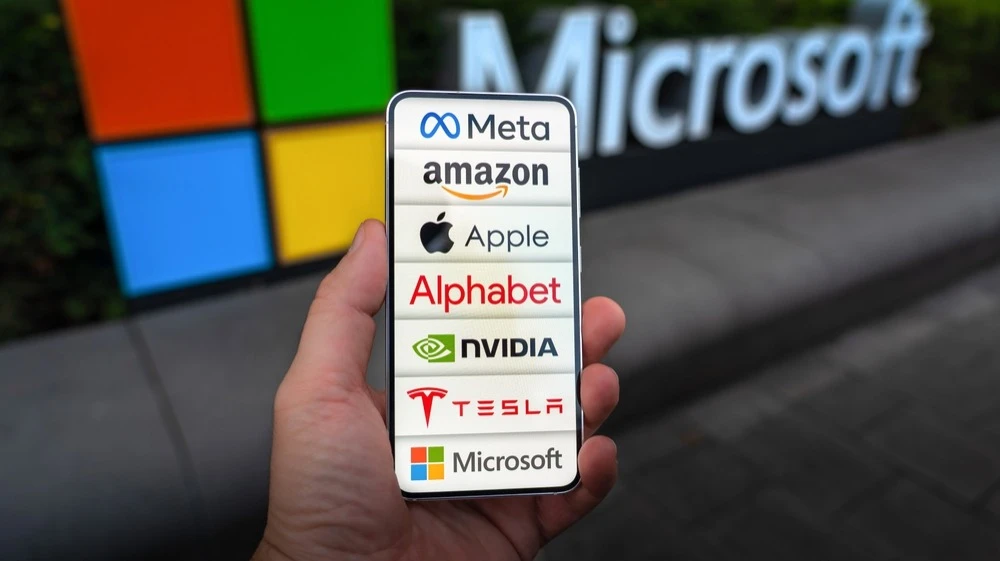
11:42 CET: What's happening with the "Magnificent Seven" in New York's pre-market? All stocks are falling except for one:
Tesla: -2.94%;
Nvidia: -2.80%;
Alphabet: -2.15%;
Amazon: -1.07%;
Meta: -0.92%;
Apple: -0.49%;
Microsoft: +0.88%.
11:30 CET: SpaceX stock futures are falling for the fourth consecutive day. Yesterday, they plummeted by more than 16%, wiping $400 billion off the company’s market capitalization. This is the largest single-day drop in market capitalization since Nvidia’s stock crash in January 2025, triggered by the release of the Chinese neural network Deepseek, according to the Financial Times.
“Everyone who wanted to buy SpaceX shares did so in the first few days after the IPO, and it seems that phase is largely over,” said Mike O’Rourke, a strategist at Jones Trading.
11:11 CET: A speed barrier looms over AI stock trading, said tech investor Dan Niles, founder of Niles Investment Management, in an interview with CNBC released yesterday. According to him, just a few months ago, companies were racing to ramp up their AI usage, encouraging employees to generate as many tokens as possible; but now, faced with rising costs, companies are shifting to cost-saving mode and realizing that it’s impossible to burn through their entire annual AI budget in just a few months. To finance the AI race, tech giants are forced to actively raise debt and equity financing. SpaceX, which recently went public, is issuing $20 billion in bonds.
According to Niles, he is reducing the proportion of “Magnificent Seven” stocks in his portfolio. The investor noted that the ultimate beneficiaries of all these massive AI investments are chipmakers—but he has also decided to reduce their share in his portfolio following a sharp rise in their stock prices.
10:57 CET: “Former market leaders appear to be losing ground. Investors are shifting into more defensive sectors that are less tied to AI and capable of generating more predictable cash flows,” wrote Chris Weston, head of research at Pepperstone, on social media platform X.
10:54 CET: The sell-off was triggered by doubts about whether tech giants—particularly Alphabet—will be able to justify their massive spending on AI infrastructure, according to Bloomberg. “This is a useful reminder that we’re still dealing with cyclical, market-driven businesses,” says Amanda Lyons, head of research at Energy Group Capital.
The market’s attention will now turn to Micron Technology’s quarterly earnings report, which is due out on Wednesday. The company’s stock has been the top performer in the Philadelphia Semiconductor Index since the start of the year, rising more than 300% since January. According to Lyons, key indicators for investors will include price trends, as well as any changes in forecasts for capital expenditures and memory chip shipments.

10:43 CET: Nasdaq 100 tech futures are down 2.7%, while S&P 500 broad-market index futures are down 1.5%. There are just under five hours left until the main session opens in New York.
In Asia, where trading has already closed, South Korea’s Kospi index led the decline, plummeting nearly 10%. Shares of memory giants SK Hynix and Samsung Electronics plummeted by about 13%. Japan’s Nikkei 225 index fell 3.6%, and Hong Kong’s Hang Seng index dropped 1.8%.
The European Stoxx 600 index is down 1.2%. The Stoxx 600 Technology index is down 3.2%, outperforming other sectors. Shares of semiconductor equipment maker ASML in Amsterdam are down 5.4%, while shares of chipmaker STMicroelectronics in Paris are falling by more than 7.5%.
Updating...
This article was AI-translated and verified by a human editor